
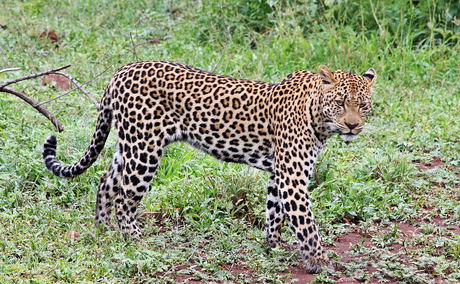
Discover the deep African myths behind lions, leopards, elephants, and hyenas — and learn how Marloth Park and Needles Lodge offer a safari experience rich with cultural storytelling and wild encounters.
How fire shapes Kruger National Park's savanna, what SANParks has learned from 70 years of burn research, and what a scorched hillside actually means for the wildlife that moves through it.
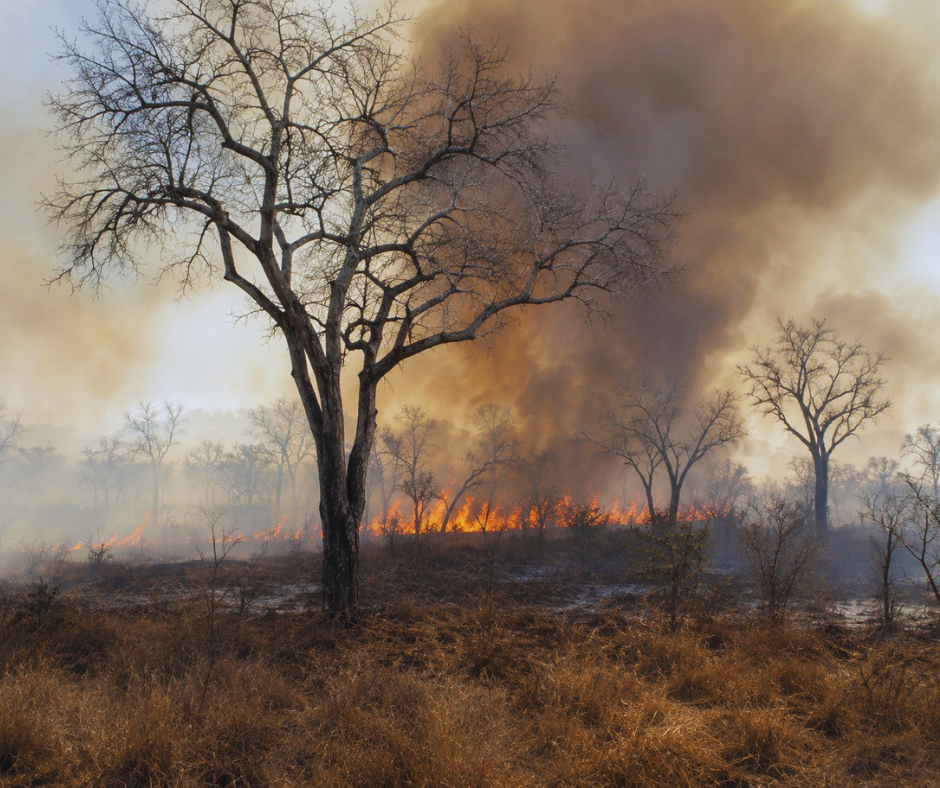
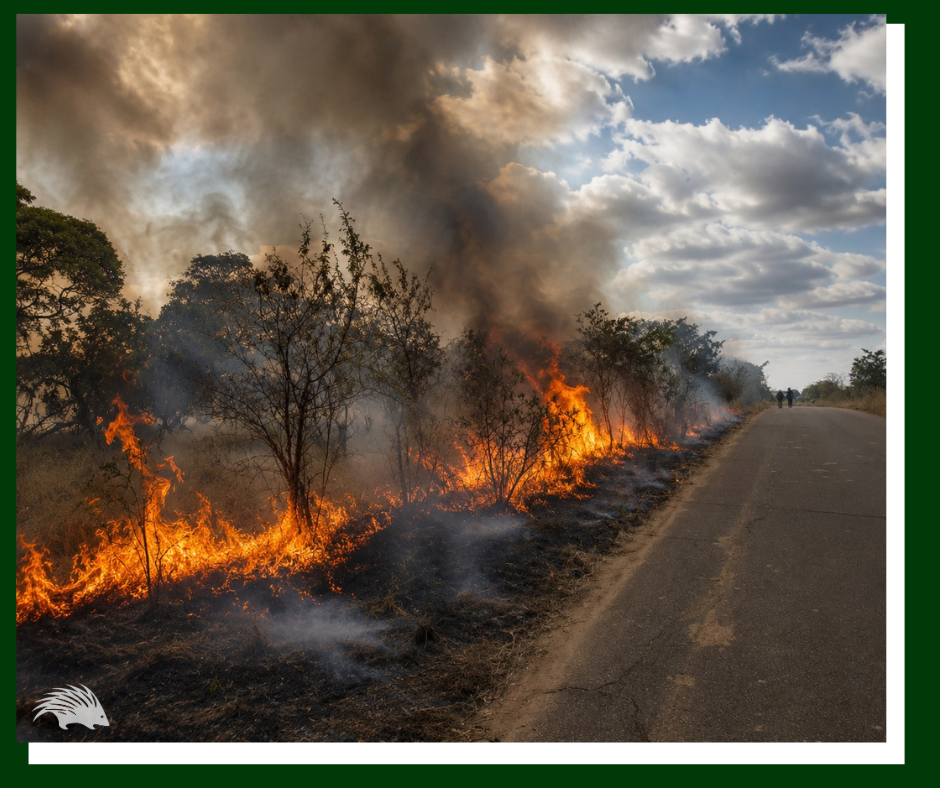
Drive through Kruger in August or September and you will see blackened ground. Ash-grey hillsides, charred tree trunks, grass reduced to stubble. To most visitors it looks like damage. To the ecologists who manage the park, it is the system working as it should.
Fire is not an accident in the African savanna. It is a process the vegetation evolved alongside, the animals adapted to, and the soil depends on. Kruger National Park has been managing, studying, and adjusting its relationship with fire since 1954, when the experimental burn plot programme began. That programme is now one of the longest-running fire ecology research projects in Africa.
Fire Ecology in Kruger at a Glance
- Average area burned annually: Approximately 16 percent of Kruger's 1.9 million hectares
- Fire return interval: Median of around 3 years; varies significantly by location and land system
- Peak fire season: September to November; the majority of fires occur in this window
- Burn plot research: Experimental Burn Plot programme running since 1954, one of the longest in Africa
- Fire management zones: Five zones across the park, each with different burn frequency, intensity, and season targets
- Lightning fires: Most lightning-ignited area burns between September and January
Fire in the Savanna: What It Is and Why It Happens
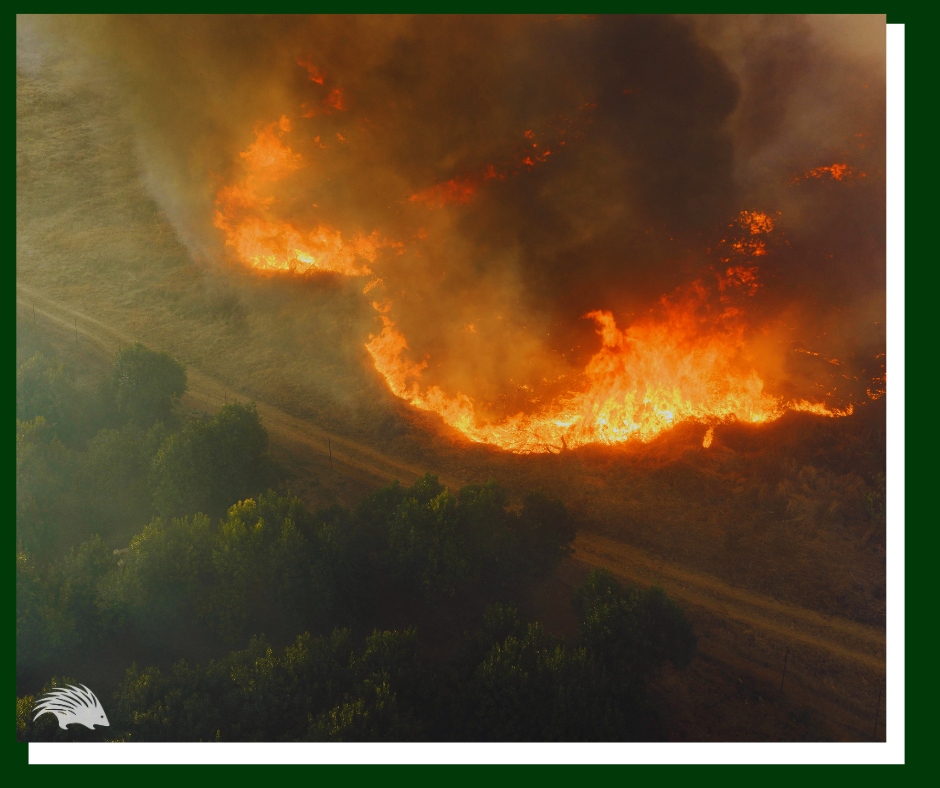
The African savanna burns because it is built to burn. The grasses that dominate the open areas of Kruger are annual or perennial species that grow fast in the wet season, die back in the dry season, and leave behind a dense layer of dry fuel by August and September. A lightning strike in October, or a spark from a road, is enough to set that fuel alight.
Lightning is the original fire source in these ecosystems. Before people, before management, before fences, lightning fires moved across the Lowveld every wet season, clearing old grass, releasing nutrients, and resetting the vegetation cycle.
The animals that live here, including impala, zebra, buffalo, and elephant, evolved in a landscape that burned regularly. Their behaviour, their movement patterns, and in some cases their physical adaptations reflect that history.
Trees in the savanna have thick bark for insulation against low-intensity fires. Grasses have their growing points at or below the soil surface, so fire removes the above-ground material but the root system survives and regrows within days of rain.
Many tree species in Kruger resprout from the base after being burned, a strategy that allows them to persist in a fire-prone system even when the above-ground stem is destroyed.
A Brief History of Fire Management in Kruger
Kruger's relationship with fire management has gone through three distinct phases, and each one produced lessons that shaped the next.
Phase One: Suppression (1930s to 1956)
In the early decades of the park, fire was viewed as destructive. Warden James Stevenson-Hamilton wrote of devastating fires crossing into the park from outside, burning for up to fourteen days.
Colonel J. A. B. Sandenbergh, who succeeded him in 1946, was convinced that burning had worsened the vegetation and harmed wildlife distribution. Under his management, fire suppression was the policy. Fires were fought rather than studied.
The result was an accumulation of old, moribund grass across large parts of the park: thick, unpalatable, and, when a fire did break out, far more destructive than a regularly maintained burn would have been.
Phase Two: Prescribed Burning on a Fixed Rotation (1957 to 1992)
In 1957, the policy changed. Recognising that fire was inevitable and ecologically necessary, SANParks introduced a prescribed burning programme. Burns were applied in the early wet season on a fixed three-year rotation across defined blocks of the park. The aim was controlled, predictable burning that managers could plan around.
The experimental burn plot programme began in 1954, just before this policy shift, and ran alongside it. Plots burned at different intervals and in different seasons were monitored over decades to understand how fire frequency and timing affected grass composition, tree cover, and wildlife use.
The fixed rotation produced useful baseline data but also revealed its limits. Real landscapes do not burn evenly. Rainfall, soil type, grazing pressure, and topography all affect how a fire burns and what it leaves behind. A single approach could not account for that variation.
Phase Three: The Lightning Fire Policy and Current Management (1992 to Present)
In 1992, SANParks moved to what it called the lightning fire policy: all fires ignited by lightning would be allowed to burn freely, while human-ignited fires would be suppressed. The idea was to restore a natural fire regime driven by lightning rather than management schedules.
After ten years, the policy was abandoned. The data showed that a large proportion of the area that burned during that period was ignited by people rather than lightning. The boundary between the park and surrounding land is too permeable, and the human-ignited fire load too high, to sustain a purely lightning-driven regime.
The current approach divides the park into five fire management zones, each with different targets for burn frequency, intensity, and season. Some areas receive frequent, hot fires for specific ecological reasons. Others receive less frequent, lower-intensity burns.
In some zones, SANParks puts in only safety firebreaks around infrastructure and allows any lightning fire to burn to its natural extent. The decisions are based on biomass accumulation data, rainfall records, satellite imagery, time since the last burn, and field reports from section rangers.
What Fire Does to the Vegetation
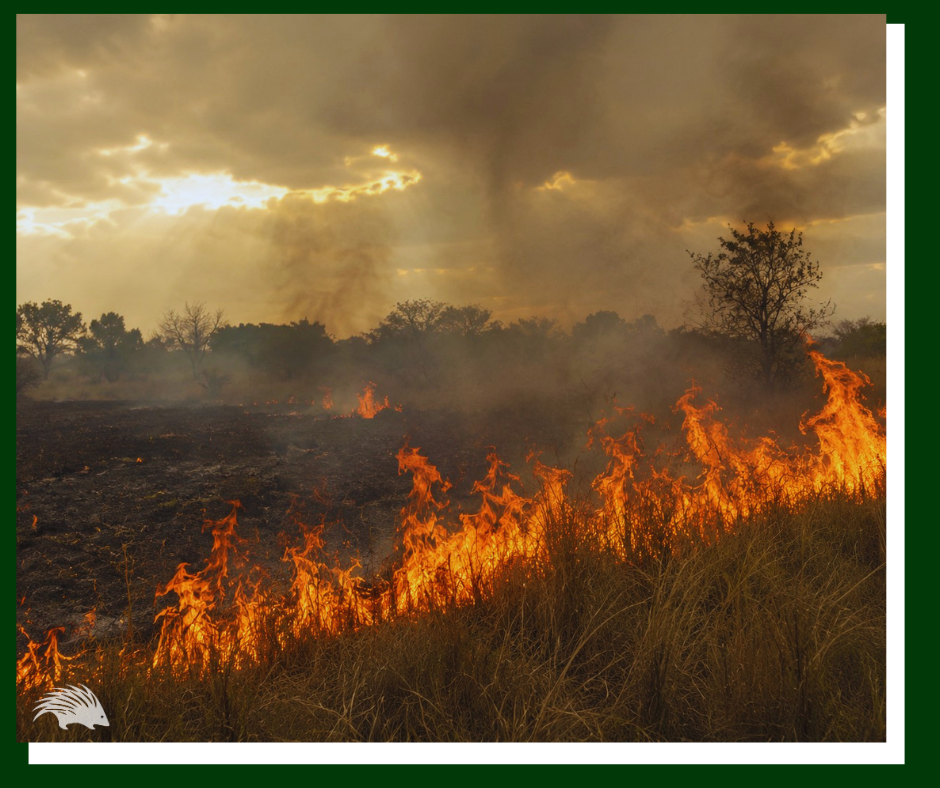
The immediate effect of a fire is obvious: it removes above-ground plant material. What follows is less visible but ecologically more significant.
Ash returns phosphorus, potassium, and other minerals to the surface soil. Within days of a fire, if rain follows, the grass begins to regrow. The new shoots are green, high in protein, and highly digestible.
This is why herds move onto recently burned areas quickly: the post-fire regrowth is among the most nutritious grazing available in the dry season.
Fire also controls woody encroachment. Without regular burning, shrubs and young trees spread into grass-dominated areas, shading out the grass and shifting the vegetation toward closed bush.
In Kruger's higher-rainfall areas in the north and east, this shift can happen rapidly. Regular burning, particularly hot fires in the late dry season, top-kills shrubs and saplings before they can establish a canopy. It keeps the tree-grass balance that the savanna depends on.
The long-term Kruger research has found that fire affects vegetation structure and biomass more than species composition. The most extreme treatments, burning annually or excluding fire for more than 40 years, produce the most dramatic changes.
Moderate fire regimes, where areas burn every two to four years, keep the system within a range that most plant and animal species can track.
What Fire Does to the Soil
A common concern about fire is soil damage. In the Kruger research, short, fast-moving grass fires do not sterilise the soil. The heat pulse moves quickly enough that soil temperatures at depth remain within the range that microbial communities tolerate.
Recovery of soil biology after a grass fire is measured in weeks, not years.
Slow, smouldering fires over heavy fuel loads are a different matter. These can damage soil structure and reduce infiltration.
It is partly why SANParks manages fuel loads through regular burning: allowing grass to accumulate for too long creates the conditions for hotter, more damaging burns when fire does arrive.
What Fire Does to Wildlife
The response of wildlife to fire in Kruger is well documented and broadly positive for grazers. Impala, zebra, wildebeest, and buffalo all move onto recently burned areas within days of a fire.
The fresh regrowth is more nutritious than old grass, and the short sward height improves visibility, which reduces predation risk for grazing animals.
Buffalo in particular are drawn to post-fire regrowth in significant numbers. Aerial counts in Kruger have found buffalo concentrations on burned patches that are markedly higher than on unburned areas of equivalent size in the weeks following a fire.
For browsers, the picture is more mixed. Elephant, giraffe, kudu, and nyala depend on shrubs and trees rather than grass. A fire that damages established shrubs reduces their food supply in the short term.
Elephant sometimes move away from recently burned areas and return as shrub regrowth matures, though individual responses vary and the pattern is not consistent across all areas or seasons.
Predators respond to burned areas differently from prey. Lions are sometimes observed using the open, short vegetation of recently burned areas for stalking, where the low cover gives clearer sightlines than dense bush.
Cheetah, which favour open ground, may also use recently burned terrain in some areas.
Birds are among the most immediate beneficiaries of fire. Raptors, storks, and other ground-foraging species move onto burning areas to catch insects, reptiles, and small mammals fleeing the flames.
Within hours of a fire front passing, large concentrations of birds can appear on the still-warm ground.
Fire Season in Kruger: When to Expect It
Most of Kruger's fires occur between September and November. This is the end of the dry season, when grasses are fully cured, fuel loads are at their peak, and lightning storms begin to arrive ahead of the main rains.
Prescribed burns in the park are also concentrated in this window, which means visitors in August, September, and October are most likely to encounter fire activity or its aftermath.
Lightning fires, which have a slightly later peak, account for the majority of the area burned between September and January.
Early wet-season fires tend to be less intense than late dry-season fires because the fuel is starting to absorb moisture, but they cover large areas when conditions allow.
By the time the full rains arrive in November and December, the blackened hillsides visible in September have often already produced a flush of green regrowth.
The transition from scorched ground to new growth happens faster in Kruger than most visitors expect. A burned area in late September can look almost fully recovered by late November.
What This Looks Like from the Road
Guests driving into Kruger from Needles Lodge in Marloth Park via Crocodile Bridge or Malelane will cross through the southern section, which burns regularly as part of the park's managed fire regime.
The Crocodile River area and the roads toward Lower Sabie pass through mixed bushwillow savanna and riparian vegetation, each of which responds to fire differently.
The mixed bushwillow areas burn patchily, leaving a mosaic of burned and unburned sections that wildlife use selectively.
Along the Crocodile River itself, the riparian forest is largely fire-resistant: the moisture in the soil and vegetation protects it from all but the most intense dry-season fires.
A blackened hillside on a game drive is worth stopping for. The ash-covered ground often shows tracks clearly: the prints of animals that crossed after the fire are preserved in fine ash in a way that soft soil rarely produces.
Within a few days of rain, the green flush that follows a burn draws more grazing animals to that patch than almost any other habitat type in the park.
Frequently Asked Questions
Does Kruger National Park deliberately set fires?
Yes. SANParks manages fire actively across five zones in the park, with different targets for burn frequency, intensity, and timing in each zone.
Some areas receive frequent, hot prescribed burns for specific ecological reasons. Others are burned less frequently. In some zones, SANParks puts in only safety firebreaks and allows any lightning-ignited fire to burn freely to its natural extent.
The decisions are based on 70 years of burn research, including the Experimental Burn Plot programme that has run since 1954.
Is fire harmful to wildlife in Kruger?
For most species, no. Grazers including impala, zebra, wildebeest, and buffalo move onto recently burned areas within days, attracted by the high-protein post-fire regrowth.
Predators use open, burned terrain for hunting. Birds concentrate on active fire fronts to catch fleeing insects and small mammals.
Browsers such as elephant and kudu avoid recently burned areas and return when shrub regrowth matures. Annual burning and complete fire exclusion over long periods both produce more negative effects than moderate fire regimes.
Why do parts of Kruger look burned when I visit?
Most fires in Kruger occur between September and November, at the end of the dry season when grass fuel loads are highest.
Visitors travelling from August through October are most likely to see active burns or recently burned ground. The black hillsides are part of normal seasonal management and natural fire activity, not evidence of damage.
Green regrowth typically appears within days of the first significant rain after a burn.
What is the Experimental Burn Plot programme in Kruger?
The Experimental Burn Plot programme began in 1954 and is one of the longest-running fire ecology research projects in Africa.
Plots across the park are burned at different intervals and in different seasons, and the vegetation and wildlife responses are monitored over decades.
The programme has informed every change in Kruger's fire management policy since the 1950s and continues to guide current decisions.
How often does an area of Kruger burn?
Fire return intervals across Kruger vary significantly by location and land system. Some areas burn as frequently as every two to three years; others go longer between fires depending on rainfall, fuel accumulation, and management decisions.
Wetter areas in the north and east tend to burn more frequently. The southern section, which guests from Needles Lodge access through Crocodile Bridge and Malelane gates, burns on a regular cycle as part of the park's managed fire programme.
Can you see fire activity on a game drive from Marloth Park?
In the dry season, particularly from August to October, active fires and recently burned areas are a regular sight on game drives through the southern section of Kruger.
Smoke on the horizon is common in September and October. Burned areas are worth driving through slowly: the ash preserves animal tracks clearly, and grazers often concentrate on post-fire regrowth in numbers that make for good sightings.
Share This Post