

Explore the role of wildebeest in Kruger National Park’s ecosystem. Learn about their behaviour, habitat, and their importance in the savanna.
Step out onto the sun-baked banks of an African river, and you will encounter one of the most eccentric sights in the natural world: the Sausage Tree (Kigelia africana).
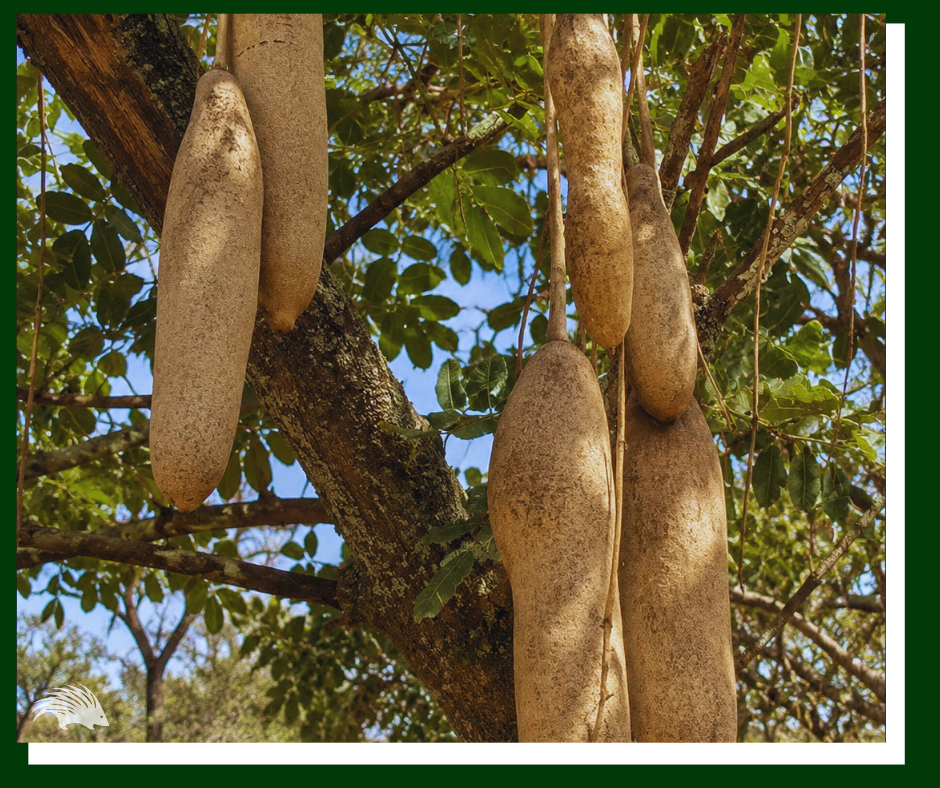
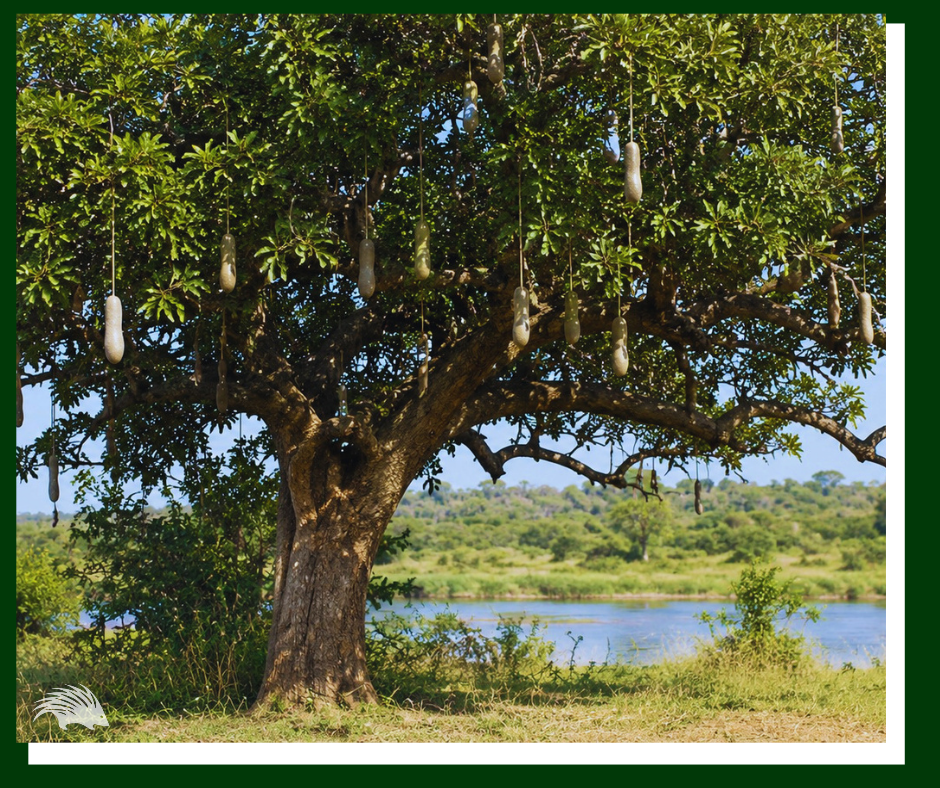
Dangling from long, rope-like stalks well beneath the canopy are enormous, grey-brown, cylindrical objects. They look precisely like heavy sausages swinging gently in the breeze, growing to a scale that initially defies belief. Here, along the winding watercourses of the Lowveld, this remarkable tree tells a captivating story of evolutionary engineering.
Here are ten things worth knowing about this botanical giant.
1. The Fruit Can Weigh as Much as a Newborn Child
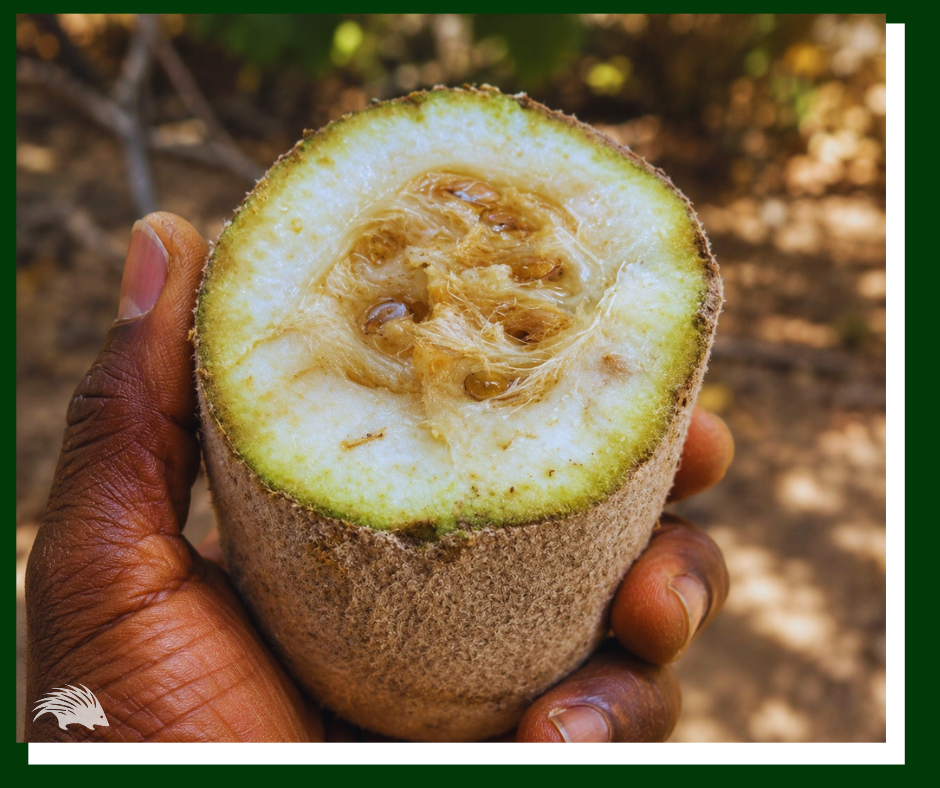
The sheer magnitude of the Sausage Tree’s fruit is astonishing. Reaching lengths of 60 to 90 centimetres, a mature specimen can tip the scales between 5 and 10 kilograms—roughly the weight of a newborn child and the length of a domestic cat.
Suspended on flexible, rope-like stalks, these heavy fruits sway at chest height. While the flexible stems allow the fruit to swing rather than drop straight down, the practical wisdom of the bush advises us to stand well clear. Walking beneath a heavily laden tree in a strong wind is an encounter best avoided.
2. Bats Are the Master Architects of Pollination
When the sun sets over the riverine forest, a clandestine drama unfolds. While daytime visitors occasionally stop by, research published in Biotropica reveals that Kigelia africana is exquisitely adapted for nocturnal pollination by bats.
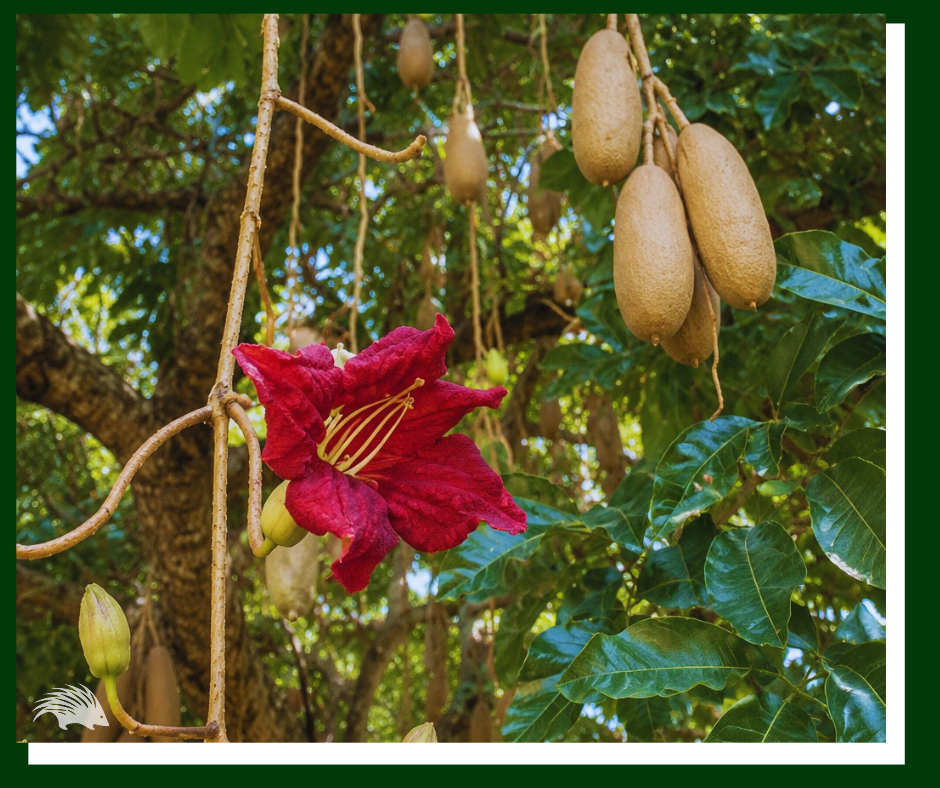
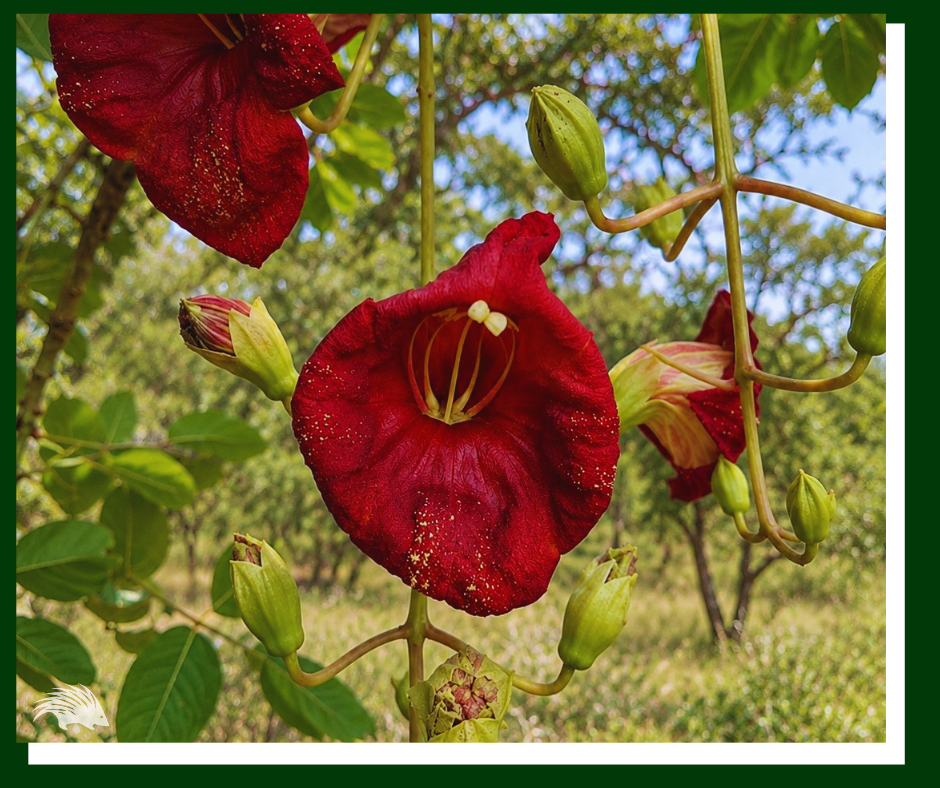
The flowers open exclusively at night, presenting deep, bell-shaped reservoirs of copious nectar. Epauletted fruit bats arrive in the dark, their snouts forming a precise morphological fit with the flower structure. This specialized partnership results in pollen deposition rates twenty times greater per visit than those managed by other animals.
3. A Fragrance Designed for Night Flyers, Not Human Noses
To our senses, the scent of the Sausage Tree flower is often described as fetid or heavy. But in nature, perspective is everything.
The flower's chemistry—dominated by specific aliphatic esters and alcohols—is deliberately tuned to appeal to bats rather than human sensibilities. Combined with a deep dark red or maroon coloration and carried safely below the foliage on long stalks, the entire floral architecture is a masterclass in targeted communication with nocturnal pollinators.
4. The Fallen Feast on the Forest Floor
The generosity of the Sausage Tree extends far beyond its branches. Once the flowers have fulfilled their purpose, they fall to the earth in a nectar-rich carpet that transforms the forest floor into a communal dining hall.
Impala, kudu, duiker, and bushbuck gather to graze on the fallen blooms. Heavier visitors, including baboons, bushpigs, and warthogs, join the feast. In the crisp hours of an African spring, the ground beneath these trees pulses with mammalian life drawn by the very scent that repels us.
5. Raw Potential and Ancient Remedies
For humans, approaching the raw fruit requires caution. Unprocessed, the fruit contains compounds such as naphthoquinones that cause skin irritation and gastrointestinal distress.
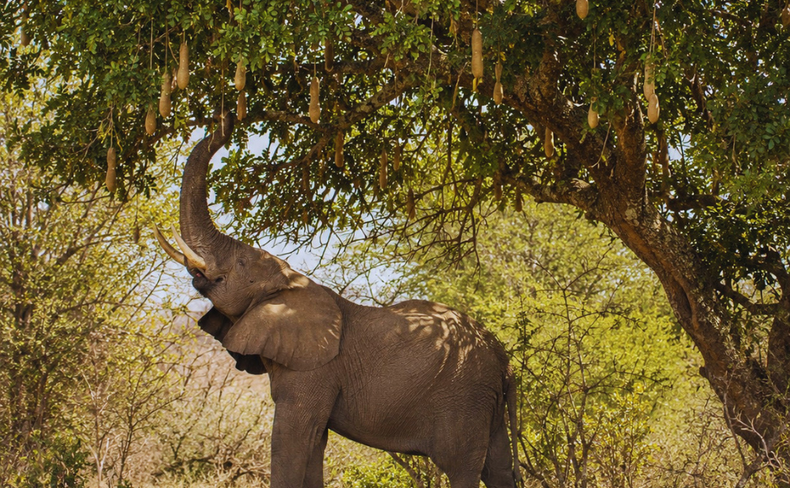
Yet, the wildlife views it quite differently. Elephants, hippos, baboons, and giraffes consume the fruit without apparent harm, acting as vital agents of seed dispersal. Across generations, human communities have learned to harness the tree's properties: when dried, roasted, or fermented, the fruit's toxicity drops, allowing it to be used in traditional brewing and as soothing poultices for skin ailments.
6. From Wild Fruit to Modern Skincare
Those same traditional applications have found a modern counterpart in the cosmetics laboratory. Today, Kigelia africana fruit extract is a sought-after ingredient in high-end face creams, serums, and sunscreens.
Laboratory studies confirm that the fruit contains bioactive compounds—specifically naphthoquinones and iridoids—possessing notable antioxidant, anti-inflammatory, and antimicrobial properties. It is a fascinating journey from the riverbanks of the African bush directly into our daily skincare routines.
7. A Monotypic Marvel
In the vast tapestry of the plant kingdom, the Sausage Tree stands entirely alone. Kigelia is a monotypic genus containing only a single species: Kigelia africana.
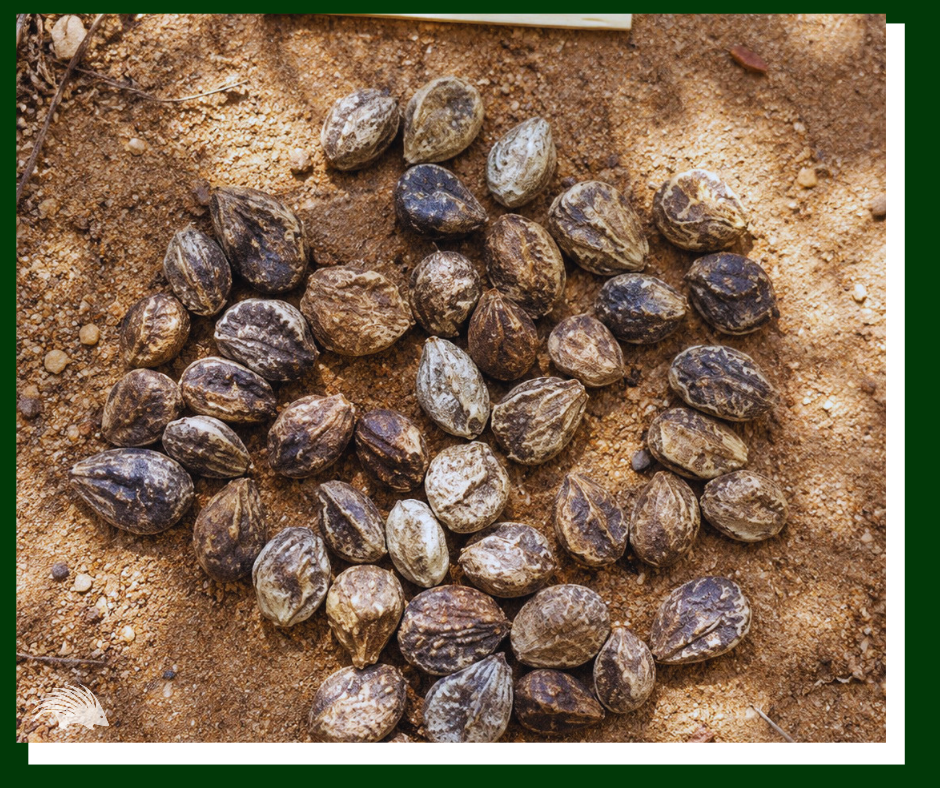
While it belongs to the Bignoniaceae family—sharing distant ancestry with the vibrant Jacaranda—its massive, vertebrate-dispersed fruit and bat-pollinated lifestyle set it apart. From the Afrikaans Worsboom to the Arabic designation translating as "the father of kit-bags," every culture that encounters this tree immediately recognizes its unmistakable signature.
8. A Long-Term Investment in the Next Generation
Nature often favors quick, ephemeral yields, but the Sausage Tree plays a patient, high-stakes game. Beginning its development in the warmth of the southern summer around December, the fruit clings to the branches through autumn and well into winter.
A single tree may display multiple generations of fruit simultaneously, with the previous season's crop still hanging when the new flowers arrive. By investing heavily in a few colossal fruits rather than thousands of small seeds, the tree ensures that only large, powerful animals like elephants and hippos are equipped to move them.
9. A Genuine Hazard in the Wind
There is an unmistakable gravity to the Sausage Tree—quite literally. When a ten-kilogram fruit hangs suspended several metres in the air, the physics involved demand our respect.
In calm weather, the flexible stalks hold fast. But when the Lowveld winds pick up, these heavy cylinders can dislodge with considerable force. It is a wise traveler who takes note of where they park their vehicle beneath a fruiting canopy.
10. An Unmistakable Landmark of the Lowveld
To travel through the southern reaches of Kruger National Park—along the Crocodile River near Marloth Park and routes like the S25 and S114—is to be greeted regularly by the silhouette of the Sausage Tree.
With its spreading canopy, maroon bell flowers, and immense hanging cylinders, it is one of the most easily identified trees in the region. Whenever you spot a fallen fruit resting on the earth below, pause for a moment. Look closely, and you will almost certainly find the bush coming alive around it.
Frequently Asked Questions
Why is it called the Sausage Tree?
The common name describes the enormous, cylindrical, grey-brown fruit hanging from long stalks beneath the canopy. In Afrikaans, it is the Worsboom, and the genus name Kigelia derives from the Mozambican Bantu word kigeli-keia, both celebrating its iconic shape.
Is the Sausage Tree fruit edible?
Not in its raw form. It contains compounds that cause skin irritation and gastrointestinal distress in humans. However, when dried, roasted, or fermented, it has been used traditionally for brewing and remedies, while wildlife such as elephants and baboons consume it safely.
What pollinates the Sausage Tree?
Epauletted fruit bats serve as the primary pollinators. Research demonstrates that their nocturnal visits result in vastly superior pollen deposition compared to other visitors, perfectly matching the flower's nightly opening times and scent profile.
Why is Kigelia africana in skin creams?
The fruit extract contains valuable bioactive compounds—specifically naphthoquinones and iridoids—known for their antioxidant, anti-inflammatory, and antimicrobial qualities, making it a popular addition to modern skincare formulations.
Is it dangerous to stand under a Sausage Tree?
Yes, in windy conditions. With fruit weighing up to 10 kg hanging high above, strong gusts can dislodge them, making it wise to avoid parking or camping directly beneath a heavily fruiting tree.
Where can I see Sausage Trees near Marloth Park?
They are common along the Crocodile River and throughout the riverine forests of southern Kruger, easily accessed via the Crocodile Bridge and Malelane gates.
Needles Lodge in Marloth Park places you right on the doorstep of these magnificent riverine habitats. Our expert guides are always ready to point them out on game drives and share the intricate stories of the bush. Get in touch to plan your visit.
Share This Post