
Discover the secret world of antlion sand‑pit traps in the Lowveld. Learn how these tiny predators engineer lethal traps and why they’re essential to the bush ecosystem.
The Steenbok: The Bushveld’s Tiny Phantom
Posted by Denis on Tue March 24, 2026 in Gamedrive, Safari, Kruger National Park, Fauna and Flora of Kruger National Park, and African Wildlife.
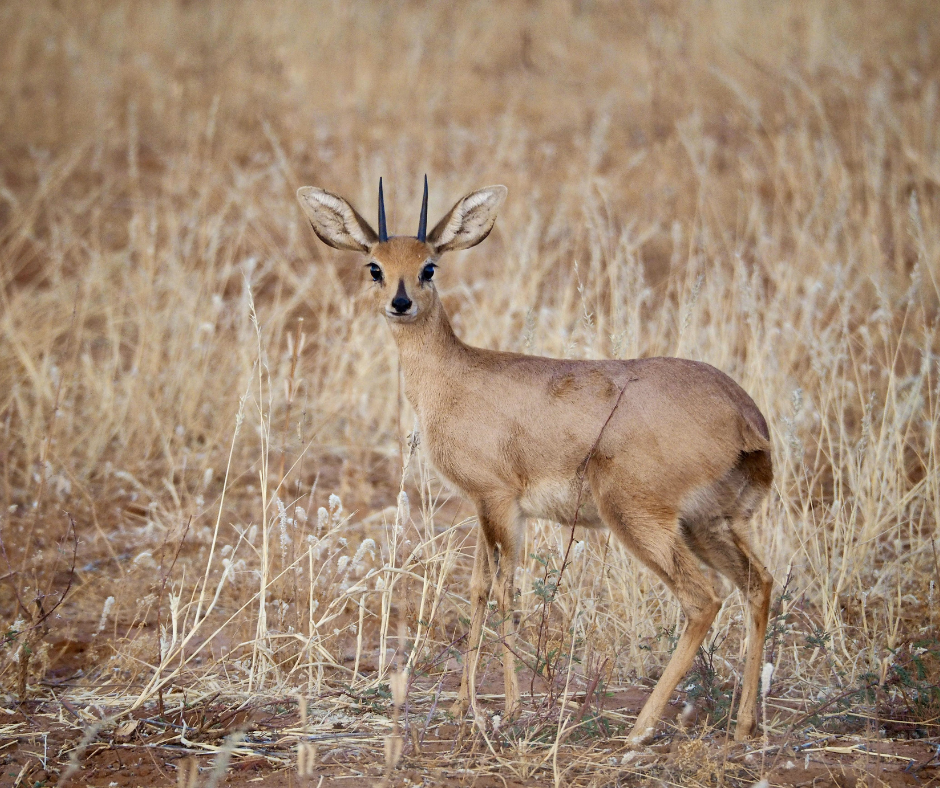
Discover the steenbok, one of Kruger National Park’s smallest antelope. Learn about its behaviour, habitat, and why spotting this shy bushveld resident is so special.
If you walk quietly through the African Lowveld at dawn, you might catch a glimpse of something small and delicate threading through the grass. It freezes for just a second — ears up, eyes wide — and then it’s gone. Vanished into the thicket like it was never there.
That’s usually how people meet the steenbok.
While a giraffe is hard to miss and a buffalo is hard to ignore, the steenbok (Raphicerus campestris) is more of a vanishing act. It survives by being subtle. It’s a master of the quiet life, relying on silence and staying low to the ground to stay off the radar.
Small Animal, Big Awareness
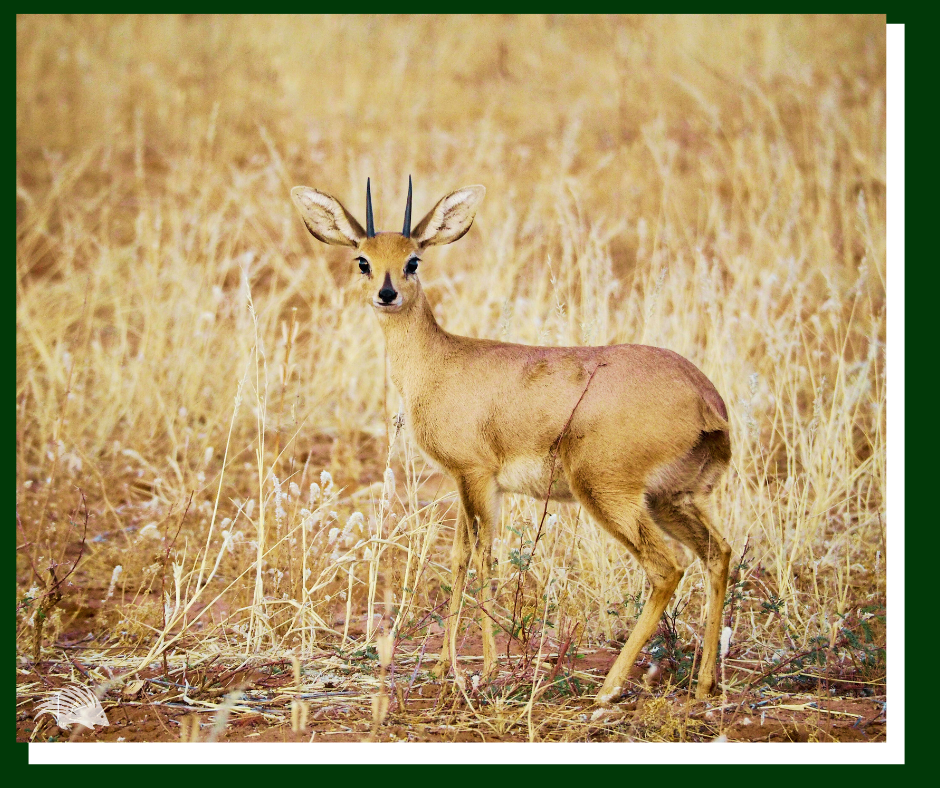
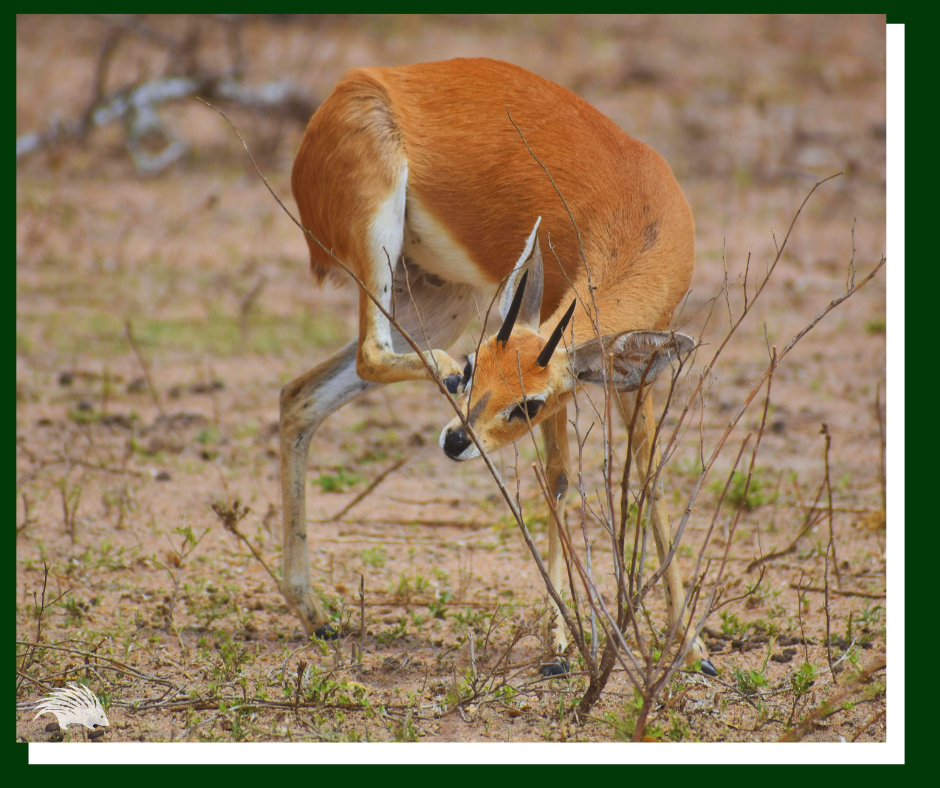
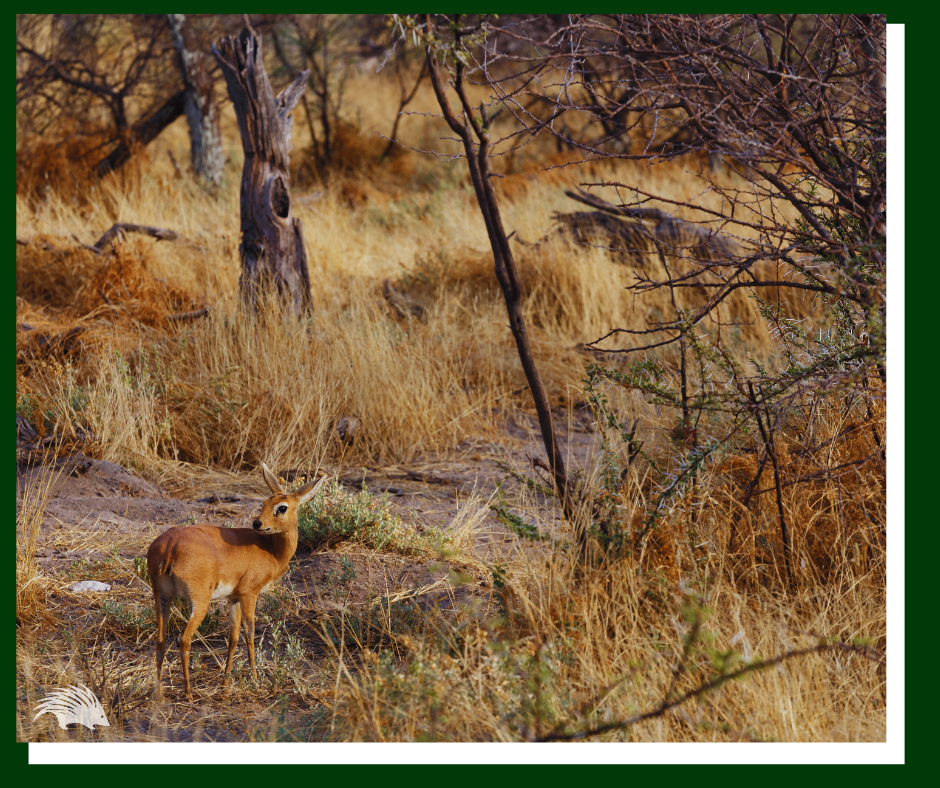
The steenbok stands about 45–60 cm at the shoulder and weighs somewhere between 8 and 12 kg — roughly the size of a medium dog, but far more elegant. Its coat is a warm reddish-tan that sits perfectly against dry grass and sandy soil, and those oversized ears give it a permanently startled look that’s frankly quite endearing.
Only the males have horns — short, straight spikes that rarely grow past 15 cm. Nothing dramatic, but perfectly suited to sorting out the occasional territorial disagreement.
Those ears, though. They’re almost comically large for its body, and they’re constantly moving, scanning, adjusting. In a landscape where the threats range from jackals on the ground to martial eagles overhead, having that kind of early warning system is everything.
A Creature That Prefers Its Own Company
Most antelope are herd animals — safety in numbers, all of that. The steenbok goes the other way entirely.
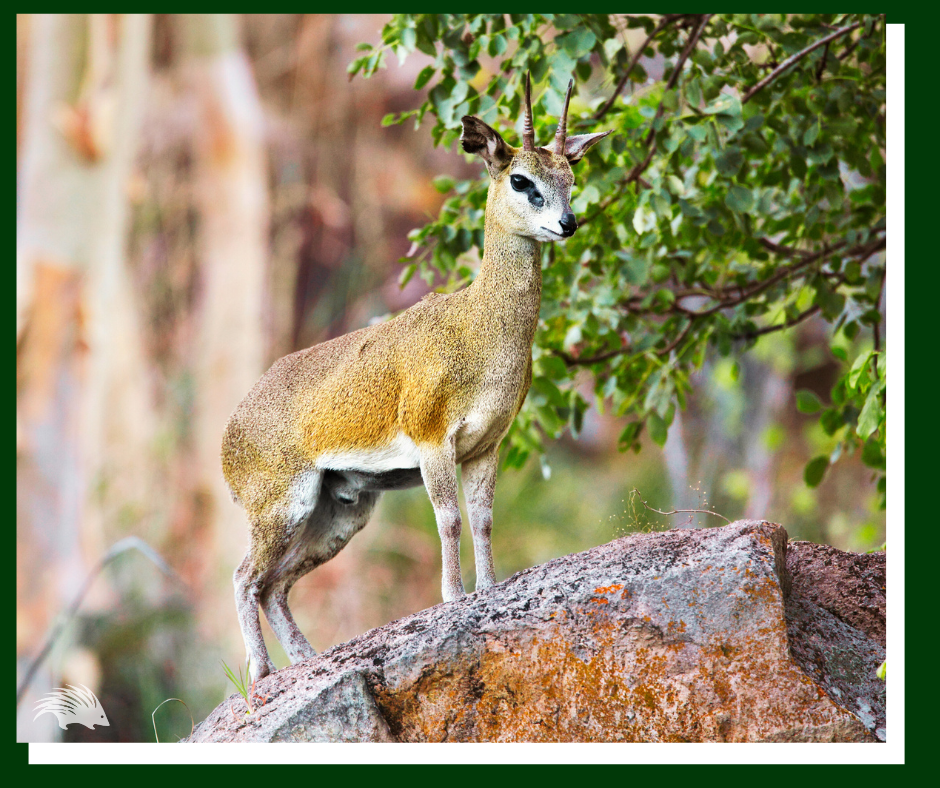
These animals are solitary and territorial. You’ll usually see them alone, occasionally in pairs during breeding season. Each one has its own patch of ground, marked out with scent glands and quietly defended.
It’s a very different way of living compared to the impala herds that move through the same area. Where impala are loud and social and constantly in motion, the steenbok moves slowly through its territory on its own, nibbling at leaves and seeds and tender shoots, doing its own thing.
If you do startle one, it’ll take off in a zig-zag sprint — sharp, unpredictable changes of direction — before suddenly stopping and crouching low in the vegetation. It’s betting that between the speed and the camouflage, you’ll lose track of it. More often than not, it’s right.
Made for the Dry Bush
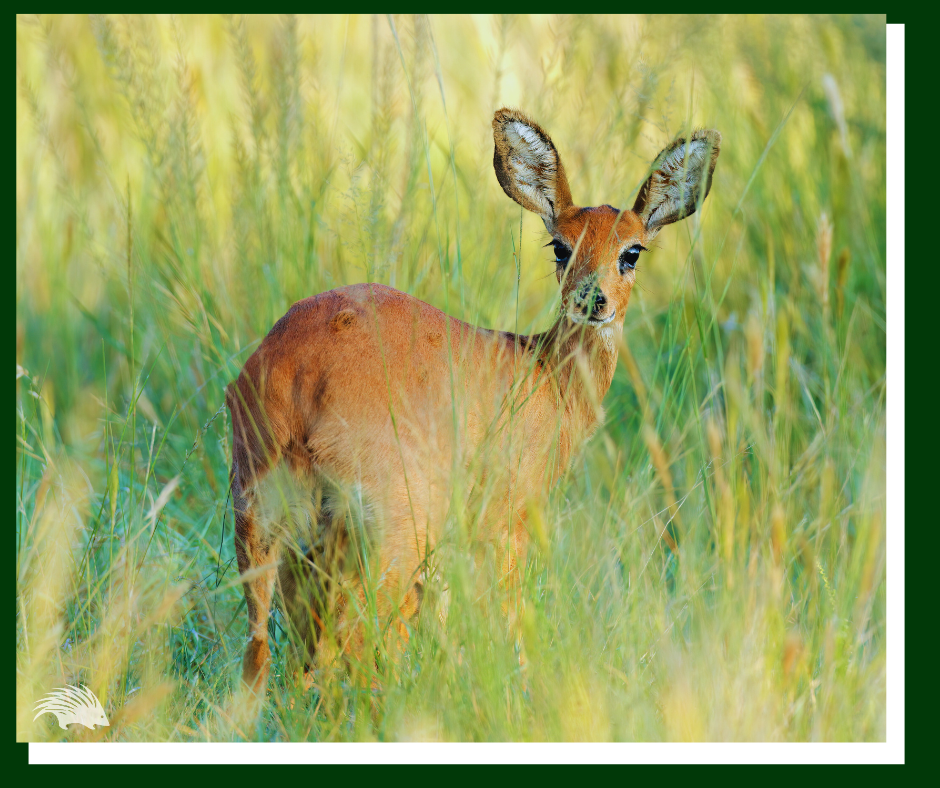
The steenbok is a browser, not a grazer, which matters more than it might sound. It eats leaves, herbs, wild fruits, and shoots rather than grass — and that diet gives it a real advantage in dry conditions where grazing animals start to struggle.
Steenbok can go without drinking water entirely, pulling all the moisture they need from the plants they eat. In an environment where water can be scarce for months at a time, that’s a remarkable adaptation.
Their flexible diet means they’re comfortable across a range of habitats — open savanna, dense bushveld thickets, even semi-arid areas.
Life as Prey
Being small in the African bush means being on someone’s menu. The steenbok lives under constant low-level pressure from leopards, caracals, jackals, pythons, and birds of prey — and that shapes everything about how it behaves.
Its first move is almost always to freeze. If that doesn’t work and it has to run, it zig-zags. And rather than sprinting across open ground where it’s exposed, it aims for the nearest thicket and disappears into it.
Where to Find Them
Steenbok are scattered widely across southern Africa, but seeing one still feels like a small reward. They like open savanna with patches of scrub — somewhere with both food and cover close at hand.
Around Kruger and Marloth Park, your best chances are along quiet sandy roads, at the edges of clearings, or near bushy thickets. Early morning and late afternoon are the sweet spots, when they’re actively feeding and the light is good.
Guests at Needles Lodge sometimes encounter them right on the property — a small antelope stepping carefully through the natural bushveld that surrounds the lodge, doing exactly what it would be doing if no one was watching.
Why They Matter
Easy to overlook, but not unimportant. As browsers, steenbok help manage vegetation by grazing young shoots before they can dominate. That keeps plant diversity ticking along. And as prey, they feed into the wider food chain that holds the whole ecosystem together.
A Few Quick Facts
- Scientific name: Raphicerus campestris
- Height: 45–60 cm at the shoulder
- Weight: 8–12 kg
- Diet: Leaves, shoots, fruits, herbs (browser, not grazer)
- Lifespan: Around 7–10 years in the wild
- Social structure: Mostly solitary
- Defence: Freeze first, zig-zag second
The Ones You Almost Miss
Most people come here to see the lions and elephants, and for good reason—those sightings are incredible. But sometimes it’s the smaller, quieter moments that actually stick with you.
Like spotting a steenbok frozen in the grass, clearly betting on the fact that you haven't noticed it yet. Or watching those massive ears swivel toward a sound you can't even hear. Then, in a second, there’s a quick flash of red fur and they're gone, leaving the bush looking like nothing ever happened.
The bush isn't just about the big, dramatic encounters. There is a whole other layer of life happening at eye level if you're patient enough to look for it, and the steenbok is easily one of the best parts of that world.
At Needles Lodge, that world is right outside. You just have to slow down enough to notice it.
Further Reading
Antlion Traps: Sand-Pit Assassins of the Bushveld
Wed February 11, 2026
Read This Article
How Herbivores Shape the Bush: The Quiet Architects of the Lowveld
Tue January 20, 2026
Read This Article
Discover how herbivores like elephants, impala, and wildebeest act as the architects of the Lowveld. Learn how they shape the Kruger National Park and Marloth Park.
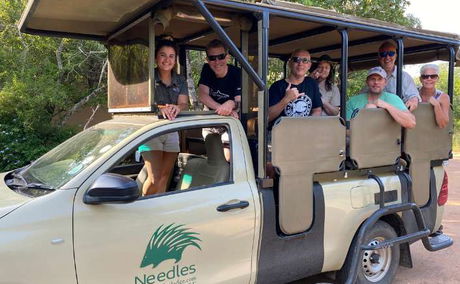
Self-Drive vs. Guided Safari in Kruger: Pros, Cons, and What to Expect
Wed March 5, 2025
Read This Article
Planning a Kruger National Park safari? Explore the pros and cons of self-drive vs. guided game drives, and discover which safari experience is best for you!
Share This Post