
Real, practical safari tips from people who’ve been there. From guided drives to packing, seasons, and stillness in the bush — here’s what first-time visitors wish they’d known before Kruger.
A practical guide for international visitors planning their first or next Kruger safari from outside South Africa, with a month-by-month timeline, packing list, health checklist, and what to expect on the ground.
Planning a Kruger safari from another country involves more moving parts than most trips. You are booking flights to Johannesburg, arranging a connection to the Lowveld, sorting health requirements, choosing when to go, and deciding where to stay in or near the park. None of it is complicated, but there is an order to it.
This guide works through the full 90 days before departure. It covers the decisions that need to be made early, the things that can wait, and the practical realities of the park itself. References to Needles Lodge throughout are specific to guests staying in Marloth Park and using the Crocodile Bridge and Malelane gates.
Quick Overview
- Park: Kruger National Park, Mpumalanga, South Africa
- Nearest international airport: OR Tambo International Airport in Johannesburg, then connecting flight or drive to the Lowveld
- Domestic airport: Kruger Mpumalanga International Airport (MQP), near Nelspruit/Mbombela
- Best game viewing: May to September during the dry season; September and October for peak animal concentration
- Malaria: Low-to-moderate risk; prophylaxis recommended, especially November to April
- Minimum recommended stay: 3 nights for a meaningful introduction; 5 to 7 nights is better
Step One: Choose Your Dates (180+ Days Out)
The single decision that shapes everything else is when you go. Kruger is open year-round but game viewing changes significantly between the wet and dry seasons.
Dry Season: May to September
The dry season is when most international visitors come. Vegetation thins out as the grasses die back, animals concentrate around the remaining water sources, and sightings are more frequent and easier to read. Temperatures in June and July are mild in the day and cold before dawn on game drives. August and September are hot, with animals pushed hard toward the rivers and waterholes.
September and early October are often cited as the peak of the dry season for animal concentration. Water is at its scarcest, herds are large, and predator activity around those water sources is high. The trade-off is heat: daytime temperatures regularly exceed 35 degrees Celsius.
Malaria risk is lower in the dry season, though not absent.
Wet Season: November to April
The wet season brings rain, green vegetation, and newborn animals in November and December. Game is harder to spot through the thicker bush, but birdwatching peaks as summer migrants arrive. Malaria risk is higher from November to April, when mosquitoes are most active.
April and May are a useful shoulder period: the rains are ending, the vegetation is starting to thin, temperatures are coming down, and visitor numbers are lower than the peak winter months.
School Holidays and Crowds
South African school holidays fall in late June to mid-July, late September to early October, and mid-December to mid-January. The park is significantly busier during these periods, particularly in the southern section. If you are travelling without children and have flexibility, the weeks just outside these windows offer good game viewing with fewer vehicles on the road.
Read more: Kruger National Park: A Guide to Seasons and Safari Adventures
Step Two: Book Flights (180+ Days Out)
Most international routes into South Africa land at OR Tambo International Airport in Johannesburg. From there, you have two options to reach the Lowveld.
Option A: Connecting Flight to Kruger Mpumalanga International Airport (MQP)
Kruger Mpumalanga International Airport (MQP) is near Nelspruit (Mbombela), about 45 minutes from Marloth Park. Domestic flights from OR Tambo take around an hour. Several airlines operate this route, including FlySafair and Airlink. This is the quickest option if you want to minimise road time on arrival day.
Option B: Drive from Johannesburg
The drive from OR Tambo to Marloth Park is around 4.5 to 5 hours on the N4 highway. It is a straightforward road on tar throughout. Many visitors hire a car at OR Tambo and drive themselves, which also gives flexibility for day trips once you arrive. If you plan to drive yourself inside Kruger, a standard sedan car is fine for the main tar roads. The gravel loops benefit from a higher clearance vehicle but are manageable in a standard car at slow speeds.
Book flights as soon as your dates are confirmed. OR Tambo connections and the MQP route can fill during peak season.
Step Three: Book Accommodation (180+ Days Out)
Accommodation in and around Kruger falls into two broad categories: SANParks camps inside the park, and private lodges and guesthouses in the surrounding areas.
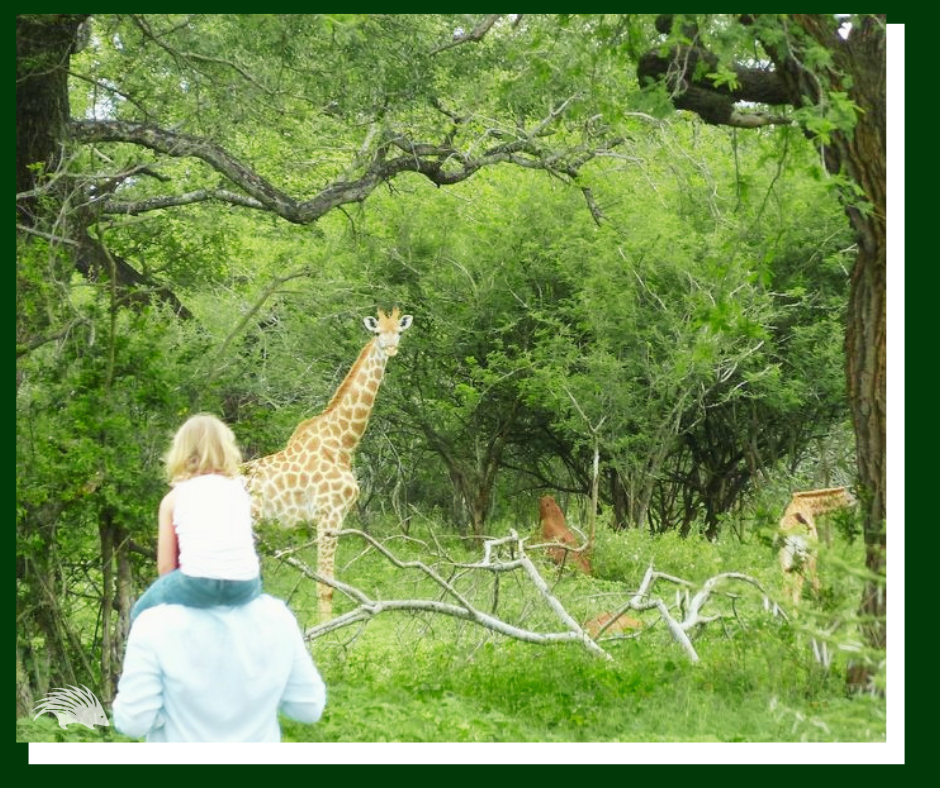
Marloth Park is a private wildlife area directly adjacent to Kruger's southern boundary, separated from the park by the Crocodile River. It is unfenced toward the river side, and smaller wildlife, including impala, nyala, warthog, bushbuck, various antelope and birds, move freely through the properties. The large predators do not enter Marloth Park.
Staying at a lodge in Marloth Park, such as Needles Lodge, puts you within a 10 to 20 minute drive of either the Crocodile Bridge or Malelane gates. You enter the park for your game drives and return to the lodge for meals and evenings. The atmosphere is quieter than a SANParks camp, and the lodges typically include breakfast and dinner.
For peak season, from June to September, booking 5 to 6 months ahead is advisable.
If Needles Lodge is your first choice, we recommend booking at least six months in advance, as reservations tend to fill up quickly with many of our past guests returning to enjoy our lovely neck of the bush once again.
Read more: The Benefits of Choosing Marloth Park Over Other Safari Destinations
Step Four: Sort Health Requirements (60 to 45 Days Out)
Malaria
Kruger is a low-to-moderate malaria risk area. The risk is highest from November to April during the wet season and lower but not absent from May to October.
Consult your doctor or a travel clinic at least 6 weeks before departure. Do not self-prescribe. No malaria prophylactic is 100 percent effective: use insect repellent, wear long sleeves and trousers after dark, and sleep in a screened or air-conditioned room.
Yellow Fever Certificate
If you are travelling to South Africa from or through a yellow fever endemic country, including parts of sub-Saharan Africa and South America, you will need a valid yellow fever vaccination certificate to enter. Check the current list with your travel clinic or the South African embassy for your country.
Other Vaccinations
South Africa does not require any vaccinations for entry from most countries, but standard travel vaccinations are worth reviewing with your doctor: hepatitis A, typhoid, and tetanus are commonly recommended. Check that your routine vaccinations are current.
Travel Insurance
Travel insurance that covers emergency medical treatment and evacuation is not optional for this trip. Check that your policy specifically covers safari activities and that it is valid in South Africa.
Please Note: The information above is provided as a helpful guide and is accurate to the best of our knowledge at the time of writing. As health recommendations and entry requirements can change, we strongly encourage all guests to consult their doctor, travel clinic, and relevant authorities before travelling to South Africa. Needles Lodge cannot be held responsible for changes to health regulations, vaccination requirements, or medical advice.
Step Five: Check Visa Requirements (60 Days Out)
Citizens of most Western European countries, the United States, Canada, Australia, New Zealand, and many other nations can enter South Africa visa-free for up to 90 days for tourism. Citizens of some countries, including China and India, can apply for an e-Visa online before arrival.
Entry requirements: your passport must be valid for at least 30 days beyond your planned departure date and must contain at least two blank pages for entry stamps. The passport must be in good condition. You will need a return or onward ticket.
Entry requirements change. Verify current requirements with the South African embassy or high commission for your country before booking. Do not rely on third-party sources for visa information.
Travelling with Children
If a child is travelling with only one parent or with neither biological parent, South African border control requires an original birth certificate and, in some cases, a notarised parental consent letter from the absent parent. These requirements are strictly enforced. Check the current requirements with the South African Department of Home Affairs or your nearest embassy well in advance.
Step Six: Pack Correctly (30 Days Out)
Clothing
Kruger game drives start early and the air is cold before sunrise, even in summer. Layer up for the morning and strip down as the day warms. The general principle: neutral colours such as khaki, olive, grey, and brown for game drives; brighter colours are fine for evenings at the lodge. White, black, dark blue, and bright blue are worth avoiding in the field as they are conspicuous to wildlife and to biting insects.
- Lightweight fleece or jacket for early morning drives, essential even in summer
- Long-sleeved shirts and long trousers for evenings, for mosquito protection
- Comfortable walking shoes or trail runners
- Wide-brimmed hat and sunscreen, SPF 50 minimum
- Sunglasses
Equipment
- Binoculars, 8x42 or 10x42 are the most useful magnification range
- Camera with a zoom lens if photography is a priority, 300mm or longer
- Power bank and adapter for South African plugs, Type M, three round pins
- Headlamp or torch for camp use
Health and Documents
- Malaria prophylaxis, prescribed and started on schedule
- Insect repellent containing DEET, 40 percent or higher
- Antihistamine cream for insect bites
- Copies of passport, travel insurance, and booking confirmations, paper and digital
- Emergency contact numbers for your travel insurer
Step Seven: Understand the Park before You Arrive (2 Weeks Out)
Gates, Opening Times, and Conservation Fees
Kruger's gates open and close with the sun. Times vary by month, from around 05:30 in summer to 06:00 in winter, and from 17:30 in winter to 18:30 in summer. Being outside the gate before it opens puts you in position for the best of the morning activity. The gate will not open early.
International visitors pay a daily conservation fee to enter the park. Fees are paid at the gate by card. The fee is separate from any accommodation charges inside the park.
From Needles Lodge, the Crocodile Bridge gate is approximately 10 minutes by car, and the Malelane gate is around 15 to 20 minutes. Both give access to the southern section of the park, which has some of the highest animal densities in Kruger.
Driving in the Park
Speed limits inside Kruger are 50 km/h on tar roads and 40 km/h on gravel. These are enforced and fines are issued. More practically, driving slowly is how you see things: a vehicle moving at 20 km/h with windows down covers far more than one rushing between camps.
You may not get out of your vehicle except at designated picnic sites and rest camps. This is a firm rule, not a suggestion. Animals in Kruger are wild and unpredictable.
Fill your fuel tank before heading into Kruger National Park. Some of the southern loops cover 80 to 100 km of gravel road.
What to Prioritise in the Southern Section
The Crocodile River forms the southern boundary of the park and is one of the most productive areas for sightings year-round, particularly in the dry season. The S28 and S114 roads along the river are reliable for elephant, hippo, crocodile, and often lion. The Lower Sabie area has consistently high leopard and lion activity. The H4-2 between Crocodile Bridge and Lower Sabie is one of the best tar roads in the southern section.
Safari Checklist
180+ Days Out
- Decide on dates, taking into account season, school holidays, and malaria risk
- Research accommodation options
- Book accommodation as soon as dates are confirmed
- Book flights
60 to 75 Days Out
- Arrange car hire at OR Tambo or MQP if driving yourself
- Book a travel clinic appointment
- Check visa requirements with the South African embassy for your country
- Obtain travel insurance with medical evacuation cover
45 to 60 Days Out
- Attend travel clinic appointment
- Get malaria prophylaxis prescription and fill it
- Check yellow fever certificate requirements if travelling from an endemic country
- Confirm your passport has 30 days validity beyond departure and two blank pages
- If travelling with children: confirm documentation requirements for border control
30 Days Out
- Purchase or check binoculars
- Source insect repellent with 40 percent DEET or higher
- Check South African plug type, Type M, and buy adapter if needed
- Confirm SANParks gate times for your travel months
- Check conservation fee amounts on the SANParks website
- Download the SANParks app, useful for bookings and gate times
2 Weeks Out
- Confirm all bookings and save copies on your phone and in email
- Check gate opening times for your specific travel months
- Note emergency contacts: travel insurer, nearest hospital to the Lowveld, lodge number
- Start malaria prophylaxis if your medication requires it before arrival, Doxycycline requires one week; Malarone requires one to two days
On Arrival
- Fill fuel tank before entering the park on day one
- Have card ready for conservation fee payment at the gate
- Set alarm for gate opening time on your first morning
- Apply insect repellent each evening before dusk
Frequently Asked Questions
Do I need a visa to visit South Africa for a Kruger safari?
Citizens of most Western European countries, the United States, Canada, Australia, and New Zealand can enter South Africa visa-free for up to 90 days. Citizens of some countries, including China and India, can apply for an e-Visa online. Your passport must be valid for at least 30 days beyond your departure date and must have two blank pages. Confirm current requirements with the South African embassy for your country before booking.
Do I need malaria tablets for Kruger National Park?
Kruger is a low-to-moderate malaria risk area. Prophylaxis is recommended for all visitors, and is particularly important if you travel between November and April when mosquito activity is highest. The most commonly prescribed medication is Malarone, atovaquone/proguanil, taken daily from one to two days before arrival through seven days after departure. Consult your doctor or travel clinic at least six weeks before travel.
What is the best time of year to visit Kruger National Park?
The dry season from May to September gives the best game viewing conditions. Vegetation is sparse, animals concentrate around water, and sightings are more frequent. September and early October are peak for animal concentration but also the hottest months. May and June offer good game viewing with milder temperatures and fewer visitors than the July school holiday peak. The wet season, from November to April, has denser bush but rewards birdwatchers and those who want to see newborn animals.
How do I get from Johannesburg to Kruger National Park?
The two main options are a domestic connecting flight from OR Tambo International to Kruger Mpumalanga International Airport, MQP, near Nelspruit, which takes about an hour, or driving the N4 highway from Johannesburg, which takes around 4.5 to 5 hours. From Marloth Park and Needles Lodge, both the Crocodile Bridge and Malelane gates into southern Kruger are within a 10 to 20 minute drive.
How many days do I need at Kruger National Park?
Three nights gives you a meaningful introduction, with time for around five or six game drives. Five to seven nights allows you to explore different areas, follow up on animal activity, and slow down enough to appreciate the detail of the bush. Shorter visits are possible but reduce the chance of seeing the full range of wildlife, which often takes a few days to reveal itself. Read more: How Many Days Do You Really Need on Safari in Kruger National Park?
Can I drive myself through Kruger, or do I need a guide?
The roads are well-maintained, signposted, and navigable in a standard car on the tar routes. You do not need a guide to enter or drive the park. Guided game drives are available through SANParks camps and private lodges such as Needles Lodge, and are worth considering for at least one or two drives, particularly if you are new to reading animal behaviour and tracking. Read more: Self-Drive vs. Guided Safari in Kruger: Pros, Cons, and What to Expect

Share This Post