
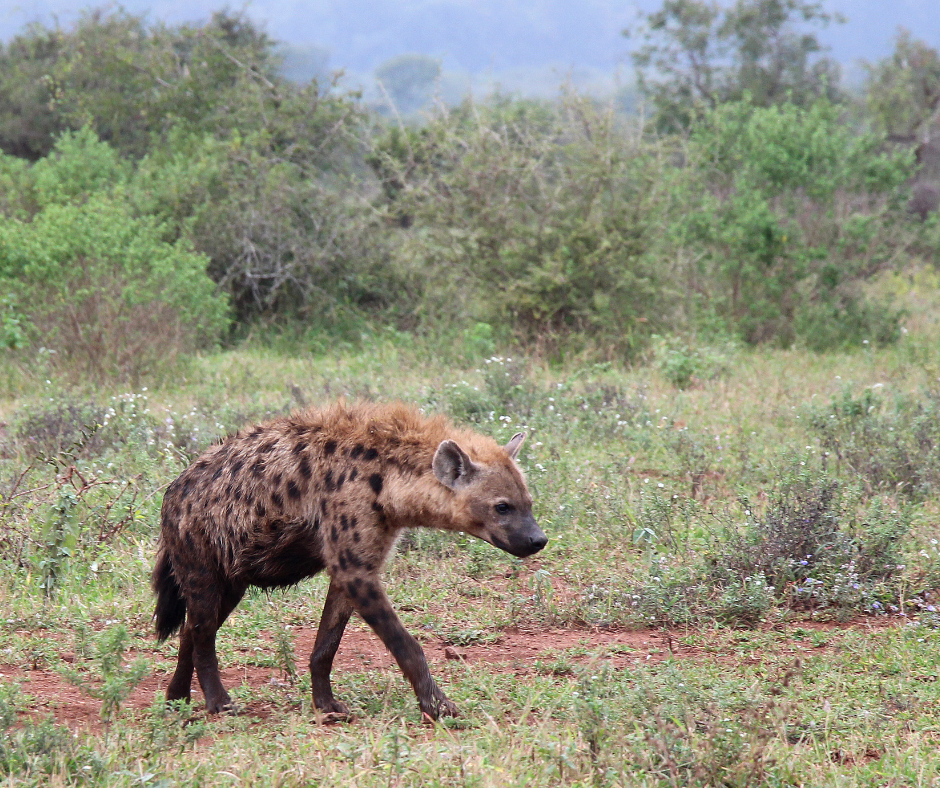
The spotted hyena (Crocuta crocuta) is one of the most misread animals in Africa. Here is what the science actually says about this common but little-understood resident of Kruger National Park.
Most people know the spotted hyena as the cackling scavenger from wildlife documentaries. The real animal is considerably more interesting. It is a capable hunter, a social sophisticate, and the source of one of the most recognisable sounds in the African bush. Guests at Needles Lodge in Marloth Park hear that sound on early morning drives into Kruger, before the heat builds and the animals settle into shade.
Quick Facts
- Scientific name: Crocuta crocuta
- Weight: Female 45 to 85 kg; male 40 to 55 kg
- Habitat: Savanna, woodland, and bushveld across sub-Saharan Africa
- Status: Least Concern (IUCN), declining outside protected areas
- Where to see them near Marloth Park: On game drives into Kruger via Crocodile Bridge and Malelane gates
1. The Laugh Is Not Laughter
The sound that gave the spotted hyena its other name, the laughing hyena, is not an expression of amusement. The giggle is a high-pitched, staccato call produced during social conflict: when an animal is under pressure from a dominant clan member, competing at a kill, or fleeing an attack. It signals anxiety, submission, or frustration.
Research has found that each animal's giggle is acoustically distinct. The pitch encodes the caller's age and rank: higher-pitched giggles come from younger, lower-ranking animals; the calls of dominant females are lower and more controlled. A listening hyena can identify who is calling, how old they are, and where they sit in the hierarchy, all from a single call.
2. They Are Not Related to Dogs
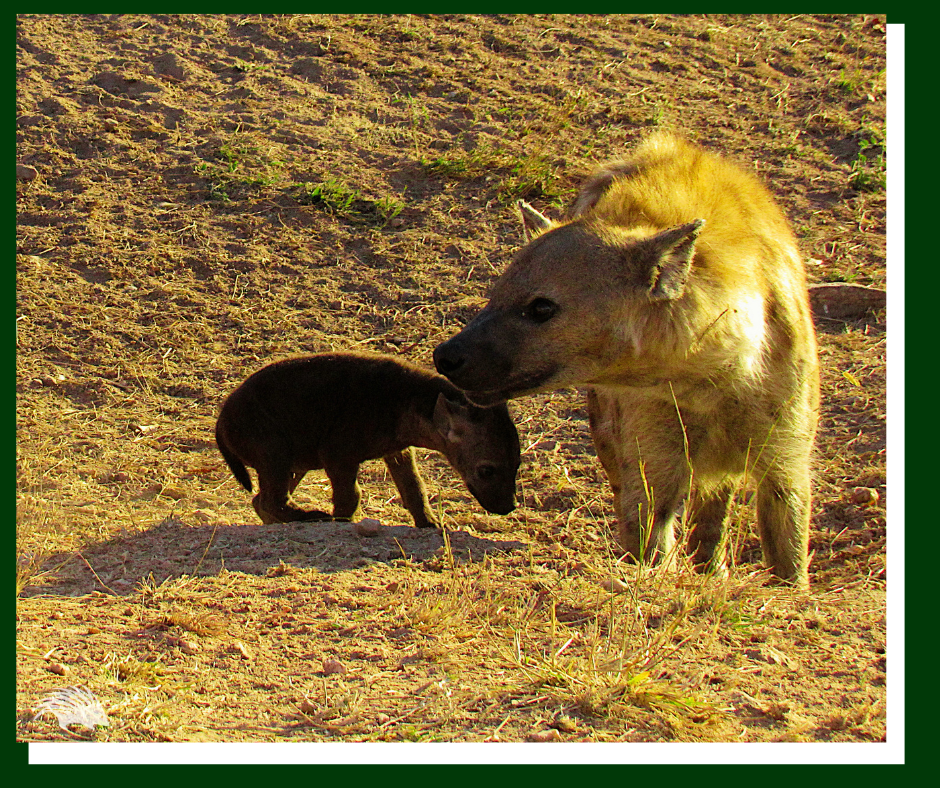
The spotted hyena looks like a large, rough-coated dog, and behaves in ways that invite the comparison. It is not a dog. The family Hyaenidae split from other carnivore lineages around 30 million years ago. The hyena's nearest living relatives are mongooses and civets. Dogs and hyenas arrived at similar body plans through convergent evolution, not common descent.
There are four living species in the family: the spotted hyena, the brown hyena, the striped hyena, and the aardwolf, which eats almost exclusively termites and weighs around 9 kilograms. Of the four, only the spotted hyena produces the giggle. It is also the only one in which females are consistently larger than males.
3. Females Outrank Every Male in the Clan
Spotted hyena society is female-dominated. Females are larger than males by up to 10 percent in body weight and 20 percent in bulk, and every female in a clan outranks every immigrant male. Rank is matrilineal: a female cub inherits her position just below her mother, above all lower-ranking adult females. She arrives at that rank as a cub and holds it for life.
Male cubs have a harder path. When they reach maturity they leave the natal clan and join another as low-ranking immigrants, often spending years at the bottom of the hierarchy. Advancement comes through patience, deference, and time, not through aggression.
4. They Kill Most of What They Eat
The scavenger image is largely inaccurate. Hans Kruuk's fieldwork in the Ngorongoro Crater, published in 1972, established that spotted hyenas kill the majority of what they eat. In the Ngorongoro, lions scavenged from hyenas more often than hyenas scavenged from lions. The direction of theft depends entirely on who has the numbers at a carcass.
In Kruger, spotted hyenas hunt wildebeest, zebra, impala, kudu, and buffalo through endurance pursuit: identifying a target, separating it from the herd, and running it down over one to several kilometres, rotating lead runners as the prey tires. A single hyena can bring down a wildebeest. Their hunting success rate is around 30 to 50 percent depending on terrain and prey type.
5. Their Jaws Can Crack a Buffalo Femur
The spotted hyena generates a bite force of around 1,100 newtons, one of the highest of any land carnivore relative to body size. The skull and jaw musculature are built around this function: the teeth are thick and blunt rather than slicing, designed for crushing rather than cutting.
The consequence is that hyenas consume parts of a carcass that lions and leopards leave behind: bone, hide, hooves, and cartilage. They digest bone almost completely. Their droppings are white and chalky, composed mainly of calcium from crushed bone. A clan at a carcass typically leaves almost nothing behind.
6. Their Social Intelligence Compares to Primates
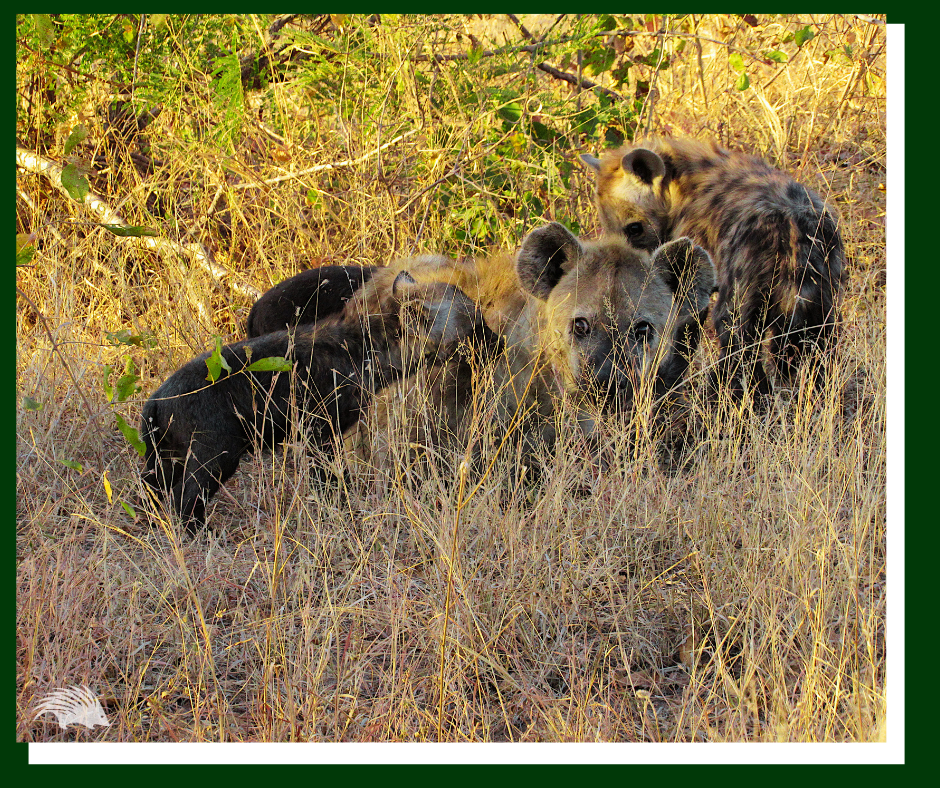
Research published in the Philosophical Transactions of the Royal Society found that spotted hyena societies resemble those of cercopithecine primates in size, structure, and patterns of competition and cooperation. Hyenas recognise individual clan mates, track third-party rank relationships, and use that knowledge when making social decisions.
A hyena deciding whether to challenge a rival at a kill is working through a calculation: who is present, who are their allies, who outranks whom, and what is the likely outcome. This is not instinct operating alone. It is social cognition of a kind more commonly attributed to primates.
7. The Whoop Carries Over Five Kilometres
The giggle gets the attention, but the whoop is the more important vocalization. It is a long, rising call that carries over open ground and dense bush for more than five kilometres. Clan members use it to locate each other across large territories, to announce their presence at a kill, and to call for reinforcements at territorial confrontations.
Lions have learned to associate hyena whooping with food and move toward it. In areas where both species are present at high density, a hyena clan that whoops too early at a kill risks losing it. Spotted hyenas communicate at least 11 distinct vocalizations, with some researchers documenting as many as 28.
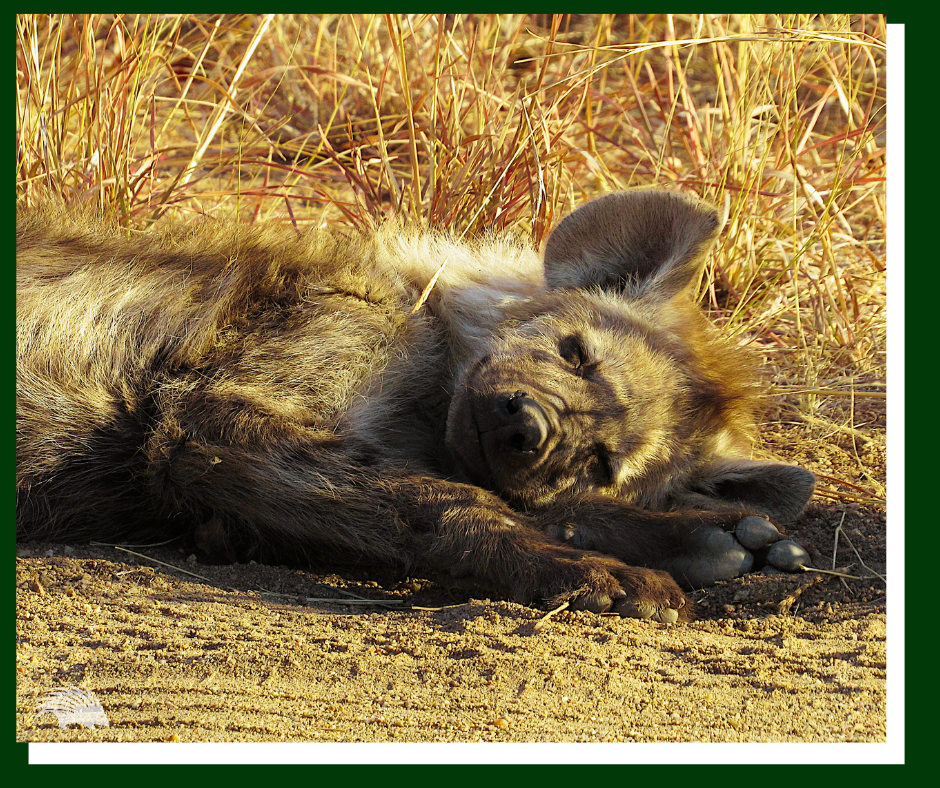
8. Cubs Are Born with Their Eyes Open
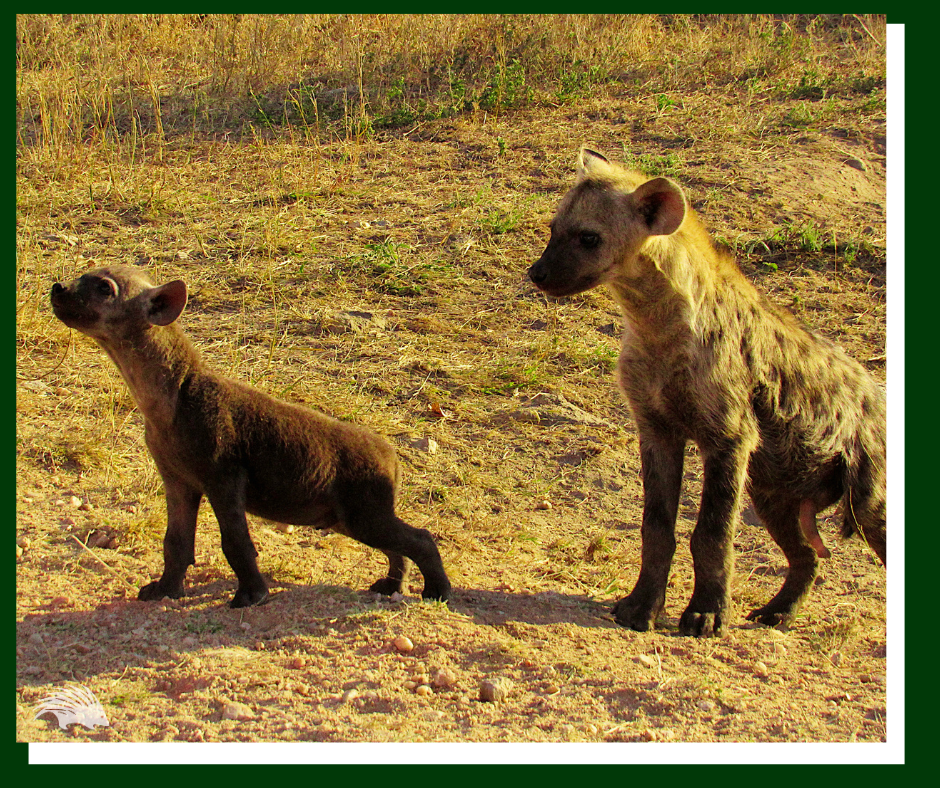
Most carnivores are born blind and helpless. Spotted hyena cubs arrive with their eyes open and their milk teeth already through. Within days they are mobile. Within weeks they are already testing rank relationships with den mates, which will define their social position for life.
Sibling competition is intense and sometimes lethal. Same-sex litters produce fierce rank contests from birth. Mortality among low-ranking cubs is significantly higher than among high-ranking ones, partly through direct aggression and partly through reduced access to milk at the den.
9. They Are Mostly Nocturnal, Which Is Why Most People Miss Them
Spotted hyenas are active mainly between dusk and dawn. In areas with high human activity, they shift further toward nighttime to avoid contact. This means that a midday game drive in Kruger may cover kilometres of good hyena habitat without a single sighting.
The best window is the first hour after the Kruger gates open, when hyenas are still active and moving back toward their resting areas. From Needles Lodge, both the Crocodile Bridge and Malelane gates are within a short drive, which makes it possible to be on the southern Kruger roads at first light.
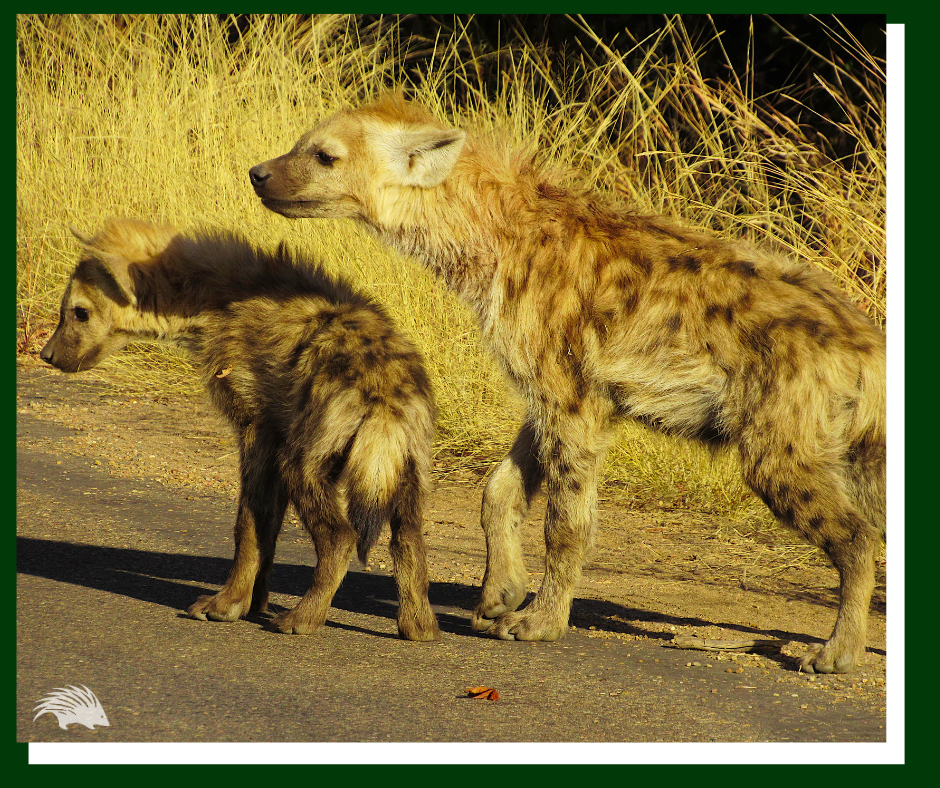
10. The White Droppings Are a Territorial Map
Spotted hyenas mark territory through a behaviour called pasting: depositing a white, waxy secretion from the anal pouch onto grass stalks at territory boundaries. The secretion has a strong, distinctive smell and carries information about the depositing animal's identity and status.
The white droppings scattered along roads and open areas in Kruger serve a similar function. A hyena investigating a dropping is reading a message: who was here, how recently, and what their rank is likely to be. Territory boundaries in Kruger clans are actively maintained and regularly contested, particularly when prey density shifts between seasons.
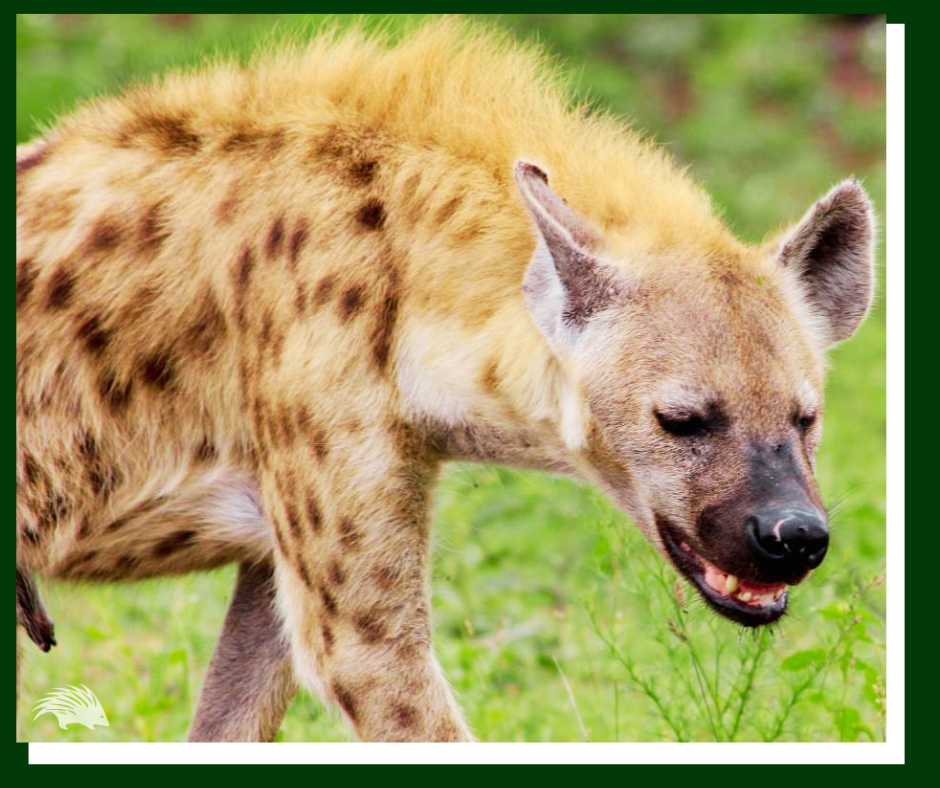
Frequently Asked Questions
Why do spotted hyenas laugh?
The giggle is a stress call, not an expression of amusement. It is produced when an animal is threatened, submitting to a dominant clan member, or competing at a kill. The pitch of the call encodes the caller's age and rank: lower-ranking animals produce higher, more frantic giggles; dominant females produce lower, steadier calls.
Are spotted hyenas more closely related to dogs or cats?
Neither. The family Hyaenidae split from other carnivore lineages around 30 million years ago. Their closest living relatives are mongooses and civets, which belong to the suborder Feliformia alongside cats. The dog-like appearance is the result of convergent evolution, not shared ancestry.
Are spotted hyenas hunters or scavengers?
Primarily hunters. Research established that spotted hyenas kill the majority of what they eat. In some ecosystems, lions scavenge from hyenas more often than hyenas scavenge from lions. They also scavenge opportunistically, but the scavenger-first description is inaccurate.
Can you see spotted hyenas in Marloth Park?
Spotted hyenas do not enter Marloth Park. They are seen on game drives into Kruger National Park, accessible from Marloth Park via the Crocodile Bridge and Malelane gates. Early morning drives into the southern section, particularly along the Crocodile River and the Lower Sabie area, give the best chance of sightings.
What does a spotted hyena whoop mean?
The whoop is a long-distance call that carries over five kilometres. Clan members use it to locate each other, announce their presence at a kill, and signal territorial boundaries. It is distinct from the giggle: a coordinating call rather than a stress response.
How intelligent are spotted hyenas?
Research published in the Philosophical Transactions of the Royal Society found that spotted hyena social intelligence is comparable to cercopithecine primates. They recognise individual clan mates, track third-party rank relationships among others in the clan, and use that knowledge when making social decisions at kills and territorial confrontations.
Plan Your Kruger Visit from Marloth Park
Needles Lodge in Marloth Park is a short drive from the Crocodile Bridge and Malelane gates into the southern section of Kruger. Our team can help you plan early morning drives timed to catch hyenas active before the heat of the day. Get in touch to plan your visit.
Share This Post