
Discover how each season transforms Marloth Park and Kruger’s bushveld. From dry winters to lush green summers, explore wildlife patterns and safari experiences at Needles Lodge.
The Warthog: Adaptable Survivor of the Savanna
Posted by Denis on Tue December 2, 2025 in Gamedrive, Safari, Kruger National Park, Marloth Park, Fauna and Flora of Kruger National Park, Needles Lodge, and African Wildlife.
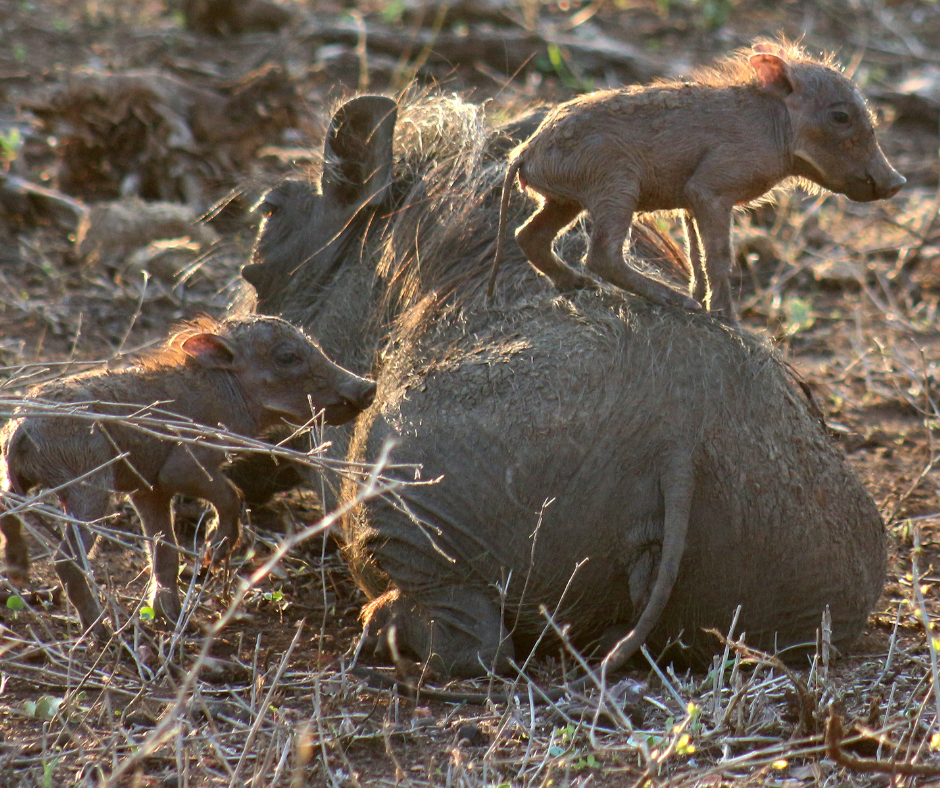
Discover the quirky charm and ecological role of warthogs in Kruger National Park and Marloth Park. Learn about their habits, social lives, and where to spot them near Needles Lodge.
The Whiskered Workhorses of the Bushveld
Not every African animal roars like a lion or rumbles like a hippo. Some, like the humble warthog, make their mark with charm, resilience, and a knack for gardening.
Often overlooked in favour of flashier wildlife, the warthog (Phacochoerus africanus) is one of the bush's unsung heroes. With their stout frames, upright tails, and those wonderfully warty faces, these tough little pigs have adapted brilliantly to life in the savannas of southern Africa—including right here in Marloth Park, where they often stroll through the open spaces around Needles Lodge.
Warts and All: What Makes a Warthog?
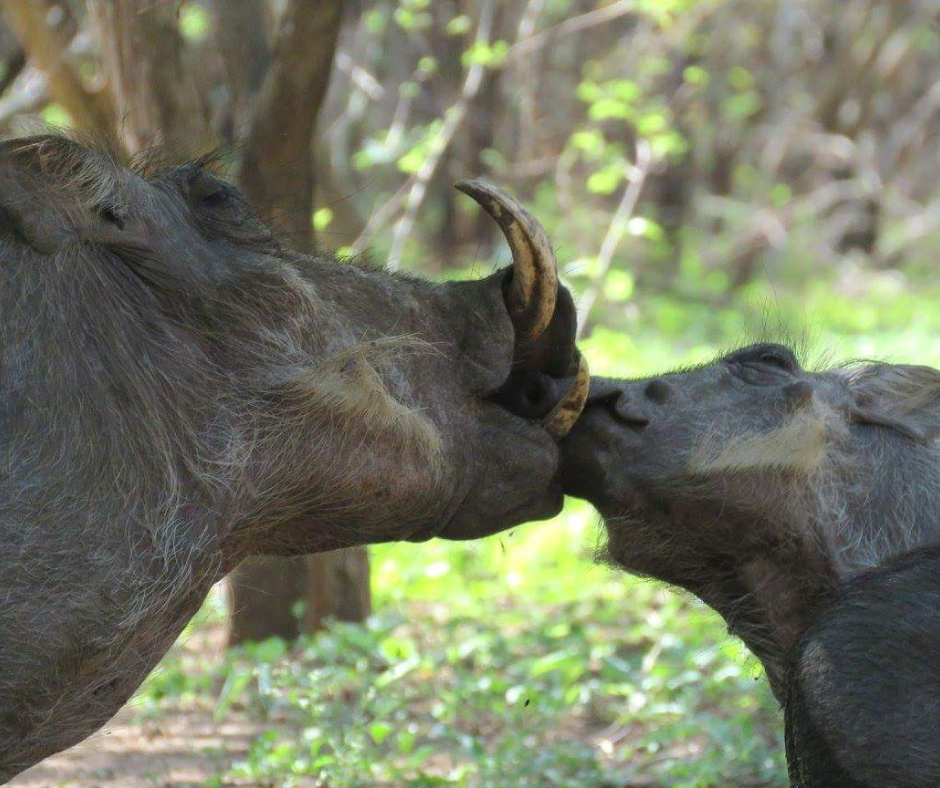
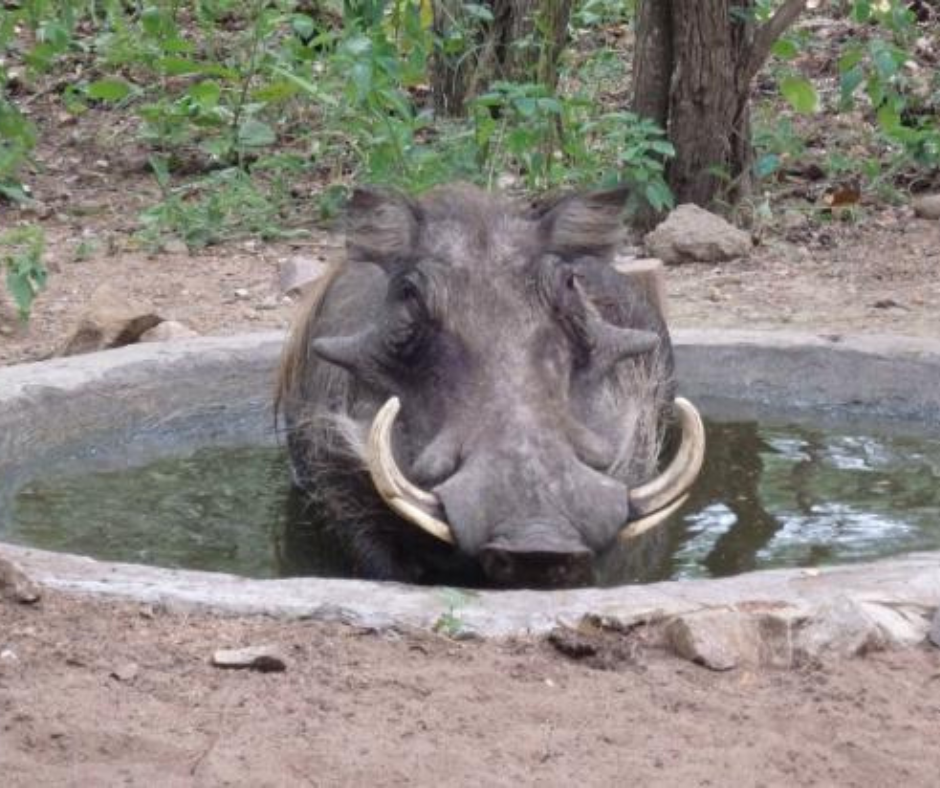
The warthog gets its name from the fleshy protrusions—or "warts"—on its face. These are not just for show. The large bumps on males act like built-in airbags, cushioning their heads during intense battles with rivals. Females have smaller warts, and both sexes sport curved tusks that double as digging tools and defensive weapons.
Their bodies may appear ungainly, but warthogs are built for speed. When threatened, they bolt with tails straight up like antennae—a comic sight that’s actually a clever signal to other fleeing family members.
Kneeling to Feed: A Signature Stance
One of the warthog’s most endearing behaviours is its tendency to kneel while grazing. With their short necks and long legs, lowering themselves onto calloused front “knees” helps them reach the ground efficiently, especially when foraging for short grasses and roots.
This kneeling, combined with their natural rooting and digging habits, turns them into nature’s gardeners. By breaking the soil, they aerate it—helping seeds germinate and grasses grow back thicker and greener.
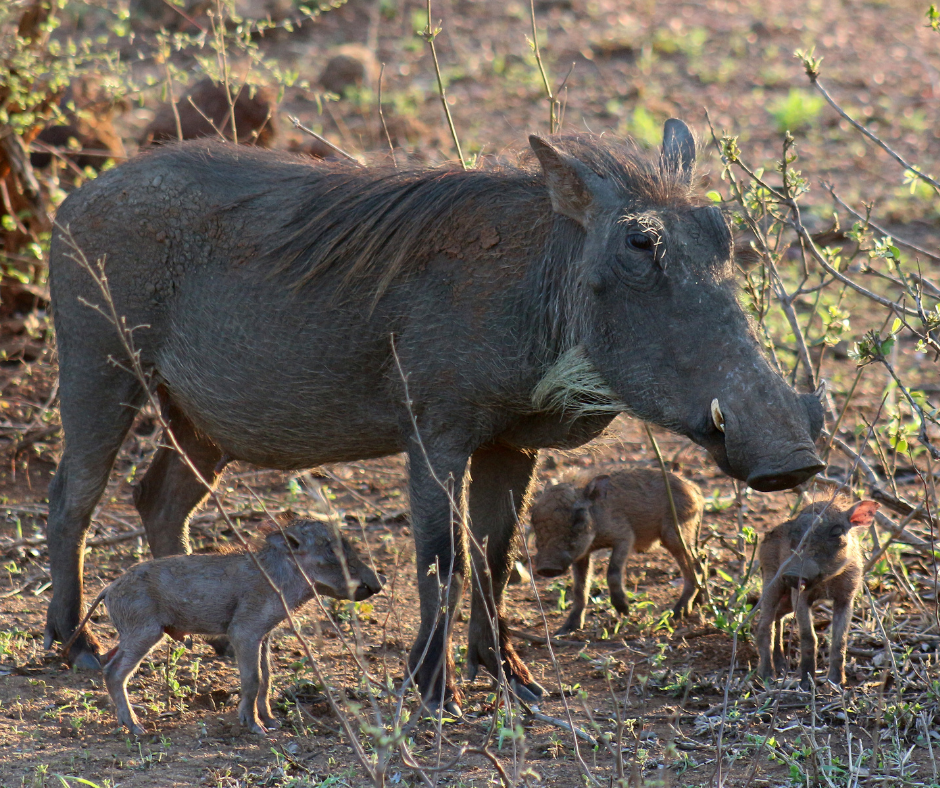
You’ll often see this ecological effort in action around Needles Lodge, where families of warthogs wander freely, snuffling through the grass and kneeling for a snack with piglets in tow.
Warthog Society: Small Families, Big Bonds
Warthogs live in small family groups known as sounders, usually consisting of a mother and her offspring. Adult males tend to be solitary or live in bachelor groups, joining females only during the mating season.
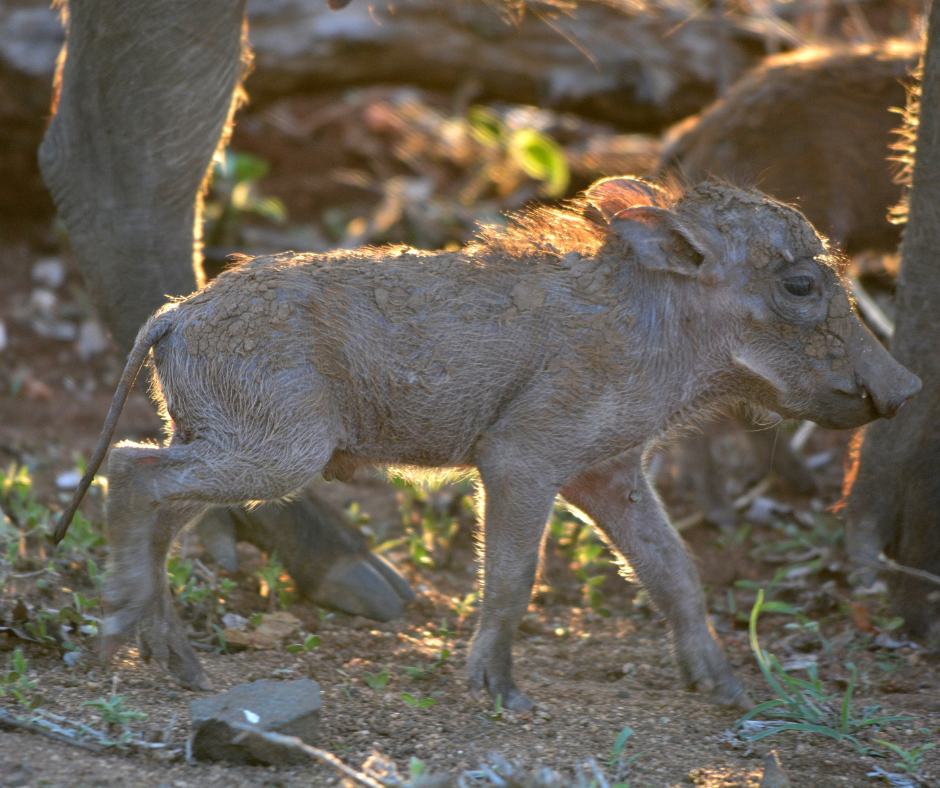
Sounders are tight-knit units, offering protection and social learning opportunities to young warthogs. It’s common to see a piglet mimic its mother’s foraging technique or follow her into a vacant aardvark burrow for an afternoon nap. These burrows serve as safe havens, especially during the hotter hours or when predators lurk nearby.
Built for Survival
Living in the open savanna brings challenges—namely predators like lions, leopards, and hyenas. But warthogs aren’t defenceless.
- They rely on excellent senses of smell and hearing to detect threats, as their eyesight is poor.
- Their tusks can inflict serious wounds.
- Speed—up to 50 km/h in short bursts—gives them a fair chance at escape.
- Warthogs often back into burrows, so they can charge out tusks-first at any attacker.
Despite these defences, warthogs are a favourite target of big cats. Watching their cautious movements near waterholes in Kruger National Park is a reminder of how survival in the wild is always a game of awareness and agility.
Ecosystem Helpers and Kruger Regulars
Much like elephants and hippos, warthogs play an important ecological role. Their rooting behaviour turns over topsoil, while their dung provides nutrients for insects and decomposers. Their abandoned burrows are reused by other species—porcupines, mongooses, and even owls.
In Kruger National Park, warthogs are widespread, especially in grassy areas near riverbeds and open plains. Visitors frequently spot them trotting across roads or grazing at rest stops.
And back in Marloth Park, these resident porkers are part of daily life. It’s not unusual for guests at Needles Lodge to share a peaceful moment with a family of warthogs grazing in the garden.
Warthogs After Dark
Although primarily diurnal (active during the day), warthogs sometimes venture out at twilight, especially during cooler months. This places them among Africa’s lesser-known nocturnal neighbours—creatures that navigate the bush under the stars.
Warthogs are cautious at night, relying on burrows or thick brush for protection. Yet, under the moonlight, you may glimpse their bristly backs and upright tails as they shuffle back home, piglets in tow.
The Warthog’s Gentle Reminder
Warthogs survive through adaptability rather than brute strength or aggression, utilizing speed, tusks, and burrows for defence, along with the intelligence to thrive in their environment.
Whether they’re kneeling in the grass, sleeping in a borrowed burrow, or rooting through soil like wild landscapers, warthogs remind us of the subtle roles each creature plays in the grand puzzle of the savanna.
Understanding the Warthog's Warts
Male warthogs have two prominent pairs of facial warts (which are actually thick, fleshy growths of skin and cartilage, not true warts):
- A large pair beneath each eye (suborbital).
- A smaller pair just above the mouth/on the cheek (submaxillary or preorbital).
Female warthogs, in contrast, generally only have the single, much smaller pair of warts beneath their eyes. The lower pair is essentially absent or barely visible.
These facial growths serve a defensive function. They help protect the face and eyes during head-to-head combat, which is common among males fighting for dominance or mating access.
Safari Tips: How to Spot Warthogs
Planning a visit to Kruger or Marloth? Keep these tips in mind:
- Early mornings are prime warthog viewing hours as they emerge to feed.
- Look for dust patches and wallows—warthogs love to roll in mud to cool off and remove parasites.
- Near rivers and grasslands, scan for low-moving shapes with upright tails.
- Always observe from a respectful distance. Like all wildlife, warthogs deserve space and quiet.
Before your safari, be sure to read our guide on the dos and don’ts for visiting Kruger National Park and brush up on safari etiquette to ensure a responsible and rewarding experience.
Quick Warthog Facts
- Scientific Name: Phacochoerus africanus
- Weight: 50–150 kg (males larger than females)
- Lifespan: 12–15 years in the wild
- Diet: Omnivorous, feeding primarily on grasses, roots, and tubers, but also consuming fruits, bark, fungi, insects, eggs, and carrion opportunistically.
- Tusks: Used for digging and defence
- Habitat: Savannas, grasslands, and open woodland
- Predators: Lions, leopards, hyenas, wild dogs, and crocodiles
Warthogs may not have the elegance of antelope or the stature of elephants, but they bring something uniquely African to every safari. They are survivors, gardeners, and companions of the open plains.
So, next time you’re on a game drive or sipping sundowners at Needles Lodge, keep an eye out for a dust bath and a tail waving like a flag. The kneeling gardeners of the savanna are never far.
Further Reading
Seasonal Shifts: How the Bushveld Transforms Throughout the Year
Mon May 19, 2025
Read This Article
Expert Photography Tips for Capturing Marloth Park's Unique Wildlife
Sat May 11, 2024
Read This Article
Nestled next to Kruger National Park, Marloth Park is a photographer's dream, teeming with wildlife like zebras and bushbabies, often visible from Needles Lodge. This serene sanctuary offers not just a stay but a chance to capture the essence of these creatures in their natural habitat. From the magical golden hours to the spontaneous wildlife behaviours at dusk, this guide provides expert tips to help you hone your photography skills and take...

Essential Packing Guide for Your South Africa Safari Adventure
Tue August 8, 2023
Read This Article
Experience a remarkable South African safari with our comprehensive packing guide. From clothing essentials for the bush to photography gear and protection against the elements, we have you covered. Explore Needles Lodge, a luxurious four-star game lodge near Kruger National Park, and create unforgettable memories.
Share This Post