
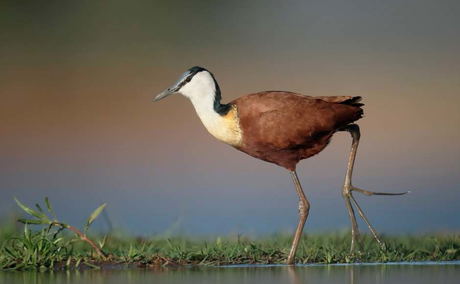
Explore essential biological facts about the African Jacana. Learn about their unique "lily-trotting" feet, unusual breeding habits, and life in the Lowveld wetlands.
There is a fig tree along the Crocodile River that is never quiet. At almost any time of year, something is eating from it: a vervet monkey working through the branches at first light, a flock of green pigeons turning the canopy loud with wing beats, a warthog below cleaning up what falls. By the time evening comes, fruit bats are coming in from across the river.
This is not coincidence. Wild figs are among the most productive food sources in the African bush, and the Sycamore Fig in particular fruits for much of the year, providing food at times when little else is available. The genus Ficus has around 36 species in southern Africa. In Kruger National Park, several of them are common in the riverine forest along the Crocodile, Sabie, and Luvuvhu rivers. All of them depend on a wasp to reproduce.
Guests at Needles Lodge in Marloth Park are within easy reach of the Crocodile River and the Crocodile Bridge gate into southern Kruger, where Sycamore Figs are a consistent feature of the riverbank vegetation. The trees are large enough to identify from a vehicle, and active enough with wildlife that any one of them is worth stopping beside.
Sycamore Fig at a Glance
- Scientific name: Ficus sycomorus
- Family: Moraceae, the same family as the edible fig and mulberry
- Height: Up to 35 m; trunk can exceed 2 m in diameter
- Bark: Distinctive yellowish to pale brown, papery and flaking on mature stems
- Habitat: Riverine forest and areas with high water tables; along the Crocodile, Sabie, and Luvuvhu rivers in Kruger
- Fruiting: Produces fruit for much of the year; not strictly seasonal
- Pollinator: A single species of fig wasp in the family Agaonidae, in an obligate mutualism
- Ficus species in southern Africa: Around 36
- Status: Not threatened
What a Fig Actually Is
A fig is not a fruit in the conventional sense. What we call the fig is a syconium: a hollow, urn-shaped structure that contains hundreds of tiny flowers on its inner surface. Those flowers are where pollination happens, where seeds develop, and where fig wasps lay their eggs. The fleshy outer wall develops around this internal structure and becomes what animals eat.
This design means that the flowers of a fig tree are never visible from the outside. They cannot be accessed by bees or butterflies or any of the pollinators that serve most other flowering plants. The only way in is through a small opening at the tip of the syconium called the ostiole. It is just wide enough for one thing: a female fig wasp, which is typically 1 to 2 millimetres long.
The genus Ficus contains nearly 900 species worldwide, making it one of the most diverse plant genera on earth. The oldest fossil evidence for the fig-wasp relationship dates to around 34 million years ago, though molecular evidence suggests the mutualism may be 75 million years old or more. Every one of those species depends on its wasp partner to reproduce.
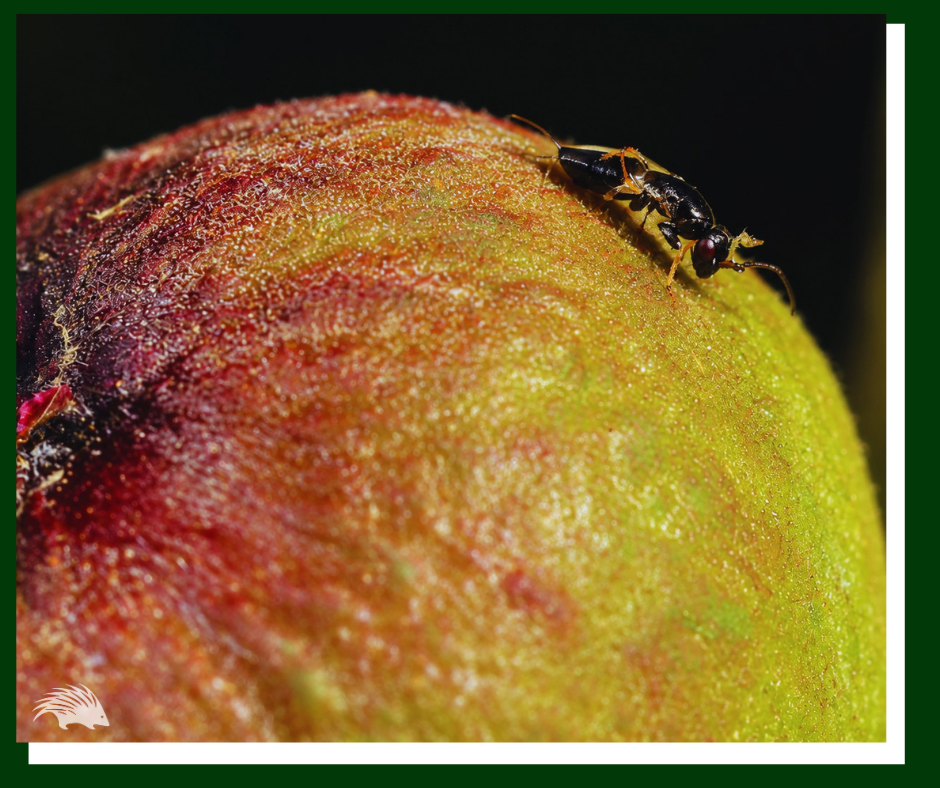
The Fig Wasp: A Life Spent Inside a Fig
Most fig species have a highly specialised relationship with one or a small number of pollinating fig wasp species in the family Agaonidae. The relationship is obligate on both sides: the fig cannot reproduce without the wasp, and the wasp cannot reproduce without the fig. This is one of the most specialised plant-pollinator relationships in the natural world.
The female wasp enters a receptive fig through the ostiole, losing her wings and often her antennae in the process of squeezing through. She will never leave. Inside, she moves through the flower-lined chamber, depositing pollen she carried from the fig she hatched in, and laying her own eggs into the ovaries of some of the flowers.
The flowers she pollinates develop seeds. The flowers she lays eggs in develop galls, which feed and house her larvae.
The eggs hatch inside the fig. Male wasps emerge first from their galls, blind and wingless. Their entire purpose is to find and mate with females still inside their galls, and then to chew exit tunnels through the fig wall. They die inside the fig.
The females emerge from their galls, collect pollen from the male flowers that have by now matured inside the same fig, and exit through the tunnels the males cut. They have a lifespan outside the fig of around one to two days, during which they must find a new receptive fig of the correct species.
The question of what the wasp gets from this arrangement is easy to answer: a protected nursery for its larvae, with food provided.
The question of what the fig gets is more interesting. The tree gives up some of its seeds to become wasp galls, but it gains reliable pollination from an insect that will enter a closed structure no other pollinator can reach.
The balance is maintained because the wasp does not lay eggs in every flower: some are pollinated and left to produce seeds, while others receive both pollen and an egg, becoming galls. Enough flowers produce seeds that the tree sets viable fruit.
Non-Pollinating Fig Wasps
The pollinating wasp is not the only wasp that uses a fig. Several other wasp species, collectively called non-pollinating fig wasps, also lay their eggs inside developing figs, often by inserting their ovipositors through the fig wall from the outside.
They parasitise the galls created by the pollinating wasp or lay eggs directly into developing seeds. They contribute nothing to pollination.
A mature fig can contain a complex community: pollinating wasps, non-pollinating parasites, and the larvae of both, all developing simultaneously inside the same syconium.
By the time the fig ripens, the female wasps have typically emerged and left, and the male wasps have died inside. What remains is the fig's flesh, seeds, and any material from non-pollinating wasps that did not complete their cycle before ripening.
The Sycamore Fig: A Portrait
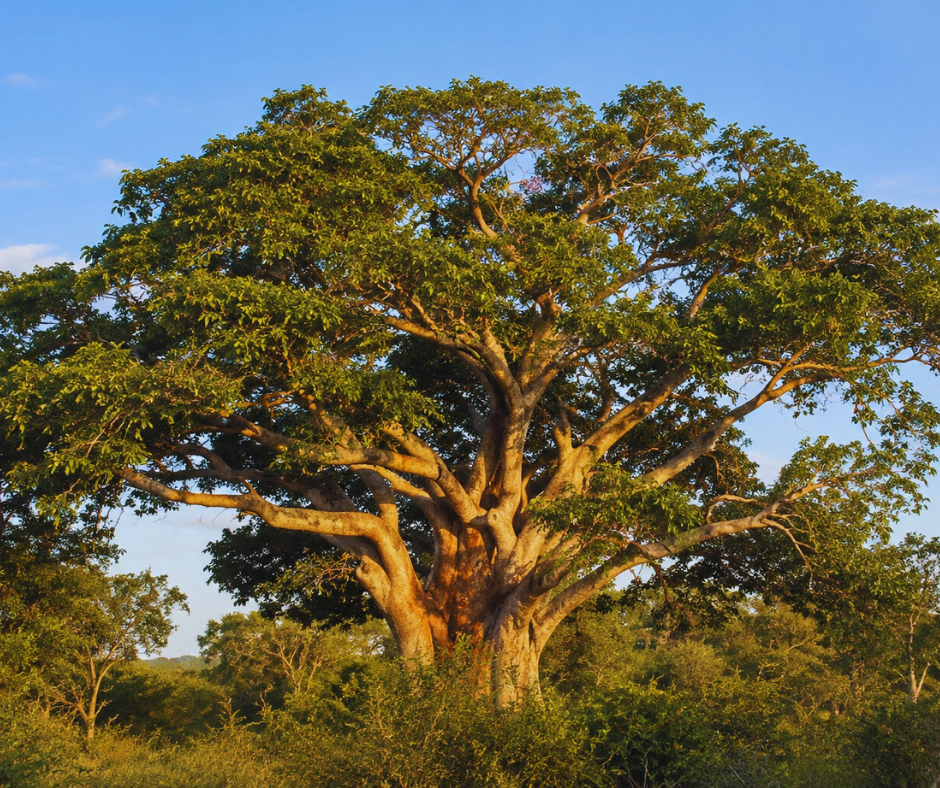
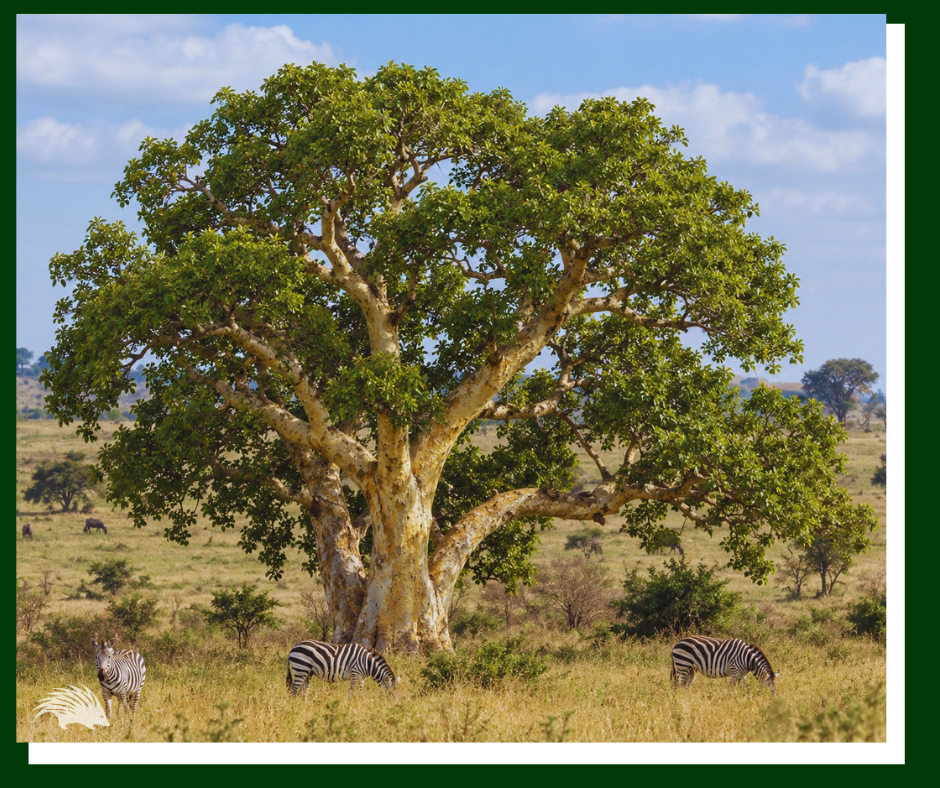
The Sycamore Fig is the most recognisable wild fig along the rivers of Kruger. It is a large tree, reaching up to 35 metres in height, with a trunk that can exceed two metres in diameter on old specimens.
The bark is one of the clearest identification features: a distinctive pale yellow to yellowish-brown, papery and flaking in strips on older stems, smooth and greenish on younger branches.
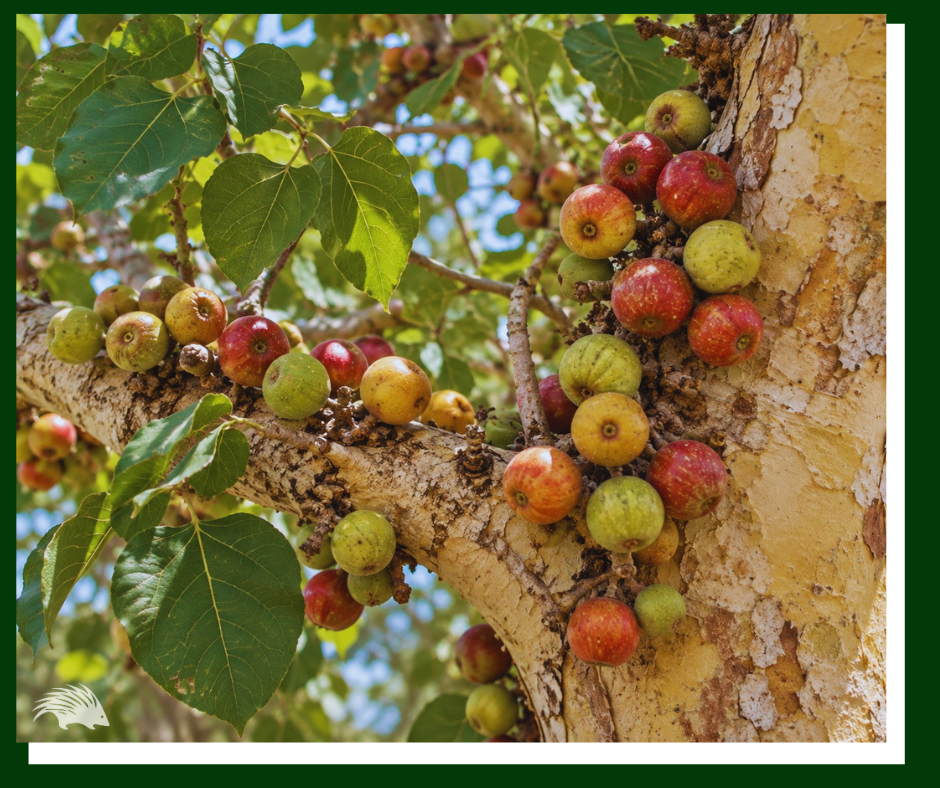
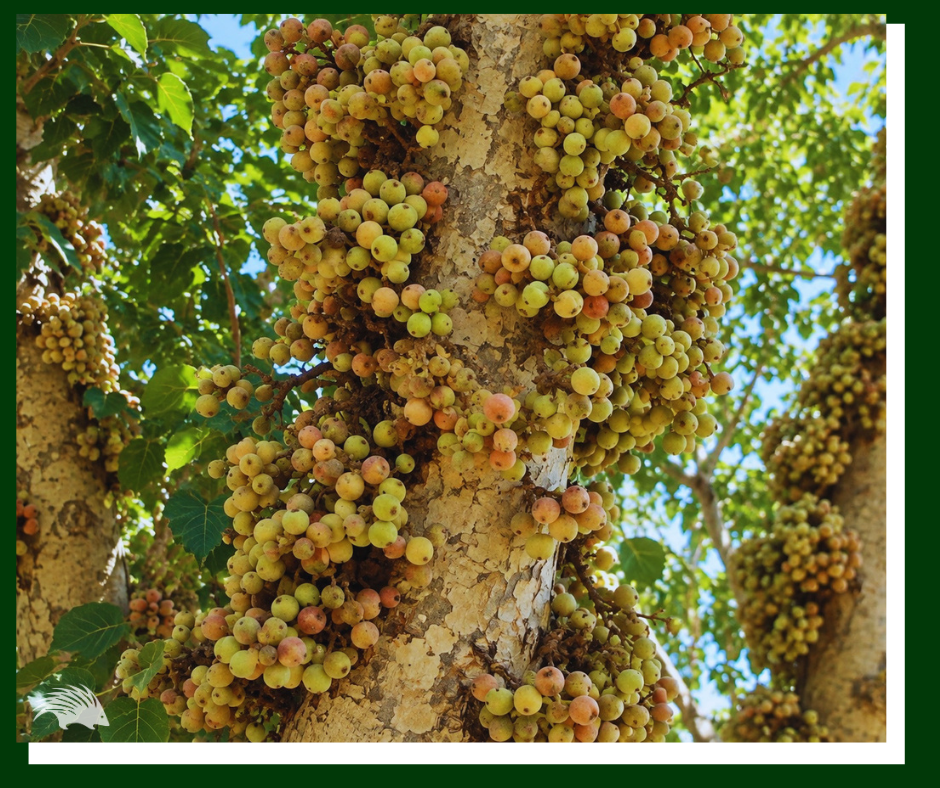
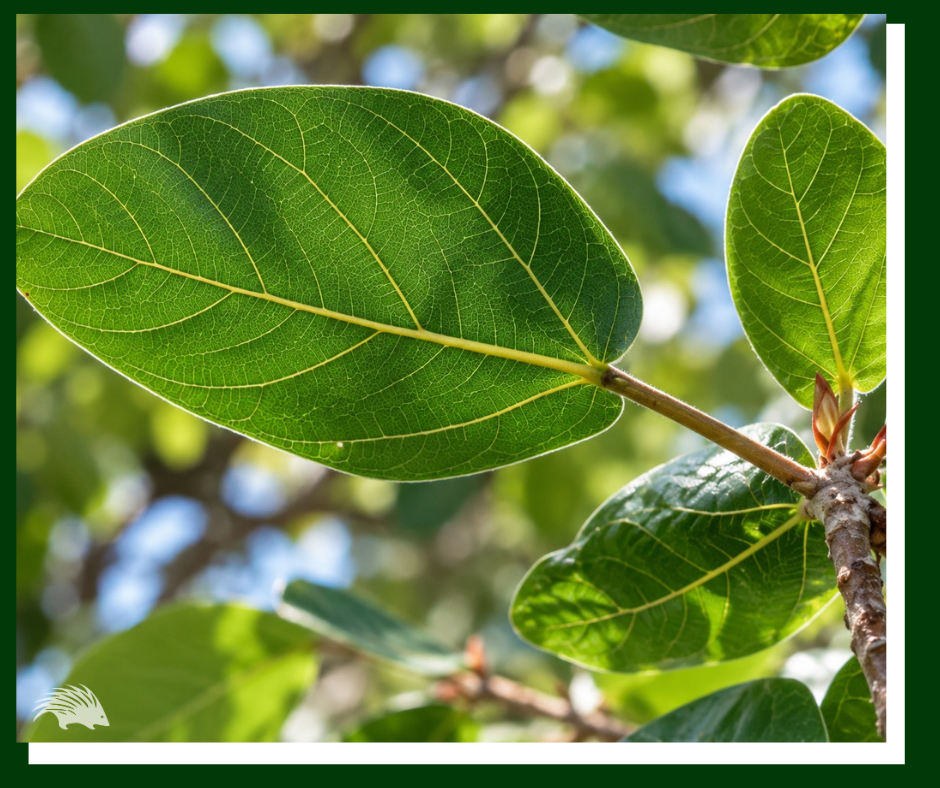
The leaves are large, rough to the touch, and broadly oval. The figs themselves grow directly from the trunk and major branches rather than from the tips of the smaller branches, a growth pattern called cauliflory.
A fruiting Sycamore Fig in full production can carry thousands of figs at different stages of development simultaneously on its trunk and main limbs. The figs are yellowish to reddish when ripe, around 2 to 3 cm in diameter.
The tree is semi-deciduous: it drops some leaves in the dry season but rarely stands bare. It is associated with high water tables and is found along rivers, in drainage lines, and in other areas where moisture is reliable.
Along the Crocodile River from Marloth Park through to the Crocodile Bridge gate area, mature Sycamore Figs are a consistent feature of the riverbank.
What Eats the Sycamore Fig
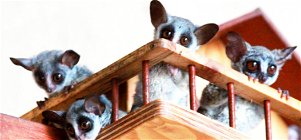
The list of animals that eat Sycamore Fig fruit is long enough to make the point without needing to be exhaustive. Baboons, vervet monkeys, and bushbabies work the branches for ripe figs. Fruit-eating birds, including green pigeons, hornbills, barbets, and brown-headed parrots, move through the canopy when the tree is in fruit.
On the ground below, impala, kudu, nyala, bushbuck, bushpig, and warthog eat fallen fruit. Elephant eat the fruit, the bark, and the leaves; they have been recorded stripping bark from large Sycamore Figs and in some areas causing significant damage to mature trees.
Black rhino eat the leaves; white rhino eat both bark and leaves. Fruit that falls into the river is eaten by fish.
At night, the fruiting fig switches to a different set of visitors. Epauletted fruit bats are the most important nocturnal consumers.
Research in Kruger found that two species of epauletted fruit bat restricted around 90 percent of their foraging activity to riverine areas with Sycamore Figs present. The bats carry figs to perches within 200 metres of the tree to eat them, dropping seeds along the way, which makes them effective dispersers.
This asynchronous fruiting across different fig species and individual trees is what makes the genus so ecologically significant. There is almost always a fig tree in fruit somewhere in the park, providing food at times when most other fruit sources have stopped.
For many animals, figs can be an exceptionally important food source when other fruits are scarce.
Traditional Uses
The Sycamore Fig has a long history of use across its range. The fruit is edible and has been eaten fresh, dried, and preserved across Africa and into the Middle East for thousands of years.
The tree appears in ancient Egyptian texts and artwork, and its soft wood was widely used for coffins in ancient Egypt.
In the Lowveld, various parts of the tree have been used in traditional medicine. The bark, latex, and leaves appear in preparations for skin conditions, respiratory complaints, and fever.
As with all traditional medicinal uses, these are documented as part of the ethnobotanical record and are not a recommendation for self-treatment.
Other Wild Figs in Kruger and Marloth Park
The Sycamore Fig is the most conspicuous wild fig in the riparian areas, but several other species are present in and around Kruger, each occupying a slightly different habitat.
The Large-leaved Rock Fig (Ficus abutilifolia) grows on rocky outcrops and granite kopjes, anchoring itself in rock fissures and sending roots down through the rock. It is a smaller tree than the Sycamore Fig but uses the same basic strategy of producing fruit over an extended period.
The Natal Fig (Ficus natalensis) is widely distributed in the Lowveld and is notable for its inner bark, which in Uganda and parts of East Africa is processed into barkcloth, a material with a long cultural history in the region.
The Common Wild Fig (Ficus thonningii) is widely distributed and is often used as a boundary or shade tree in rural areas.
All of these species share the same dependence on fig wasps for pollination and all of them produce fruit that feeds the same broad community of frugivores.
The strangler figs are worth a separate note: as they grow, they create a complex structure of roots and stems that provides nesting sites, shelter, and foraging opportunities for a wide range of animals quite apart from the fruit itself.
Seeing Wild Figs near Marloth Park and Kruger
The easiest place to find Sycamore Figs from Needles Lodge is along the Crocodile River and on the roads immediately inside Crocodile Bridge gate.
The trees are large enough to recognise from a vehicle: look for the pale yellow bark and the distinctive figs growing directly from the trunk and main branches. On a fruiting tree, the wildlife activity is its own advertisement.
The S25 and S114 roads along the Crocodile River in the southern section of Kruger pass through riverine forest where Sycamore Figs are common.
Early morning drives are the best time: the birds are active, the monkeys are feeding before the heat builds, and the light through the riverine canopy is at its best.
In Marloth Park itself, wild figs of various species occur along the river side of properties and in the drainage lines that run through the area.
They are not as large or as numerous as those along the main river in Kruger, but the same community of birds and small mammals uses them.
Frequently Asked Questions
What is the relationship between fig trees and fig wasps?
Fig trees and fig wasps have an obligate mutualism: each depends on the other to reproduce.
The fig's flowers are enclosed inside the syconium, the fig structure, and can only be reached by a female fig wasp that enters through a small opening called the ostiole.
The wasp pollinates the flowers and lays her eggs inside some of them; her larvae develop in galls inside the fig. The tree cannot reproduce without the wasp carrying pollen between figs. The wasp cannot reproduce without the fig providing a nursery for its offspring.
Each fig species has its own pollinating wasp species in the family Agaonidae.
Do figs contain dead wasps?
Yes, though by the time the fig ripens, the process is largely complete.
The female wasp dies inside the fig after laying her eggs, and the wingless males die inside after mating. The fig produces enzymes that break down the wasp bodies as the fruit develops.
The female offspring typically emerge before the fig ripens. What remains in a ripe fig is primarily the fig's own flesh and seeds, along with any material from non-pollinating wasps that did not complete their cycle.
What animals eat wild figs in Kruger?
The list is extensive. Birds including green pigeons, hornbills, barbets, and brown-headed parrots eat figs in the canopy. Baboons, vervet monkeys, and bushbabies feed in the branches.
On the ground, impala, kudu, nyala, bushbuck, bushpig, warthog, and elephant eat fallen and accessible fruit. Elephant also eat the bark and leaves.
At night, epauletted fruit bats are significant consumers and seed dispersers. Fish eat fruit that falls into the river.
Why are fig trees important to the ecosystem?
Fig trees fruit for much of the year, which means they provide food at times when most other fruit sources have stopped.
This makes them a fallback food source for a wide range of frugivores during lean periods. In Kruger, the asynchronous fruiting of different fig species and individual trees means there is almost always a fig in fruit somewhere in the park.
The trees also provide nesting sites, shade, bark for feeding, and complex structure in the riverine forest.
Where can I see Sycamore Figs near Marloth Park?
Sycamore Figs are common along the Crocodile River, which forms the southern boundary of Marloth Park and Kruger.
The S25 and S114 roads along the river in the southern section of Kruger, accessible via the Crocodile Bridge gate, pass through riverine forest where mature Sycamore Figs are present.
Look for the distinctive pale yellow bark and figs growing directly from the trunk. A fruiting tree will usually be obvious from the bird and monkey activity around it.
What is a strangler fig?
A strangler fig begins life as an epiphyte, germinating from a seed deposited on the branch of another tree, usually by a bird or bat.
It sends roots downward around the host tree's trunk and eventually envelops it in a lattice of aerial roots. The host tree may eventually be killed or displaced, leaving the fig standing on its own root cage.
The Common Wild Fig (Ficus burkei) is one of the most typical strangler figs of the South African Lowveld. The Sycamore Fig is not a strangler.
Needles Lodge in Marloth Park is a short drive from the Crocodile Bridge gate into southern Kruger, where Sycamore Figs are a regular feature of the riverine roads. Our team can point you toward fruiting trees and the best roads for riverine forest wildlife on your game drives. Get in touch to plan your visit.
Share This Post