
Discover the butterflies of the Lowveld — colourful, resilient, and vital to the bushveld ecosystem around Needles Lodge and Marloth Park.
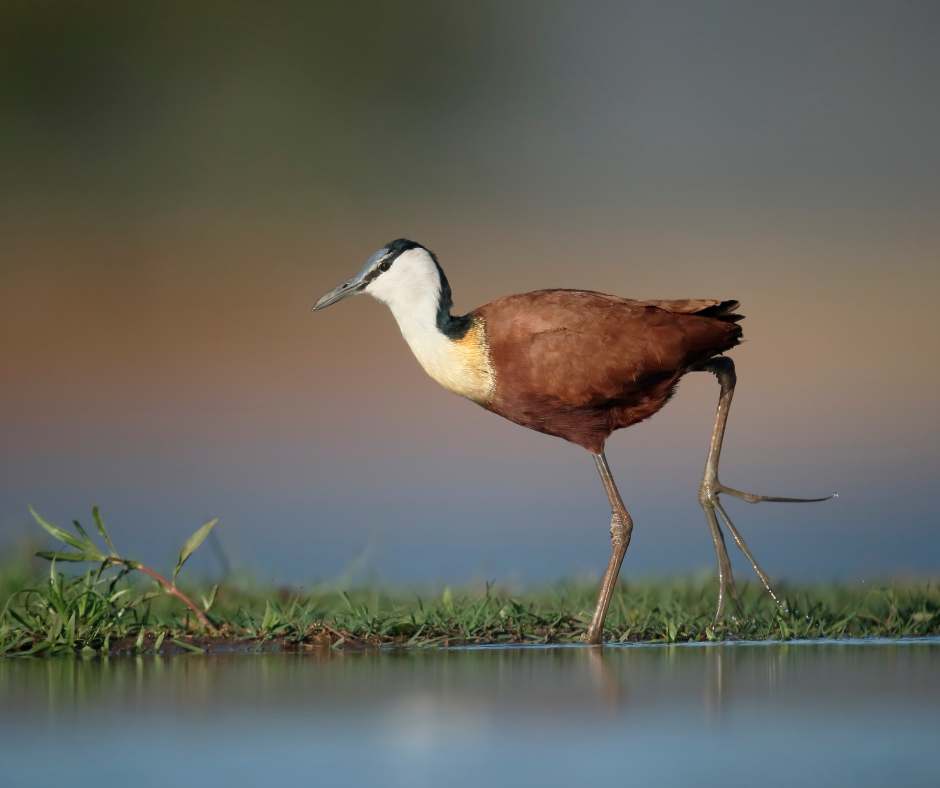
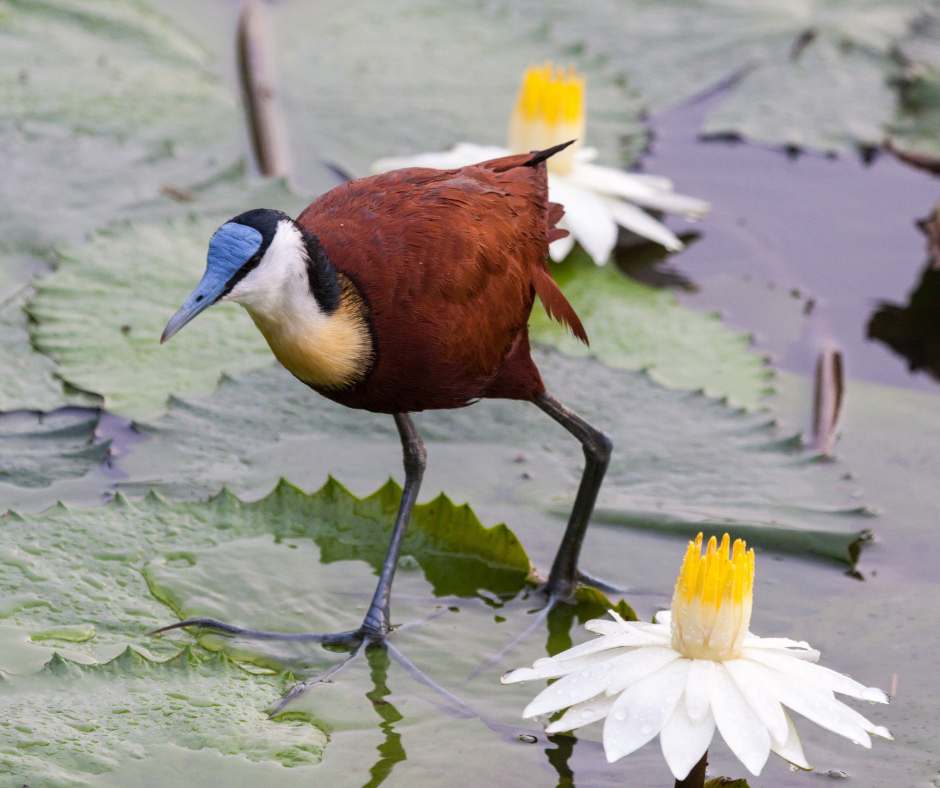
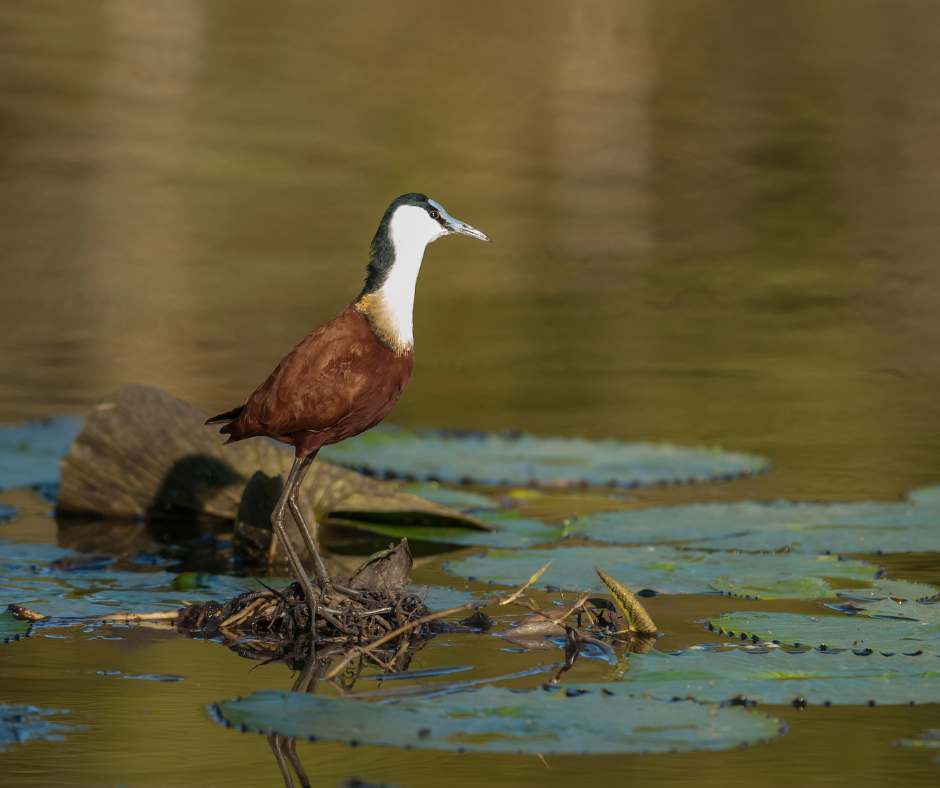
In the wild, some birds announce themselves with a piercing cry, while others rely on sheer size to impress. The African Jacana (Actophilornis africanus) does neither. Instead, it glides into your awareness—quietly and improbably—walking across water-lilies as if the laws of physics didn’t apply. In the wetlands of the Lowveld, this elegant wader is a living illusion, stepping lightly across floating leaves with toes splayed wide like natural snowshoes.
A member of the Jacanidae family also known affectionately as the “Lily-Trotter".
Biological Profile: The Anatomy of a Specialist
To understand how the African Jacana thrives in its watery world, we have to look at the unique biology that sets it apart from other waders. This is a bird designed entirely for life on the surface tension of a pond.
Size and Weight: There is a notable difference between the sexes; females are significantly larger (reversed sexual dimorphism), weighing up to 260g, while males are smaller, usually topping out at around 140g. They typically reach a length of 23 to 31 cm.
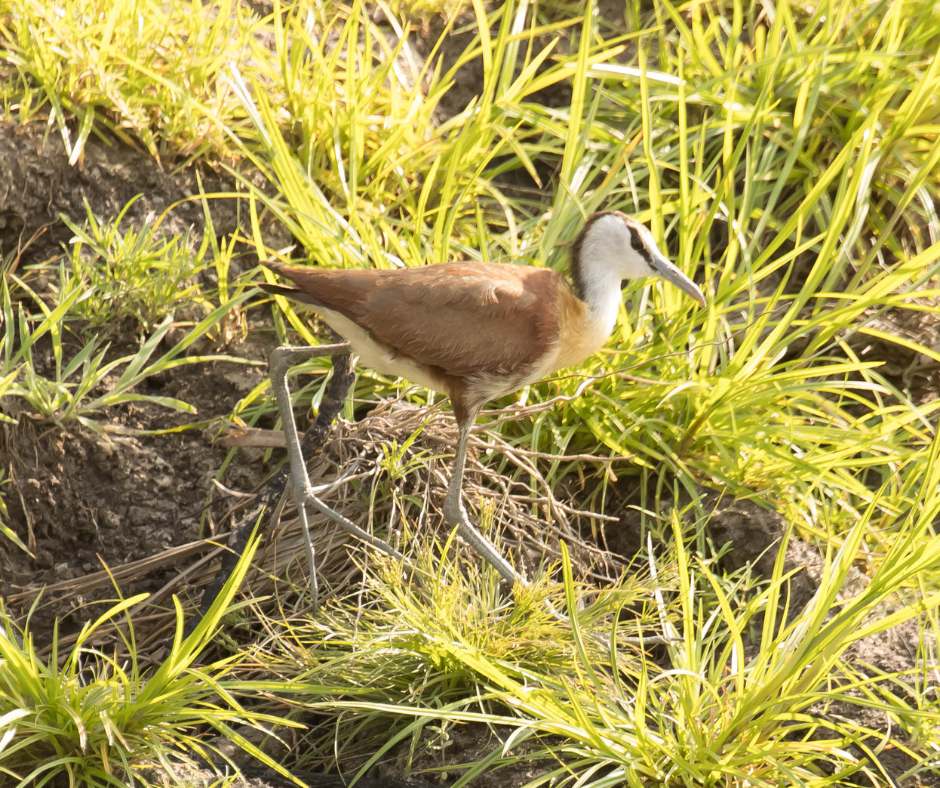
The "Water-Walking" Feet: Their most striking feature is their toes, which can reach up to 7 cm in length. These spread the bird's weight over a massive surface area, allowing them to stand on a single lily pad without it submerging.
Dietary Habits: Jacanas are carnivorous foragers. They spend their days "gleaning" insects from the surface of aquatic plants. Their diet consists mainly of beetles, dragonflies, insect larvae, spiders, and small crustaceans.
Breeding Cycle: Their breeding season is tied to the rains when water levels are stable. After an incubation period of about 22 to 28 days, the eggs hatch into precocial chicks—meaning they are ready to run and swim almost immediately.
Plumage: They sport a rich chestnut body, a black nape, and a white neck. The striking blue "frontal shield"—the fleshy plate on the forehead—is an extension of the bill and serves as a signal of maturity.
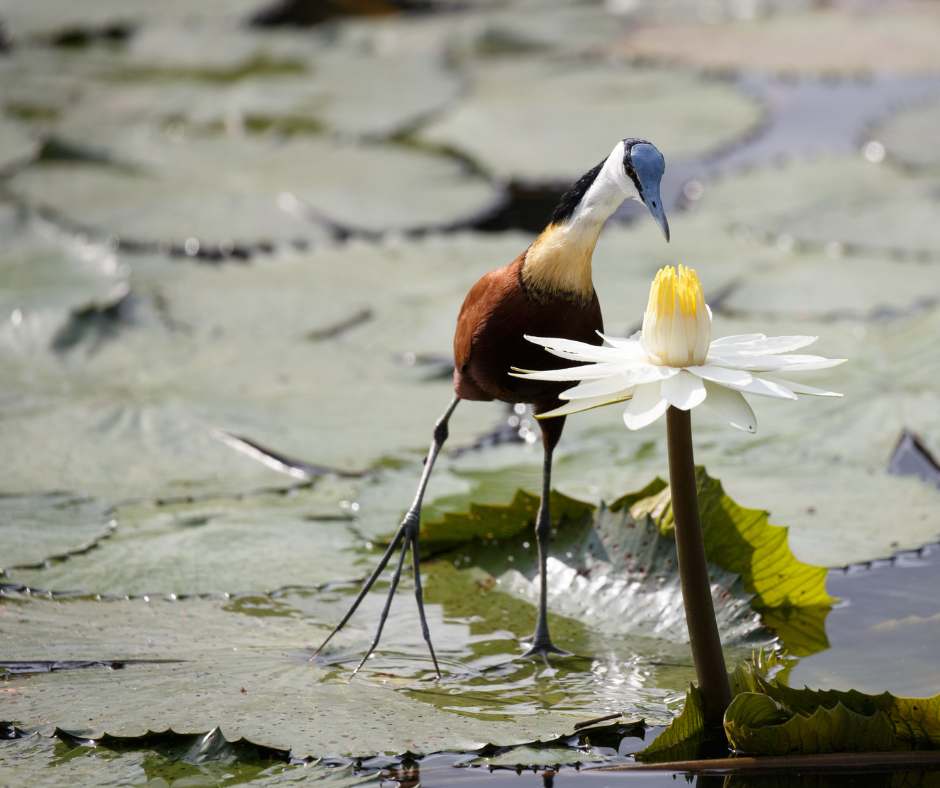
Habitat: Where Still Water Breathes
Jacanas are specialists of shallow, calm wetlands. They favour pans, marshes, dams, and the slow-flowing edges of rivers where floating vegetation—like the Water Lily (Nymphaea)—is thick.
In the Lowveld, seasonal rains transform dry basins into green, mirror-like habitats—perfect Jacana country. These birds are often considered "indicators" of a healthy ecosystem; their presence suggests a thriving wetland with abundant insect life. Throughout the southern Kruger National Park, they are a staple sight for anyone watching the lily-filled dams.
Behaviour: A Unique Role Reversal
While the Jacana’s walk is famous, its social life is even more unusual. In a rare twist for the bird world, the African Jacana practices polyandry:
Dominant Females: The females are the "bosses" of the territory. They often mate with multiple partners and will aggressively defend their patch of the pan from other females.
The Ultimate Dads: Once the eggs are laid on a floating nest, the female moves on, leaving the male to handle all the incubation and chick-rearing duties.
The Wing-Carry: When danger (like a crocodile or large fish) approaches, the male performs an astonishing feat—he scoops his chicks up under his wings and carries them to safety. Often, all you can see are the tiny, dangling legs of the chicks poking out from his feathers!
Fast Facts: Did You Know?
Improbable Proportions: A Jacana’s toes are disproportionately long and are the longest relative to body size of any bird.
Survival Swimmers: While they prefer walking on leaves, Jacanas are capable swimmers and can even dive underwater to hide if they are startled.
The Submerging Nest: Jacana nests are simple, floating platforms of aquatic weeds. Because they are so low-profile, the eggs are often partially submerged in water, but they are specially adapted to survive the dampness and constant cooling of the pond.
Vivid Signals: The bright blue shield on their forehead becomes more vivid during the breeding season, signaling health and status to other birds.
For birders and nature lovers exploring the Lowveld's diverse activities, the Jacana is a must-see. It serves as a symbol of the bush itself: resilient, intricate, and quietly extraordinary.

Share This Post