
Discover the Jackalberry tree (Diospyros mespiliformis) in Marloth Park and Kruger — its ecology, wildlife role, conservation, and why you’ll remember it on safari.
Knob-thorn: Giraffe Buffet and Summer Perfume
Posted by Denis on Thu May 21, 2026 in Needles Lodge, Fauna and Flora of Kruger National Park, Marloth Park, Kruger National Park, and Trees of Southern Africa.
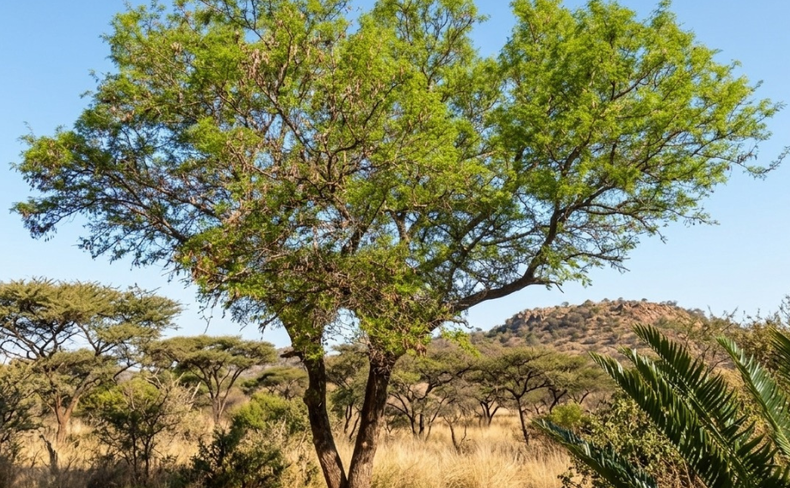
Discover the Knob-thorn tree in Kruger National Park and Marloth Park, a favourite food source for giraffe and one of the Lowveld’s most recognisable summer flowering trees.
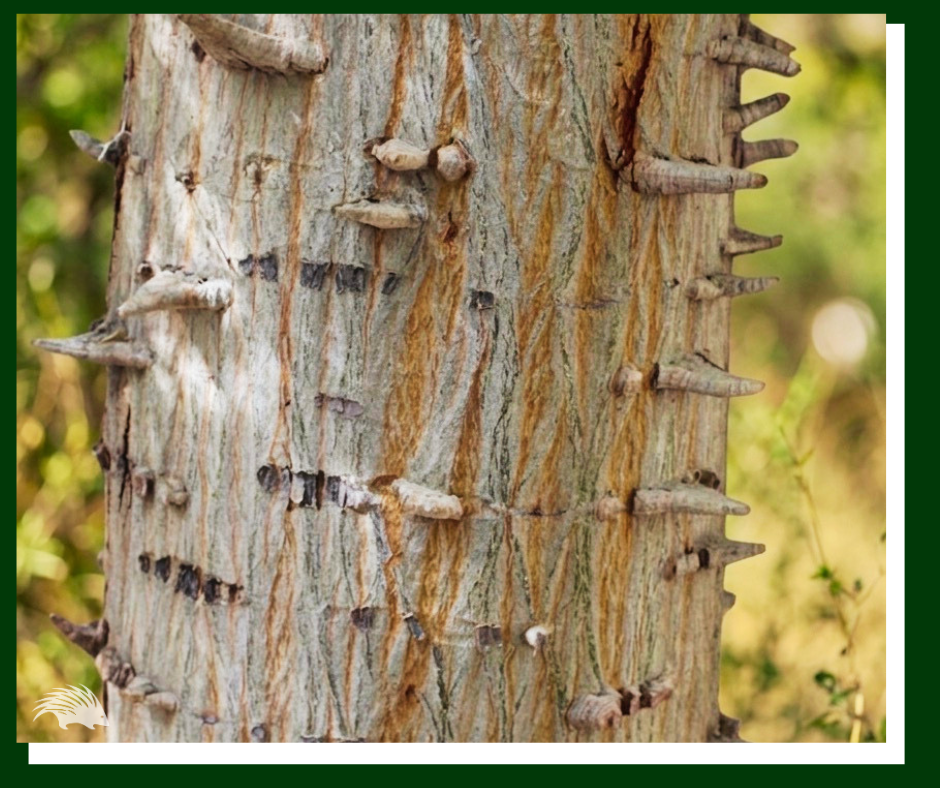
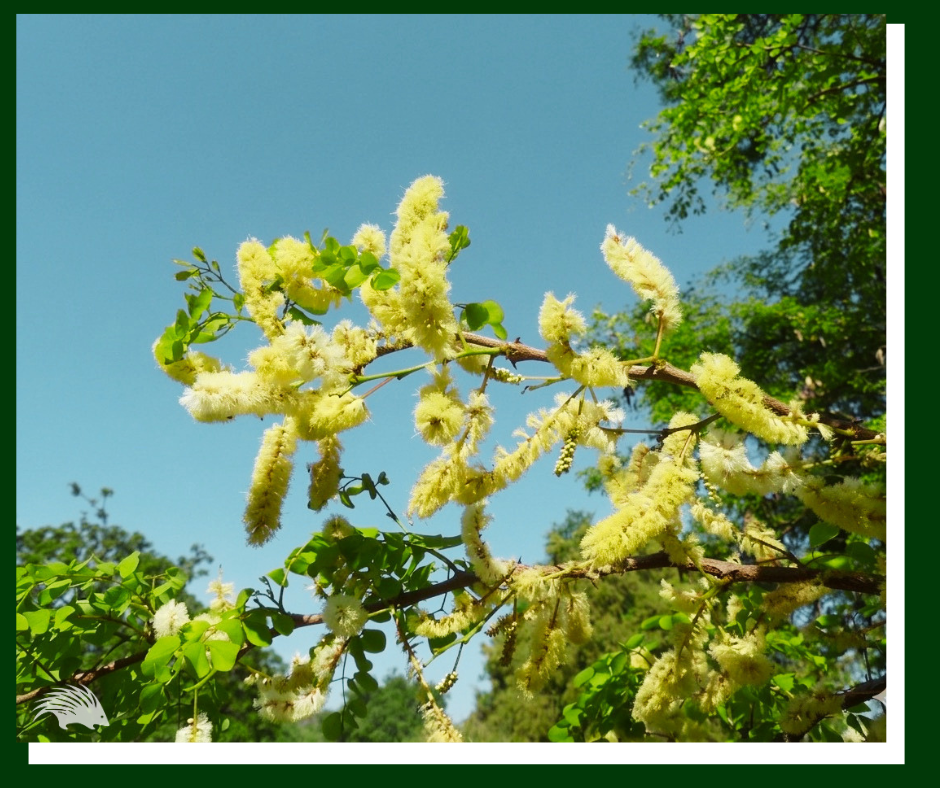
The Knob-thorn (Senegalia nigrescens) is one of the most recognisable trees in the Lowveld. Its trunk is covered in hard, dark, woody knobs — each tipped with a short curved thorn — and in October and November it produces dense cream-coloured flower spikes with a scent that carries well across the bush.
It is a tree most visitors to Needles Lodge and Marloth Park will pass dozens of times without realising it. Giraffe know it well. So do elephant, kudu, and impala. It turns up on almost every game drive into Kruger.
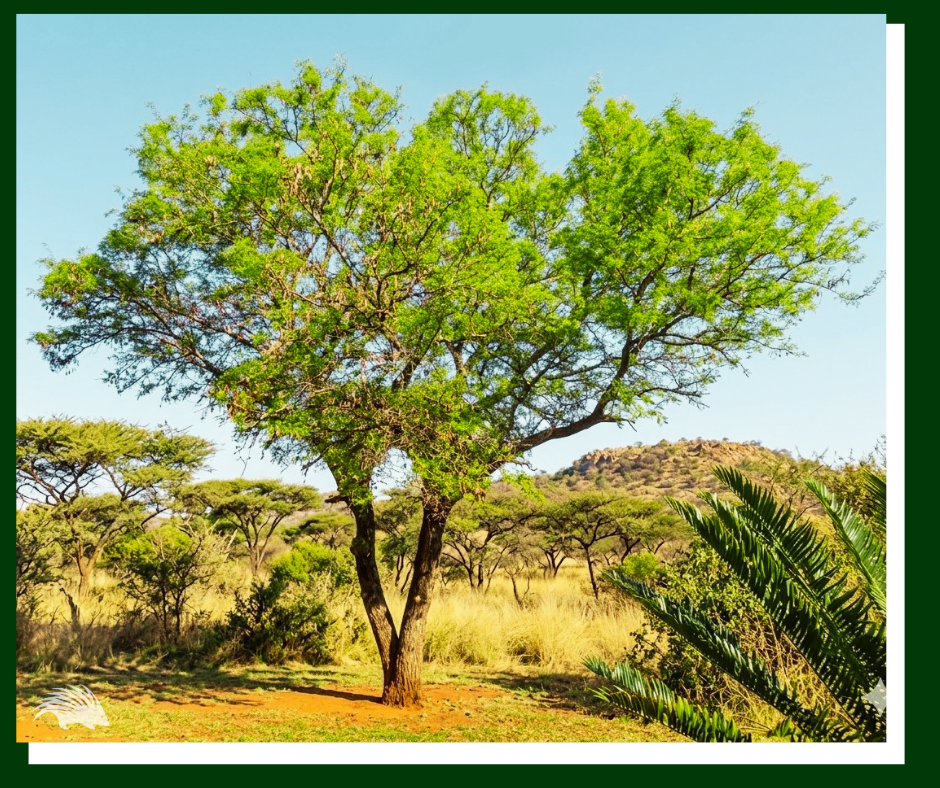
Quick Facts
- Scientific Name: Senegalia nigrescens (formerly Acacia nigrescens)
- Common Names: Knob-thorn, Knob-thorn Acacia
- Identifying Feature: Prominent black knobs on the trunk and branches, each tipped with a short hooked thorn
- Habitat: Hot, low-altitude savanna and bushveld; well-drained sandy or loamy soils
- Height: Typically 6 to 17 metres
- Ecology: Major food source for giraffe, elephant, kudu, and insects
- Defence: Knob-borne thorns plus hooked thorns on young growth
Why It’s Called the Knob-thorn
The name describes the tree exactly. Run your eye up the trunk of a mature Knob-thorn and you’ll see rows of hard, dark, woody knobs erupting from the bark — each one armed with a short curved thorn at its tip.
On young trees, these knobs are smaller and closer together. On old trees, they can be quite pronounced, giving the trunk a rough, almost prehistoric texture.
The knobs are persistent thorn bases, a structural feature that develops as the tree matures and the original paired thorns become embedded in the expanding bark.
Where It Lives
The Knob-thorn is a tree of hot, low-altitude country. In the greater Kruger region, including Marloth Park, it is one of the most visible trees in the mixed bushwillow and mopane savanna.
It grows on flat plains, rocky outcrops, and dry ridges where the soil drains freely and the summer heat is intense.
Unlike the Fever Tree, which prefers wet ground, the Knob-thorn thrives in dry, open savanna landscapes.
A Portrait of the Tree: What to Look For
Bark and Trunk
Mature trees have dark grey to blackish bark that is rough and deeply fissured. The distinctive knobs are the easiest identifying feature.
Leaves
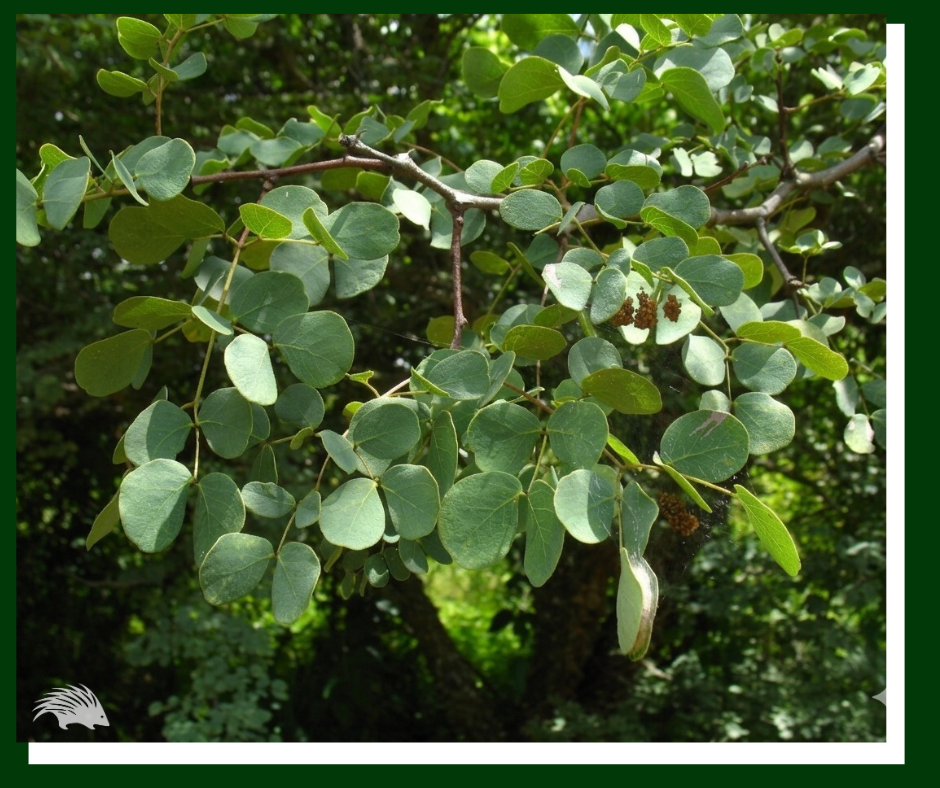
The leaves are bipinnate and feathery in appearance. They are small, grey-green, and often emerge just before or alongside the flowers.
During dry periods, the tree may drop its leaves entirely.
Flowers
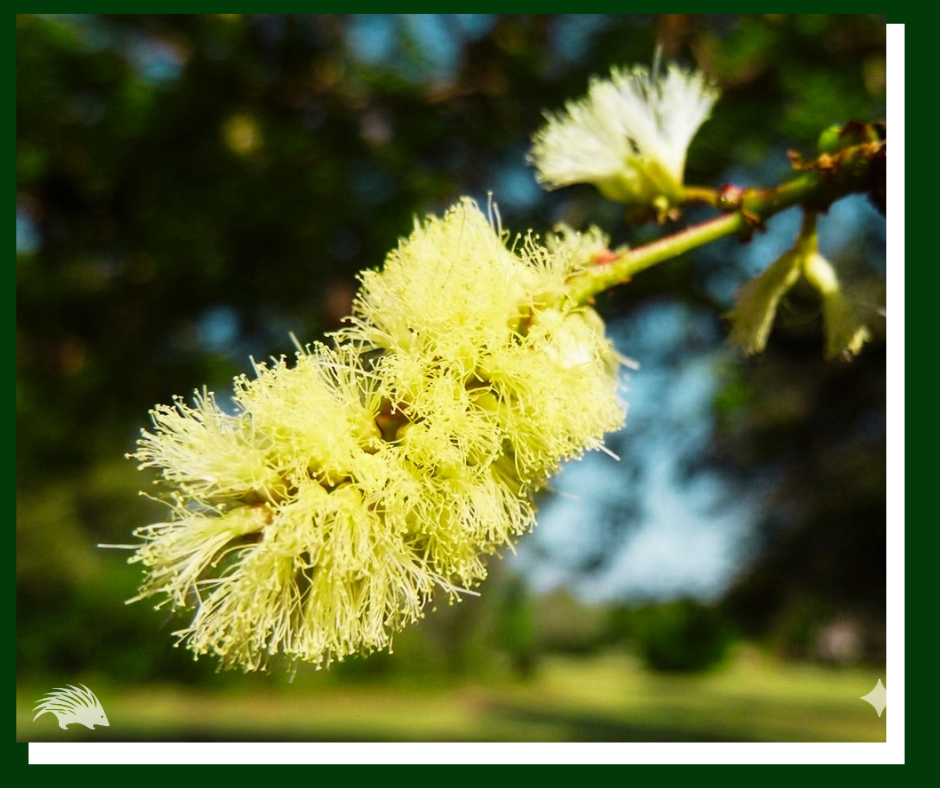
In October and November, the bare branches erupt with dense cream to pale-yellow flower spikes packed with tiny blossoms.
The scent is sweet, warm, and carries on the wind for a good distance. It is one of the defining smells of the Lowveld summer.
Pods
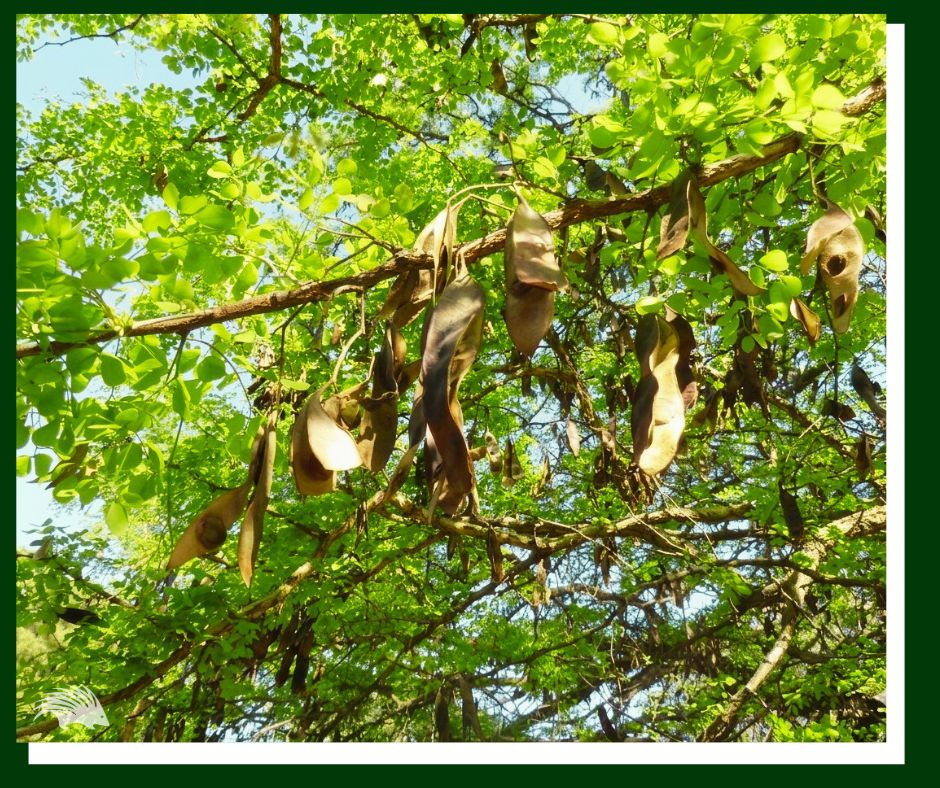
The seed pods are flat, thin, and papery, turning a pale straw colour when ripe. Birds and small mammals help disperse the seeds.
The Giraffe Connection
Giraffe are selective browsers with long, tough tongues adapted for feeding among thorns. The Knob-thorn is one of their favourite trees.
Giraffe feed on the young leaves, shoots, and flowers high in the canopy where most other animals cannot reach.
Elephant also feed on Knob-thorn, often stripping bark or even pushing trees over to reach the roots.
What Else the Knob-thorn Feeds
The flowers are an important nectar source for bees, wasps, beetles, and other insects.
Kudu and impala browse the lower foliage, while birds and rodents feed on the seeds.
The bark and crevices support beetles, lizards, nesting birds, and bark spiders.
The Summer Perfume: Why It Smells So Good
The scent of a flowering Knob-thorn is one of the sensory highlights of the early wet season in the Lowveld.
On still October mornings after the first rains, the fragrance can fill a large area.
The scent exists to attract pollinating insects, but for visitors to Kruger and Marloth Park, it becomes one of the unforgettable pleasures of the bushveld summer.
Practical Uses and Traditional Knowledge
Wood
Knob-thorn wood is hard, dense, and termite-resistant. It has long been used for fence posts, tool handles, and construction.
It also burns slowly and produces excellent coals, making it highly valued as firewood.
Traditional Medicine
Various parts of the tree have been used in traditional medicine. Bark preparations have been used for stomach complaints and skin conditions, while root decoctions have been used for fever.
These traditional uses are part of the ethnobotanical record and are not medical advice.
Cultural Presence
The Knob-thorn is a familiar tree across the Lowveld, Zimbabwe, Botswana, and Mozambique. It forms part of local stories, traditional knowledge, and daily rural life.
Threats and Conservation
The Knob-thorn is not currently listed as threatened, and populations within Kruger and Marloth Park are generally stable.
Outside protected areas, heavy harvesting for firewood and fencing reduces populations. Overgrazing and land conversion also limit regeneration.
Elephant browsing pressure can alter Knob-thorn populations in some areas, though this remains part of the natural ecosystem dynamic.
Seeing the Knob-thorn at Marloth Park and Kruger
The Knob-thorn is one of the easiest trees to spot on drives through Marloth Park and Kruger National Park.
Areas around Lower Sabie, Satara, and the roads between Skukuza and Tshokwane pass through prime Knob-thorn savanna.
What to Look For
- Dark knobbed bark with rounded protrusions
- Cream-coloured flower spikes in spring
- Giraffe feeding from the upper canopy
- Flat papery pods beneath the tree in late summer
The Knob-thorn may not be the flashiest tree in the bushveld, but it is one of the most important. It feeds wildlife, perfumes the summer air, and shapes the savanna ecosystem.
A giraffe stretching into the upper canopy to pull leaves from thorned branches — that is the Knob-thorn doing its job.
The sweet scent drifting across the bush after the first summer rains — that is also the Knob-thorn.
The bushveld is full of quiet relationships that have existed for thousands of years. The connection between giraffe and Knob-thorn is one of them.
Disclaimer
References to traditional and medicinal uses of the Knob-thorn are provided for informational purposes only and are not medical advice. Please consult a qualified healthcare provider before considering any herbal remedies.
Further Reading
Jackalberry: Shade Tree of the Riverine
Tue October 21, 2025
Read This Article
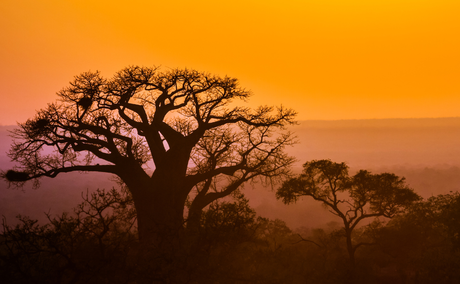
The Baobab: Africa's Iconic "Tree of Life"
Wed December 6, 2023
Read This Article
The baobab tree, an African icon, symbolizes resilience and life, deeply rooted in African culture and ecosystems. Revered in folklore and vital in maintaining ecological balance, it offers shelter and sustenance to diverse species and serves as a communal hub, with its uses ranging from medicine to crafts. Eco-tourism, particularly in areas like Kruger National Park, plays a key role in its conservation, raising awareness and funds to protect this majestic tree,...
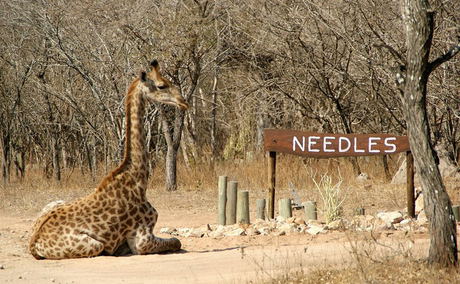
10 Curious Facts About Giraffes
Thu November 30, 2023
Read This Article
The article highlights giraffes in Kruger National Park, detailing ten unique aspects like their height, distinctive spot patterns, silent communication, powerful hearts, graceful movement, defensive kick, synchronized drinking, short naps, birth rituals, and large appetite. It also introduces Needles Lodge, a luxurious accommodation within the park, offering guests close-up encounters with giraffes and other wildlife, ideal for both nature lovers and those seeking a peaceful getaway.


Share This Post