Discover the fascinating African Hoopoe in Kruger National Park! Learn about its striking crest, unusual feeding habits, and where to spot this unique bird on your next safari.
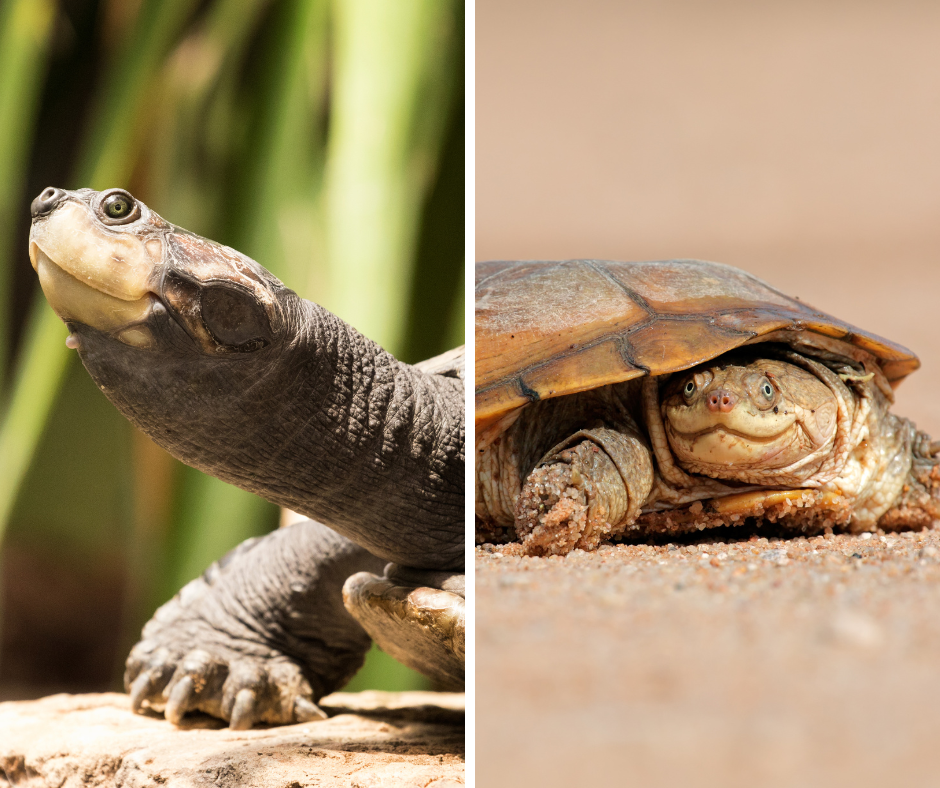
A guide to the two terrapin species found along the Crocodile River and in Kruger National Park: the Serrated Hinged Terrapin (Pelusios sinuatus) and the Helmeted Terrapin (Pelomedusa galeata and Pelomedusa subrufa).
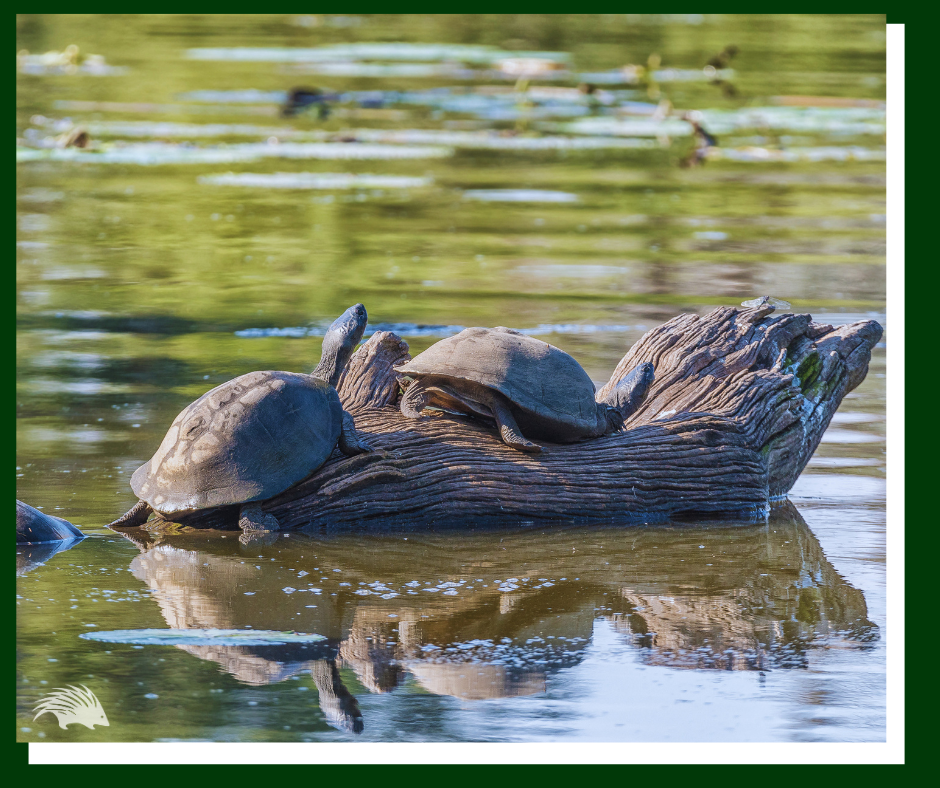
Sit long enough on the bank of the Crocodile River and you will see them. A row of dark, rounded shapes on a log or a rock, each one angled toward the sun. They hold completely still until something disturbs them, then drop into the water in a single smooth movement, one after another.
The Helmeted Terrapin is by far the terrapin visitors to Kruger most often see. It is common at waterholes, pans, and river margins throughout the park. The Serrated Hinged Terrapin occurs in the same river systems but is a much less frequent sighting: it prefers deeper water and spends less time in the open. Both are present along the Crocodile River and in southern Kruger, and both are worth knowing.
Serrated Hinged Terrapin
- Scientific name: Pelusios sinuatus
- Shell length: Up to 55 cm; females larger than males
- Shell colour: Uniform black carapace; yellow-centred plastron with black angular border
- Hinge: Front section of plastron hinges upward to close over head and forelimbs
- Habitat: Large rivers, dams, and lakes; migrates overland to seasonal pans in the wet season
- Diet: Water snails, aquatic insects, soft plant material, carrion
- Defence: Hinged plastron closure; secretes foul-smelling odour when threatened
- Nesting: Lays 7 to 30 eggs up to 500 m from water, October to January; hatchlings March to April
- Status: Least Concern (IUCN)
Helmeted Terrapin
- Scientific name: Pelomedusa galeata in South Africa and Pelomedusa subrufa, which may occur in parts of north-eastern South Africa, although its precise distribution in the Kruger region remains unresolved
- Shell length: 15 to 32 cm
- Shell colour: Olive to dark brown above; yellowish below
- Hinge: No hinge; fixed plastron
- Habitat: Seasonal pans, farm dams, slow rivers, and marshes; the most terrestrially adapted African terrapin
- Diet: Omnivorous: insects, worms, tadpoles, fish, birds, carrion, and plant material
- Defence: Withdraws head sideways; can survive years of drought underground
- Nesting: Lays 10 to 42 eggs; incubation 3 to 6 months
- Status: Least Concern (IUCN); recently split into at least 10 species globally
The Serrated Hinged Terrapin (Pelusios sinuatus)
What It Looks Like
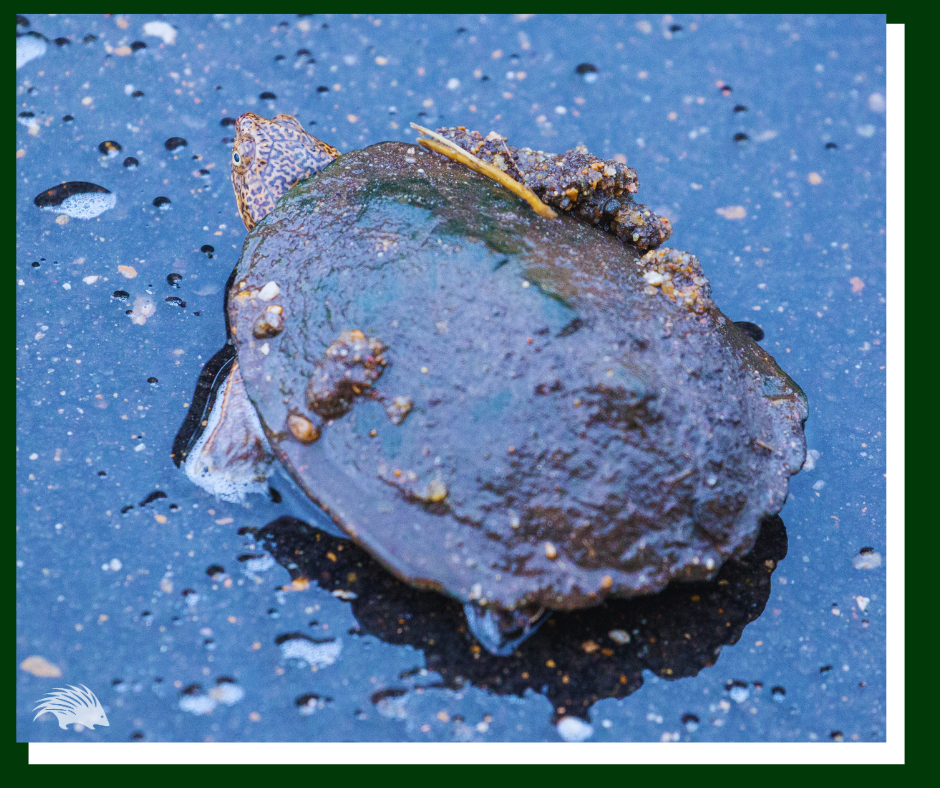
The Serrated Hinged Terrapin is the largest of the hinged terrapins in Africa, with a shell length of up to 55 cm and females consistently larger than males. The carapace is uniform black. The plastron is yellow at the centre with a sharply defined black angular pattern around the edge. The skin of the neck and limbs is pale olive-grey.
The serrated rear edge of the carapace, which gives the species its name, is visible as a slight scalloping along the back of the shell. On a log or rock, a large Serrated Hinged Terrapin is a solid, dark presence: heavier-looking than the Helmeted Terrapin and less inclined to move unless genuinely alarmed.
The Hinge
The defining anatomical feature is the hinge across the front section of the plastron, the flat underside of the shell. When the terrapin withdraws into the shell, the front section of the plastron closes upward, sealing the opening over the head and forelimbs.
This is not a complete lockdown: a determined predator can still apply enough force to break through, but the hinge provides meaningful protection against the kinds of pressure a bill or paw can exert.
As a secondary defence, the terrapin secretes a strong, foul-smelling odour from musk glands when handled or threatened. This is effective against most casual predators.
Where It Lives and What It Eats
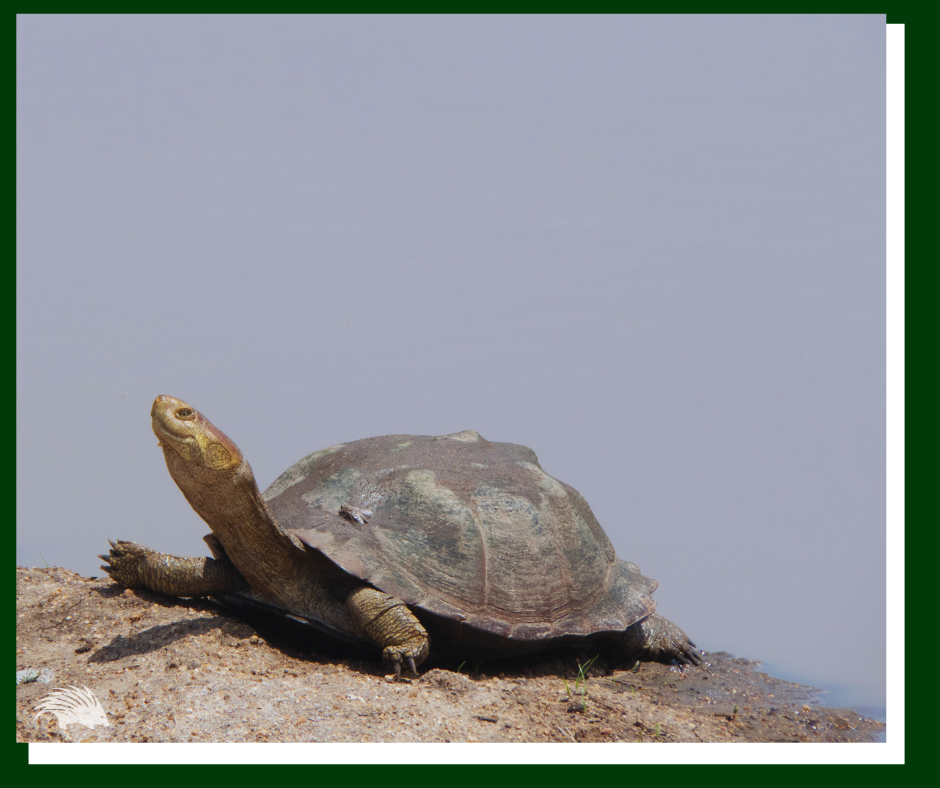
The Serrated Hinged Terrapin is a deep-water species at home in large rivers, dams, and lakes. It occurs in the Kruger river systems, including the Crocodile, Sabie, and Olifants rivers and the larger impoundments, but is seen far less frequently than the Helmeted Terrapin and tends to stay in deeper water away from the bank.
In the wet season it migrates overland to colonise seasonal pans and waterholes, sometimes travelling considerable distances from the main river.
It eats water snails, aquatic insects, soft aquatic plant material, and carrion. It is often seen on logs, rocks, and sandbanks alongside crocodiles, which it appears to treat with caution rather than alarm.
The claim that they bask on sleeping hippopotami is documented in the literature: the flat back and warm skin of a hippo apparently makes a serviceable basking platform.
Nesting
Females nest between October and January, digging a flask-shaped cavity in loose soil or sand and laying between 7 and 30 eggs. The nest site can be up to 500 metres from the nearest water.
Hatchlings emerge in March and April and make their way to water independently. Like most terrapin species, nest predation is high: monitor lizards in particular locate and excavate nests.
The Helmeted Terrapin (Pelomedusa galeata and Pelomedusa subrufa)
What It Looks Like
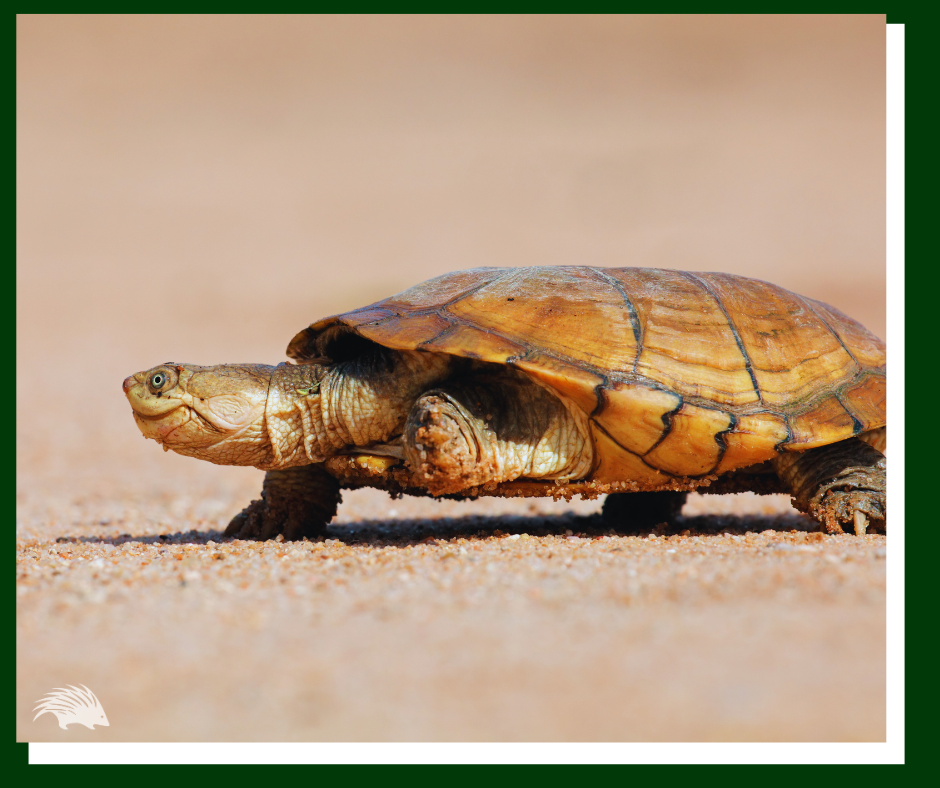
The Helmeted Terrapin is smaller than the Serrated Hinged Terrapin, with a shell length of 15 to around 32 cm. The carapace is olive to dark brown and relatively flat compared to the domed shell of many other terrapins. The underside is yellowish. The head is broad and somewhat flattened, giving the animal the helmet-like profile that produces its name.
It has no hinge. Instead of folding the plastron closed, it withdraws its head sideways under the front edge of the shell, a characteristic of the side-necked terrapins in the family Pelomedusidae that both species on this page share.
Watching a Helmeted Terrapin withdraw is noticeably different from watching most tortoises or turtles: the head goes sideways rather than straight back.
A Taxonomy Under Revision
What was long called a single species, Pelomedusa subrufa, distributed across most of Africa, Madagascar, and Arabia, has been found through genetic analysis to contain at least ten distinct species.
Research by the Senckenberg Research Institute, published in 2014, established that the variation within the group is deep enough to split it significantly.
In South Africa, the species most people encounter is now recognised as Pelomedusa galeata, the South African Helmeted Terrapin.
Some research has suggested that Pelomedusa subrufa sensu stricto may also occur in the north-eastern parts of the country, including the Kruger region, but the classification in this area is still being resolved. The different species look very similar and cannot be separated reliably in the field.
The Most Terrestrial of African Terrapins
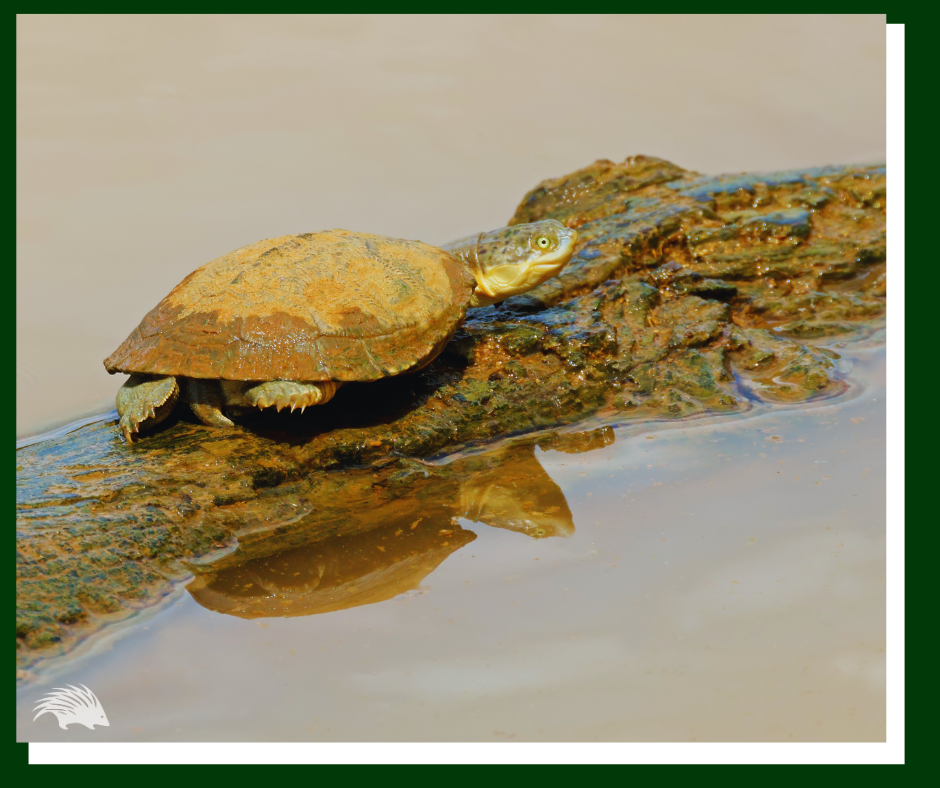
The Helmeted Terrapin is more terrestrial than the Serrated Hinged Terrapin. It favours small, shallow water bodies: seasonal pans, farm dams, slow-moving streams, and marshes. It moves overland readily and colonises new water bodies quickly.
In drier parts of southern Africa, the construction of farm dams has allowed the species to expand its range into areas it could not previously reach.
Its most remarkable adaptation is drought tolerance. When a seasonal pan dries out completely, the Helmeted Terrapin burrows into the mud and can remain there for months, sometimes years, until water returns.
Its metabolic rate drops and it survives on body reserves. This capacity to persist through years of drought is why it is found across such a wide and climatically varied range.
What It Eats
The Helmeted Terrapin is one of the more aggressive feeders among southern African terrapins. It is fully omnivorous: insects, worms, tadpoles, frogs, fish, small birds, carrion, and plant material all feature in its diet.
Groups of Helmeted Terrapins have been observed cooperatively drowning and dismembering doves and pigeons that come to drink at shallow water edges. This is not a rare event: it is a documented and apparently regular feeding strategy at suitable waterholes.
How to Tell Them Apart
At the waterhole or river bank, the two species are not difficult to separate once you know what to look for.
The Serrated Hinged Terrapin is considerably larger, with a distinctly black carapace and a yellow-patterned plastron visible when the animal is on a log or tilted on a rock. It favours deep water and larger river systems. The serrated rear edge of the shell is visible on close inspection.
The Helmeted Terrapin is smaller, flatter, and olive-brown rather than black. It is more likely to be seen at small pans, puddles, and shallow edges. The broad, flat head is distinctive when the animal is moving or feeding.
At a waterhole, Helmeted Terrapins often congregate in numbers at the shallow margins, where the Serrated Hinged Terrapin would be less comfortable.
Where to See Them Near Marloth Park and Kruger
Both species are present along the Crocodile River, which forms the southern boundary of Kruger and runs alongside Marloth Park.
The Helmeted Terrapin is by far the more frequently seen of the two: it uses the shallower margins, pans, and waterholes throughout the area. The Serrated Hinged Terrapin occurs in the main river but is a much less common sighting, preferring deeper water and spending less time on exposed banks.
In Kruger, the waterholes in the southern section and the S28 and S114 roads along the Crocodile River are consistent spots for Helmeted Terrapin sightings year-round.
They bask in the early morning and late afternoon and drop into the water at the approach of a vehicle. Stopping quietly well before a waterhole gives you a better chance of watching them undisturbed.
Waterholes in the drier central sections of Kruger, around Satara, are reliable Helmeted Terrapin spots, particularly in the dry season when animals concentrate at permanent water.
Frequently Asked Questions
What is the difference between the Serrated Hinged Terrapin and the Helmeted Terrapin?
The Serrated Hinged Terrapin (Pelusios sinuatus) is considerably larger, reaching up to 55 cm, has a uniform black carapace with a yellow-patterned plastron, and has a hinged front section of the plastron that closes for protection. It lives in large, deep water bodies.
The Helmeted Terrapin, Pelomedusa galeata in most of South Africa, is smaller at 15 to 32 cm, olive-brown, has no hinge, and favours small, shallow water bodies including seasonal pans and farm dams.
Do terrapins bask on hippos in Kruger?
Yes, this has been documented for the Serrated Hinged Terrapin. The flat back of a resting hippo provides a raised, warm surface that functions as a basking platform.
It is not the most common sight, but it has been recorded in rivers within and adjacent to Kruger where both hippos and the terrapin are present.
Can Helmeted Terrapins really survive for years without water?
Yes. When a seasonal water body dries out completely, the Helmeted Terrapin burrows into the mud and enters a dormant state, with reduced metabolism and activity.
It can remain in this state for months and, in documented cases, for multiple years, surviving on body reserves until water returns. This is one of the reasons the species is so widely distributed across climatically variable parts of southern Africa.
Are Helmeted Terrapins dangerous?
Not to humans in any meaningful sense, but they are aggressive feeders. Groups have been documented cooperatively drowning and dismembering birds, including doves and pigeons, at shallow waterholes.
They will also bite if handled. They are not a threat to people but are more active and assertive predators than their slow appearance suggests.
Where is the best place to see terrapins near Marloth Park?
The Crocodile River, which runs along the southern boundary of Marloth Park and Kruger, has both species, although the Helmeted Terrapin is by far the more commonly seen.
Waterholes in the southern and central sections of the park, accessible via the Crocodile Bridge and Malelane gates, regularly produce Helmeted Terrapin sightings.
The Serrated Hinged Terrapin occurs in the main river but is a much less frequent sighting. Arriving quietly and stopping well back gives the best views.
Is the Helmeted Terrapin actually one species?
No. What was long treated as a single species across most of Africa, Madagascar, and Arabia has been found through genetic analysis to contain at least ten distinct species.
In South Africa, most animals belong to Pelomedusa galeata. Some research suggests that Pelomedusa subrufa sensu stricto may also occur in the Kruger and Mpumalanga region, but the taxonomy in this area is still being resolved and the different forms cannot be separated reliably in the field.
Share This Post