

Discover the top 10 family-friendly activities in and around Marloth Park. From quad biking and horse riding to river fishing and scenic flights, plan your multigenerational safari adventure with Needles Lodge.
Red-billed and Yellow-billed Hornbills are two of the most visible and vocal birds in the Lowveld. They are common in Kruger, and impossible to miss once you know what to look for.
Here are ten things worth knowing about them.
Red-billed and Yellow-billed Hornbills at a Glance
- Red-billed Hornbill: Tockus rufirostris (Southern Red-billed Hornbill)
- Yellow-billed Hornbill: Tockus leucomelas (Southern Yellow-billed Hornbill)
- Length: Red-billed: around 42 cm; Yellow-billed: 48 to 60 cm
- Bill colour: Red-billed: red, no casque; Yellow-billed: yellow with small casque on male
- Habitat: Open woodland, dry savanna, thornveld; common along roadsides
- Diet: Insects, seeds, small lizards, scorpions, spiders; mainly ground foragers
- Status: Both Least Concern (IUCN)
1. The Bill Is Not Just for Show
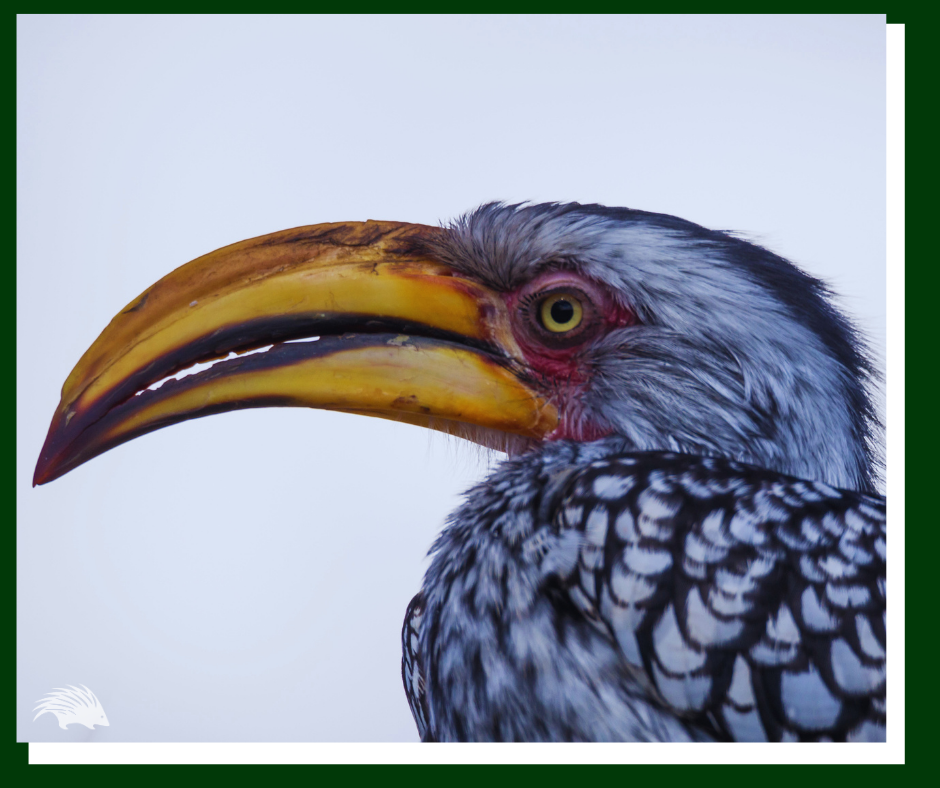
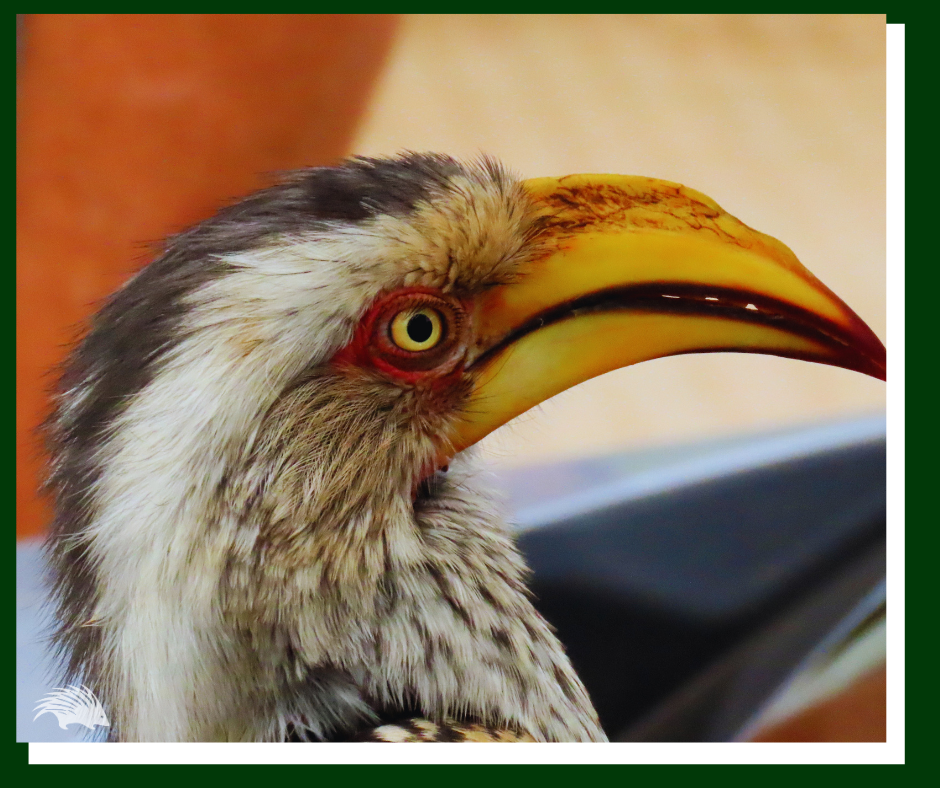
The hornbill's bill looks comically oversized, and in the case of the Yellow-billed Hornbill, it can account for up to one sixth of the bird's total body length. It is not a problem: the bill is lightweight, built from a honeycomb of hollow chambers supported by thin bony struts, which keeps the weight manageable. The bird can carry it without difficulty and uses it with considerable precision.
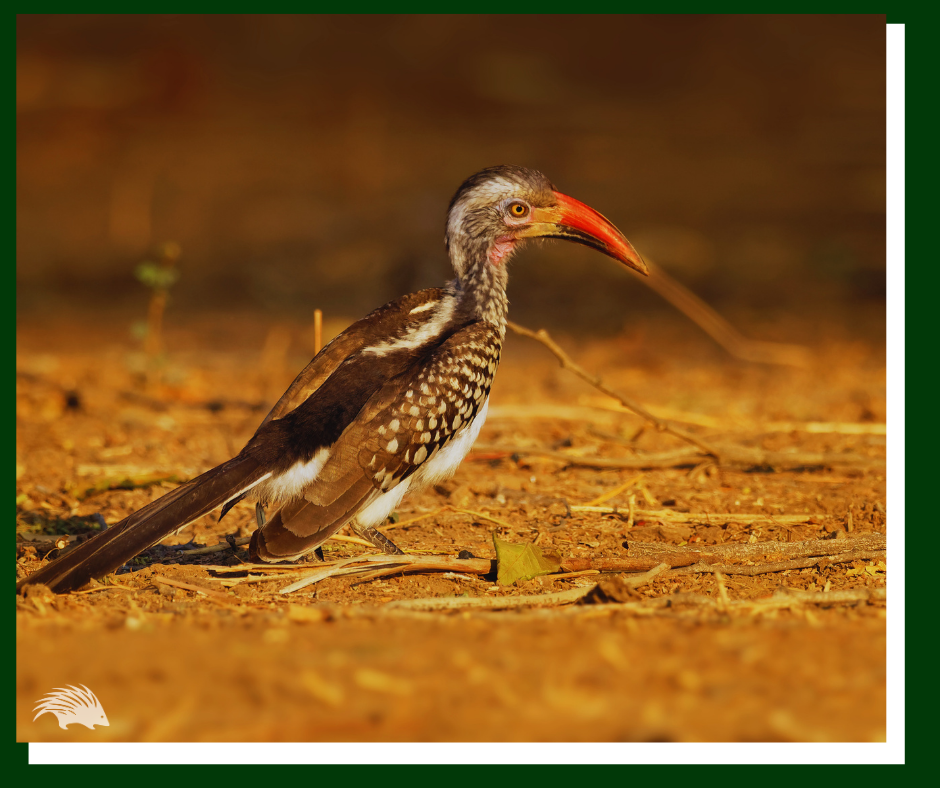
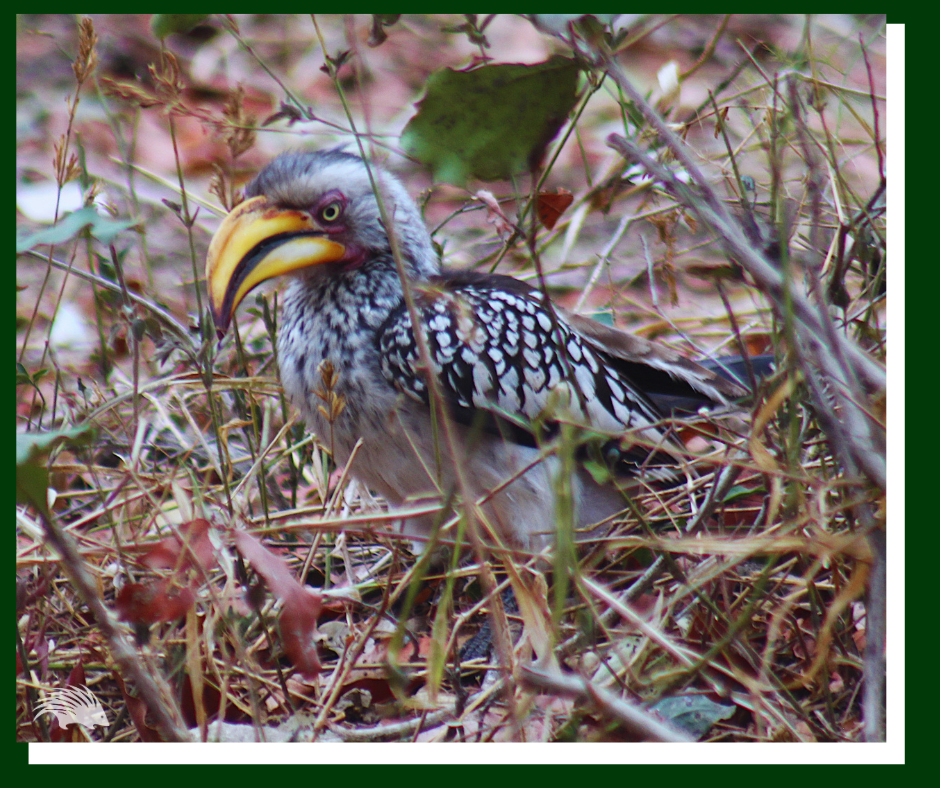
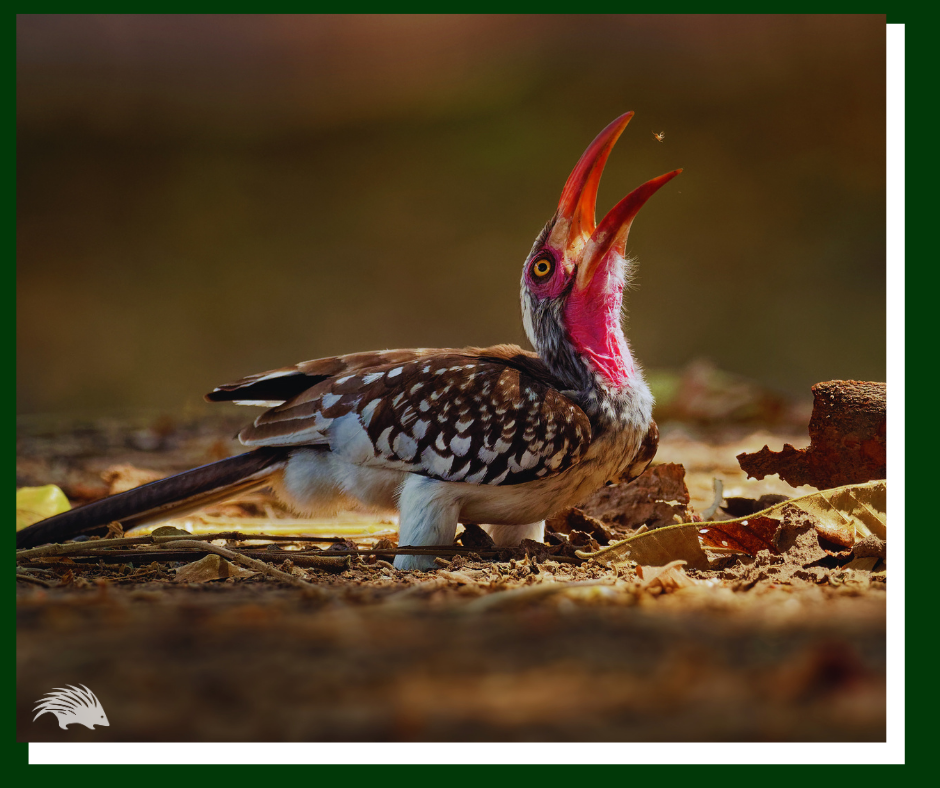
Both species are primarily ground foragers. They walk along the surface, flip over leaf litter, pebbles, and dung with the bill tip, and snap up whatever is underneath: beetles, termites, grasshoppers, scorpions, spiders, and small lizards. The Red-billed Hornbill also forages in trees for insects and occasionally takes small fruit.
2. They Are Easy to Tell Apart
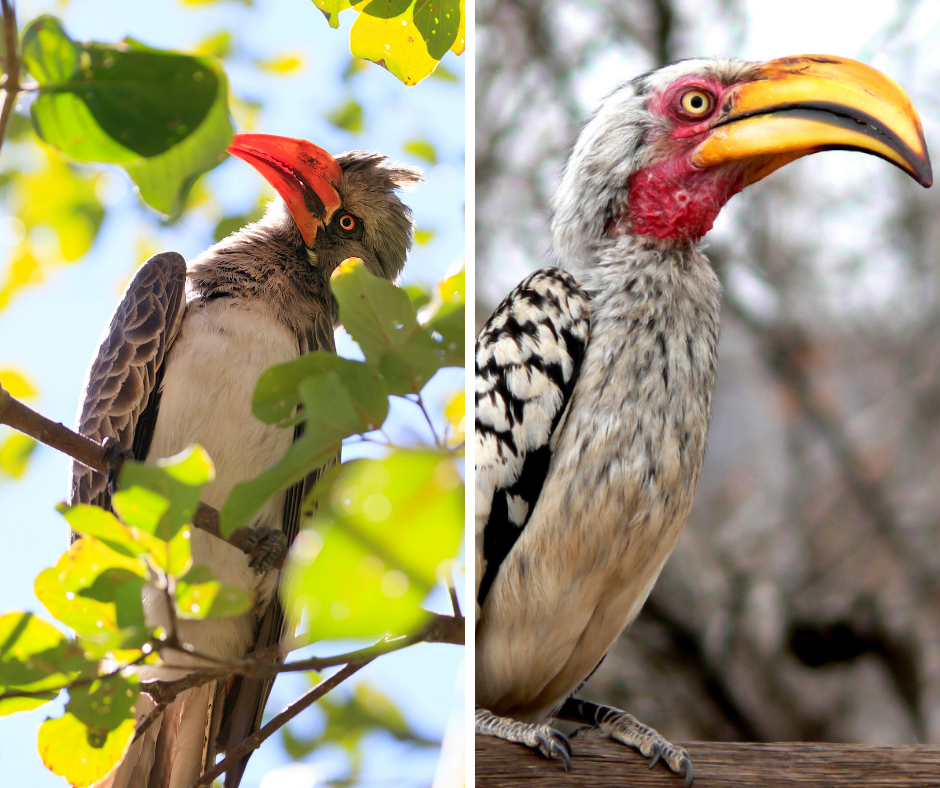
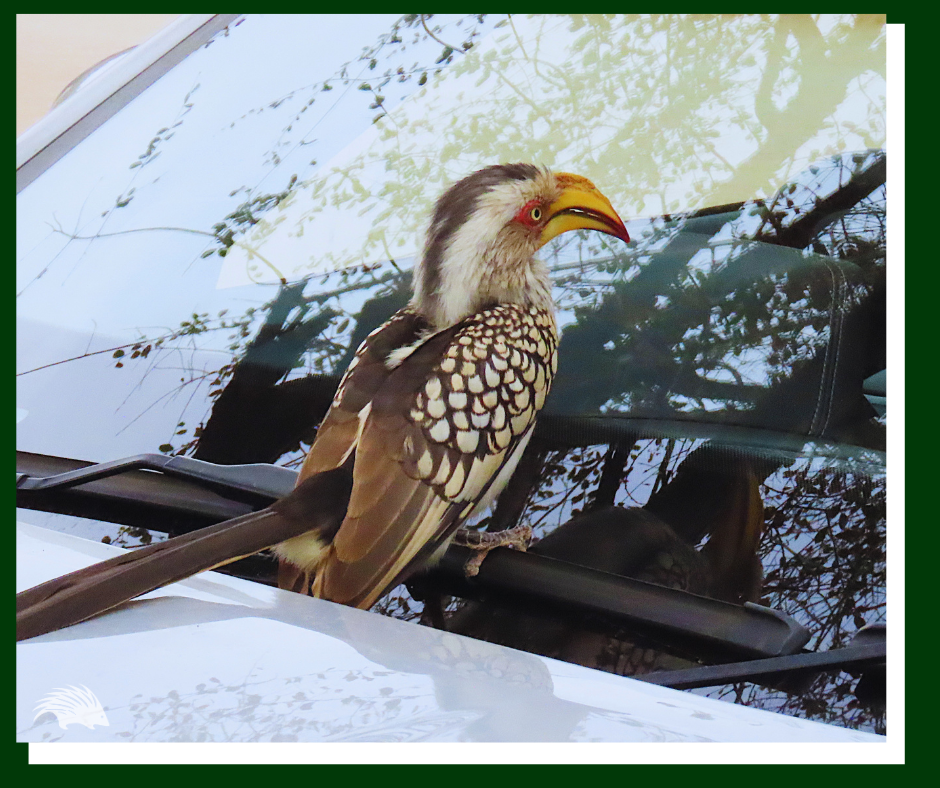
The two species look similar at a glance: both are black and white with a long, curved bill, a long tail, and spotted wing feathers. The bill colour settles the identification immediately. Red bill: Southern Red-billed Hornbill. Yellow bill: Southern Yellow-billed Hornbill.
The Yellow-billed Hornbill is the larger of the two and has a small casque on the upper bill (more pronounced on the male). It also earned the nickname the 'flying banana' for reasons that are obvious once you have seen one in profile. The Red-billed Hornbill has no casque and is slightly smaller and slimmer. Both sexes in each species look similar, though females have shorter bills than males.
3. The Female Seals Herself Inside the Nest
Hornbill nesting behaviour is one of the stranger strategies in the bird world. Both species nest in natural tree cavities. Once the female has entered the nest and the pair has decided to breed, she seals the entrance from the inside using a mixture of mud, droppings, fruit pulp, and food remains, pressing it into place until the opening is reduced to a narrow vertical slit.
She stays sealed inside for up to two to three months, through incubation and the early weeks of chick development. The male feeds her through the slit throughout this period, delivering insects, fruit, and small prey one item at a time. Inside the nest, the female undergoes a complete moult of her flight feathers during this time, emerging with fresh plumage when she finally breaks out.
4. The Chicks Reseal the Nest After the Female Leaves
When the oldest chicks are around three weeks old, the female breaks out of the nest cavity. At this point the chicks, which cannot yet fly, take over: they reseal the entrance themselves using the same mixture of droppings and food remains, leaving only the narrow slit through which both parents now feed them.
The chicks remain sealed inside for another four to six weeks, fed through the slit by both adults, until they are ready to fledge. The sealed nest is highly effective at excluding predators: a snake or monitor lizard investigating the tree finds a solid barrier instead of an open hole. The only way in requires breaking through material that the hornbills can rebuild quickly.
5. That Call Is One of the Most Recognisable Sounds in the Lowveld
The hornbill call starts quietly and builds: a series of repeated clucking notes that accelerates and rises in pitch before trailing off. The scientific name of the genus, Tockus, is itself derived from the sound of the call. It is loud enough to carry across open bush and distinctive enough that most people who have spent time in the Lowveld can place it immediately.
Both species call frequently throughout the day, often from an exposed perch on a dead branch or telegraph pole. The call is used to maintain contact between pairs, to advertise territory, and during courtship. Males call with wings partly spread, tilting the body forward in a display that accompanies the rising tempo of the notes.
6. They Forage with Mongooses and Starlings
The Yellow-billed Hornbill is known to forage cooperatively with dwarf mongooses. The hornbills follow mongoose groups as they move through the bush, catching insects, lizards, and other small animals that the mongooses flush from cover. The mongooses tolerate the hornbills and appear to benefit from the hornbills' height advantage and aerial perspective, which gives them an early warning of approaching raptors.
This relationship has been studied in some detail and is one of the better-documented examples of a mixed-species foraging association between birds and mammals in the African bush. The hornbills are attentive to the mongooses' alarm calls and respond to them, and the mongooses respond to hornbill alarm calls in return.
7. They Walk on the Ground with Surprising Confidence
Both species spend a significant portion of the day on the ground, which is unusual for birds of their size and shape. The long tail and slightly forward-leaning posture give them an unhurried, deliberate walk that is completely at odds with the general fidgety quality of most small birds.
At Needles Lodge, hornbills regularly walk through the garden and across the driveway, occasionally stopping to investigate something in the grass or under a leaf. They are not particularly shy of humans and will continue foraging to within a few metres of a person standing still. On the ground, they cover more area than you would expect, working methodically through a patch before moving on.
8. They Are Not Related to Toucans
The hornbill's large, colourful bill leads many people to assume it is related to the South American toucan. It is not. Hornbills (family Bucerotidae) and toucans (family Ramphastidae) are not closely related. The similar bill shape is a case of convergent evolution: two separate lineages arriving at a similar structure through different evolutionary paths, solving the same problems of reaching food and social display with similar tools.
Hornbills are an Old World family, found across sub-Saharan Africa and Asia. The family contains around 60 species, ranging from the small Tockus hornbills of the African savanna to the massive and spectacular Rhinoceros Hornbill of Southeast Asia. The African savanna species, including the Red-billed and Yellow-billed, are among the smallest in the family.
9. Both Species Are Year-Round Residents in Marloth Park
Unlike many of the more conspicuous summer birds (the Woodland Kingfisher, the European Roller, the various cuckoos), Red-billed and Yellow-billed Hornbills do not migrate. They are present in Marloth Park and Kruger throughout the year, which makes them among the most reliable bird sightings regardless of when you visit.
In the dry season they are particularly visible because the thinning vegetation opens up the view, and they spend more time foraging in open areas near remaining water. In the wet season they are more active in the denser bush and their calls carry well through the morning air. The breeding season runs roughly from September to January, when the nest-sealing behaviour is most likely to be observed.
10. They Are Among the First Birds Most Guests at Needles Lodge See
The hornbills at Needles Lodge are not hiding. They walk through the garden in the morning, call from the fever trees along the boundary, and perch on the fence posts in full view of the deck. They are the kind of bird that does not require binoculars or patience: they come to you.
For first-time visitors to the Lowveld, the hornbill is often one of the first truly new birds: something that does not look or behave like anything at home. The oversized bill, the walking posture, the loud accelerating call from a nearby branch. By the end of the first morning, most guests can identify both species by sight and sound, which makes them a useful starting point for getting to know the birds of the bush.
Frequently Asked Questions
What is the difference between a Red-billed and Yellow-billed Hornbill?
The bill colour is the simplest identifier: red bill for the Southern Red-billed Hornbill, yellow bill for the Southern Yellow-billed Hornbill. The Yellow-billed is also the larger of the two, at 48 to 60 cm versus around 42 cm, and the male has a small casque on the upper bill. Both species have black and white plumage with spotted wings and a long tail. Both are common in Marloth Park and Kruger.
Why do hornbills seal themselves inside a tree?
The sealed nest is a defence strategy against predators. The female enters a tree cavity and seals the entrance from the inside using mud, droppings, and food remains, leaving only a narrow vertical slit. The male feeds her through the slit for the two to three months she is inside. The chicks reseal the nest after the female breaks out, and remain inside until they are ready to fly. The sealed entrance is highly effective at keeping out snakes and monitor lizards.
Do hornbills really forage with mongooses?
Yes, for the Yellow-billed Hornbill specifically. The hornbills follow dwarf mongoose groups as they move through the bush, catching insects and small animals the mongooses flush from cover. The mongooses benefit from the hornbills' elevated vantage point and their alarm calls. The hornbills respond to mongoose alarm calls. It is one of the better-documented bird-mammal foraging associations in the African bush.
Can you see hornbills at Needles Lodge?
Both Red-billed and Yellow-billed Hornbills are regular on the Needles Lodge property in Marloth Park throughout the year. They forage through the garden, call from the trees around the lodge, and are often seen from the deck without needing to go into Kruger. They are among the most visible and reliably present birds on the property.
What do hornbills eat?
Both species are omnivorous ground foragers. Their diet includes beetles, termites, grasshoppers, scorpions, spiders, small lizards, seeds, and occasionally fruit. They flip over leaf litter, pebbles, and dung to find prey underneath. The Yellow-billed Hornbill also forages cooperatively with dwarf mongooses, catching animals that the mongooses disturb from cover.
Are hornbills related to toucans?
No. Hornbills (family Bucerotidae) are an Old World family found across Africa and Asia. Toucans (family Ramphastidae) are a New World family from Central and South America. The similar large, colourful bill is a case of convergent evolution: two unrelated lineages arriving at a similar structure independently. They are not closely related.
Red-billed and Yellow-billed Hornbills are year-round residents at Needles Lodge in Marloth Park. They are among the first birds most guests see, often before leaving the lodge grounds. Get in touch to plan your visit.

Share This Post