
Discover how each season transforms Marloth Park and Kruger’s bushveld. From dry winters to lush green summers, explore wildlife patterns and safari experiences at Needles Lodge.
How to get the most from three nights in the southern Kruger bushveld, with guided game drives, good food, and the wildlife that comes to you right on the lodge grounds.
Three nights is the sweet spot for a first Kruger stay. Long enough to settle in and find your rhythm. Long enough to go out twice a day and come back with different stories each time. Short enough that every hour still feels like it counts.
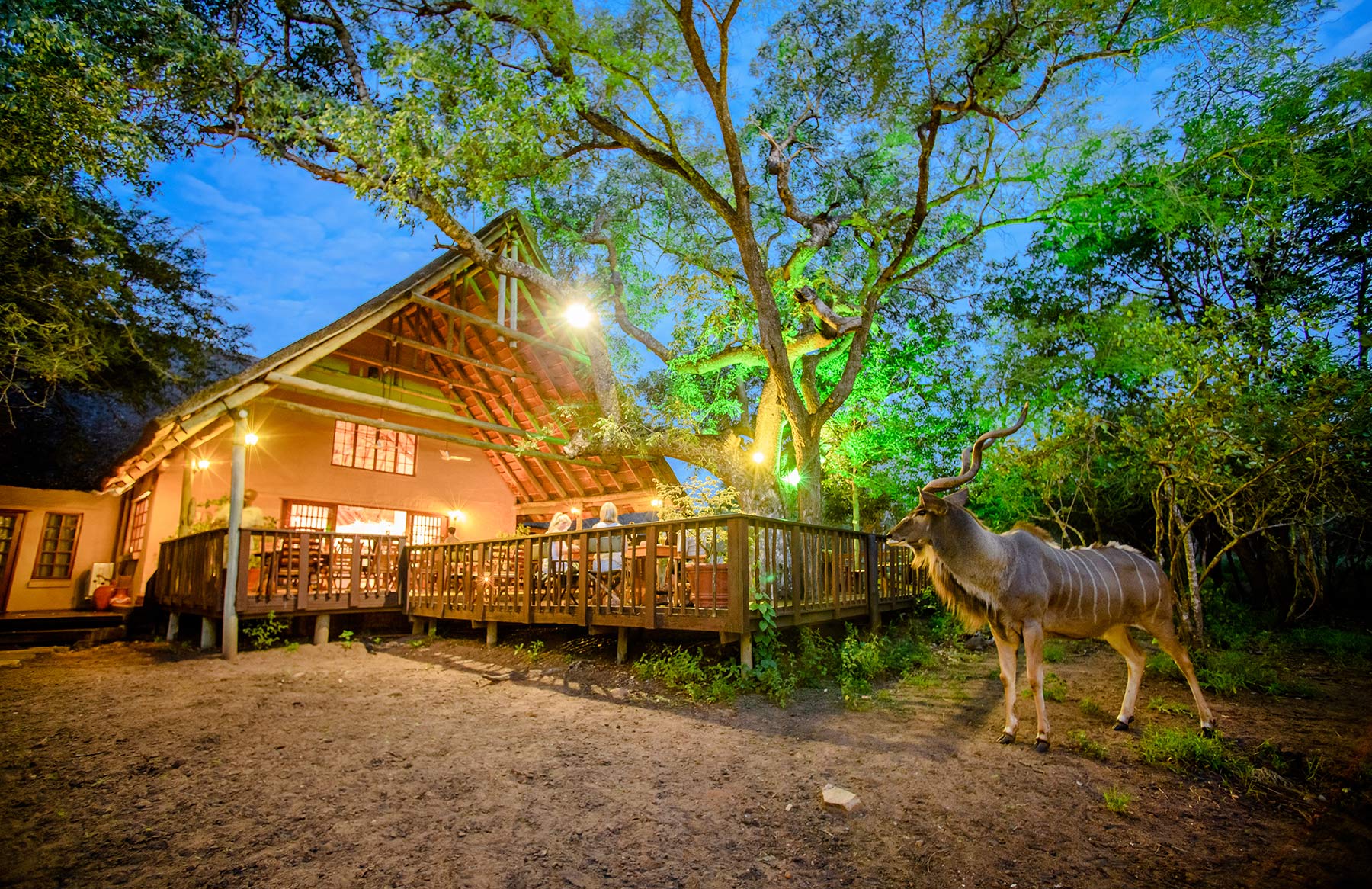
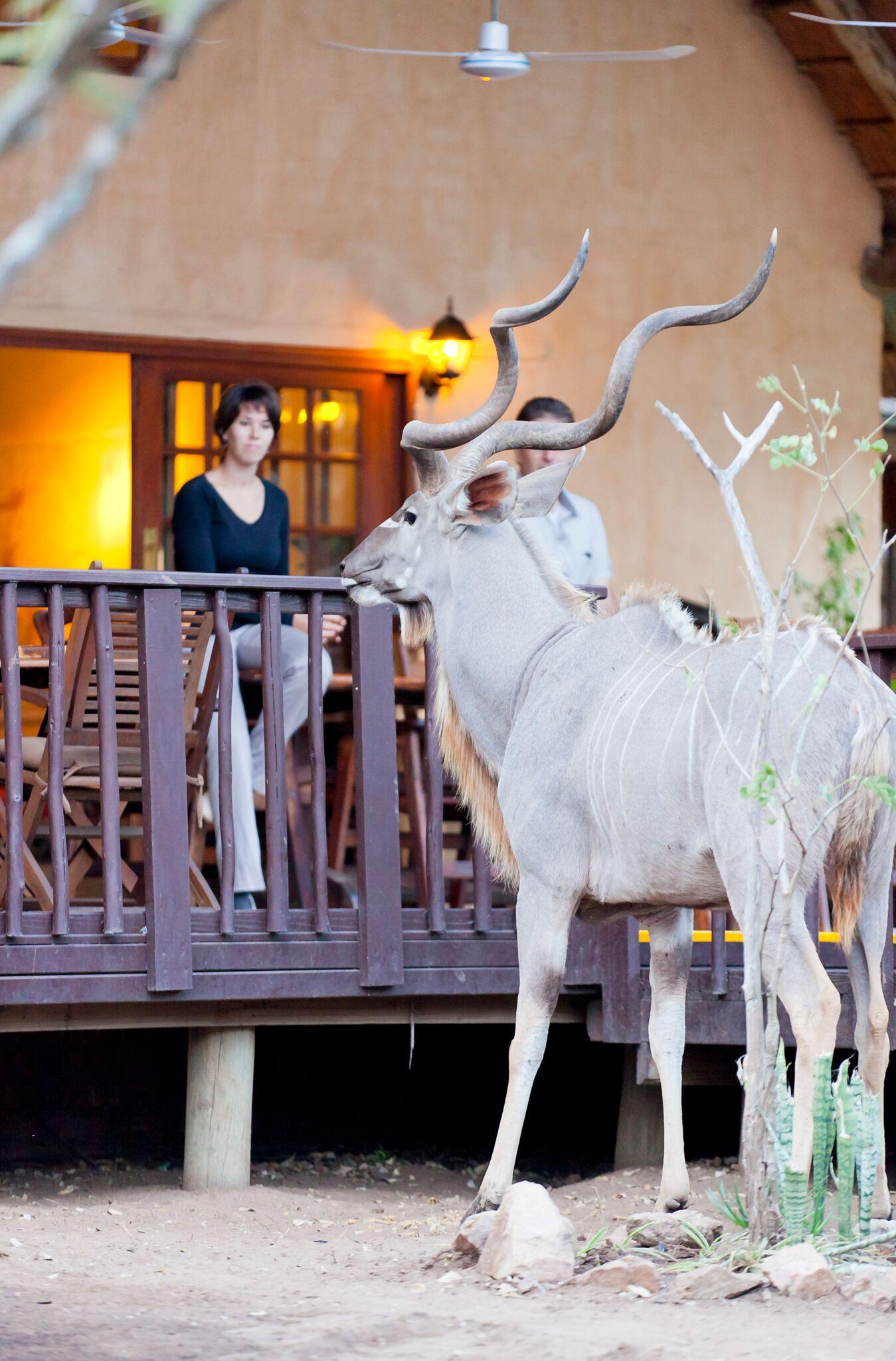
At Needles Lodge, the safari starts before you reach the park gate. Kudu move through the garden in the early morning. Warthog family groups trot across the driveway. Giraffe appear above the treeline at the back of the property. Zebra and wildebeest are regular visitors. The birdlife is constant: hornbills, rollers, sunbirds, and in summer the Woodland Kingfisher calling from the fever trees before the sun is fully up.
When you do head into Kruger, you go with a guide who knows exactly where to look. You do not have to navigate, read a map, or work out which road to take. You sit in the open vehicle, watch the bush, and let the guide do what they do. This is what three nights here actually looks like.
Day 1: Arrival, the Lodge, and Your First Drive
Check in by 15:00. There is usually a kudu or two grazing near the entrance when guests arrive, which sets the tone immediately. The rooms are cool, the lodge is quiet, and the bush is right there at the edge of the garden.
By late afternoon you are already in Kruger. The lodge transfers guests to Crocodile Bridge gate at 15:45, where the SANParks Sunset Drive departs at 16:30 in an open vehicle with a ranger guide.
The Crocodile River at this hour is at its best: hippo surfacing in the shallows, elephant moving down to drink as the heat lifts, impala herds catching the last of the light on the open floodplain. The drive runs for three hours and guests are transferred back to the lodge on return.
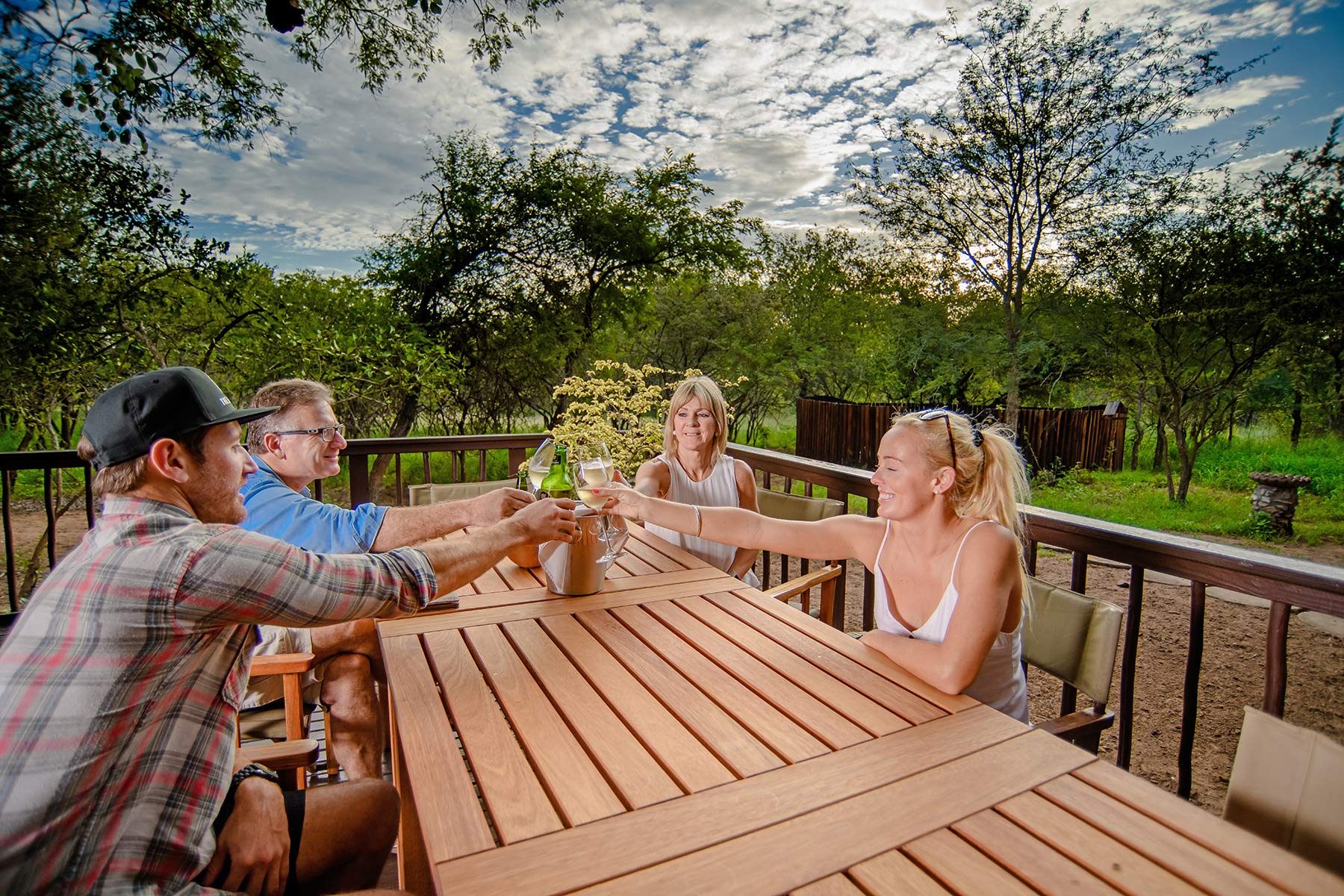
Back at the lodge, dinner is served at the long communal table. By the end of the first evening, guests who arrived as strangers are swapping sightings and debating whether the lion tracks near the river crossing were from last night or this morning.
What You Might See Today
Along the Crocodile River in the late afternoon: hippo, crocodile, elephant, impala, waterbuck, and a good chance of lion in the Gomondwane area.
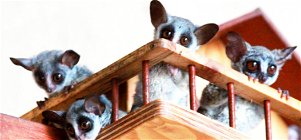
At the lodge before and after the drive: kudu browsing in the garden, warthog families with their piglets, and the first bats coming out over the deck at dusk.
Day 2: Full Day in the Bush with the Lodge Guide
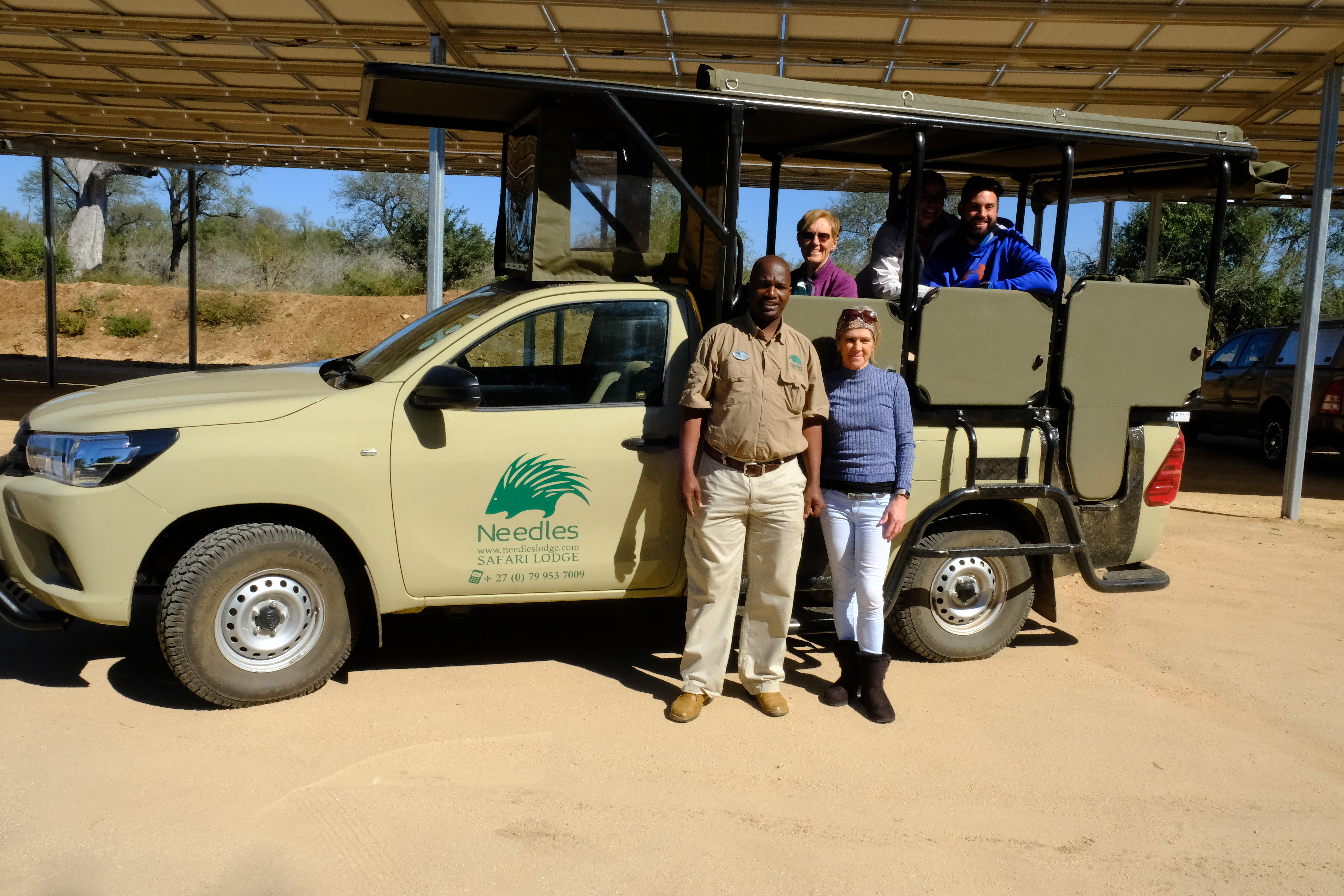
This is the full day. The vehicle leaves Needles Lodge in the dark, before first light, to be through Crocodile Bridge gate the moment it opens.
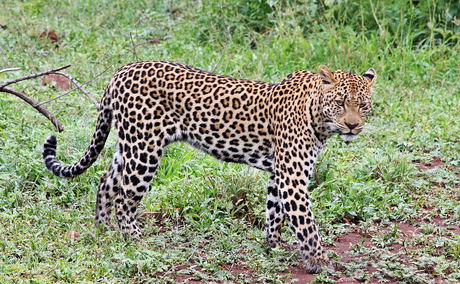
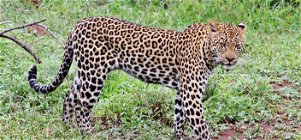
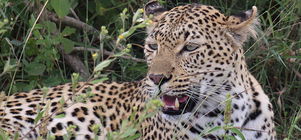
The guide has been tracking what is moving in the southern section: which pride of lions was spotted yesterday evening, where a leopard has been active on the river road, whether the wild dog pack is in the area.
You do not need to think about any of that. You sit in the open vehicle, a warm layer on your shoulders because the Lowveld morning is cold before the sun comes up, and watch the bush wake up around you. The guide does the reading.
Morning
The Crocodile River road at dawn is as good as southern Kruger gets. The guide works the river loops slowly, windows of bush opening and closing as the vehicle rounds each bend.
A family of elephant crossing the road ahead. A pair of saddle-billed storks standing in the shallows. The sound of a lion calling, somewhere to the north, close enough that the guide slows and listens before deciding whether to follow it.
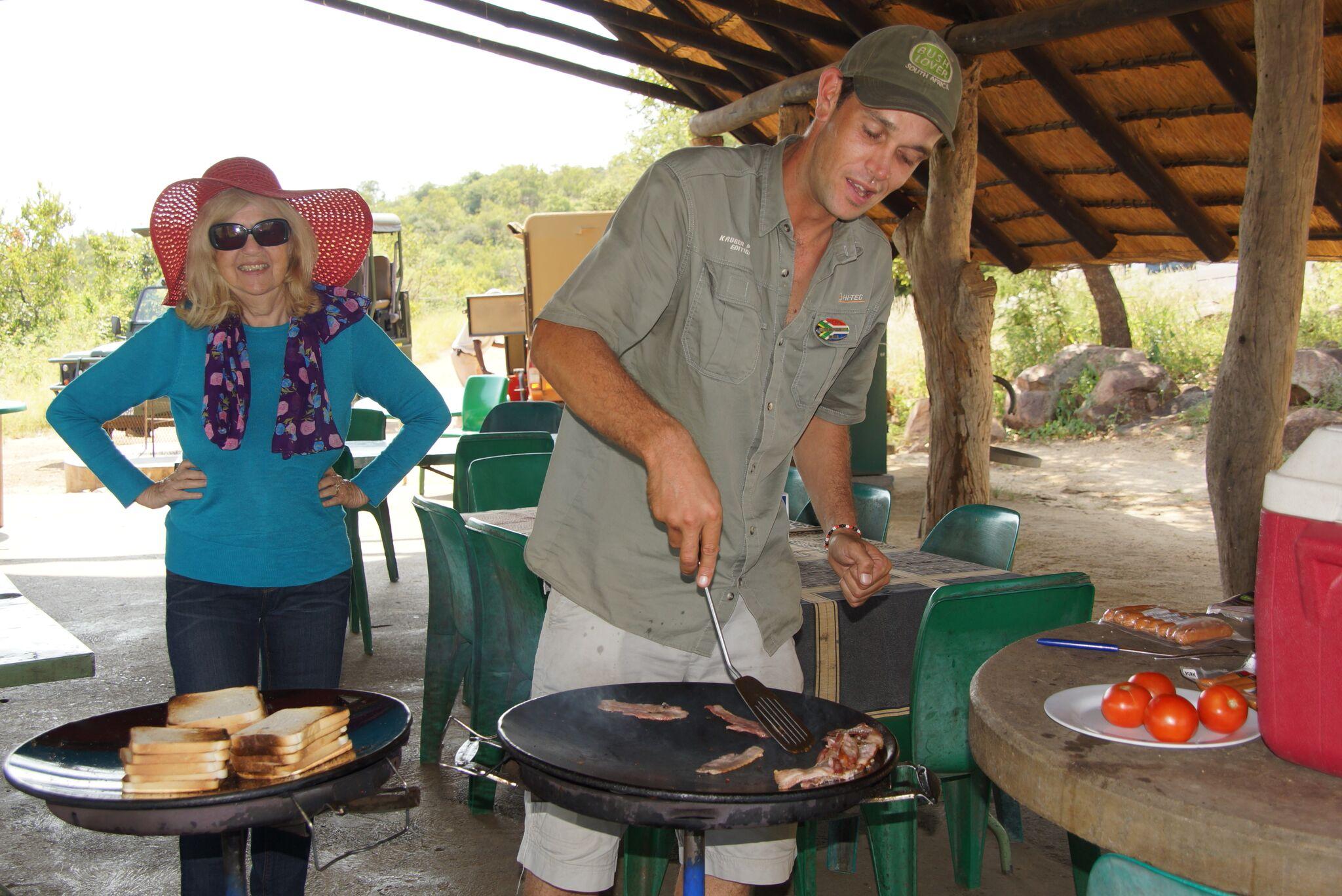
Mid-morning brings a bush breakfast stop. Depending on where the guide has taken the vehicle and what sightings have shaped the morning, this could be at Lower Sabie, Afsaal, or another spot in the park. The guide decides on the day. Food, a stretch, and back into the vehicle with a fresh read on where to head next.
Midday and Afternoon
The middle of the day pushes further into the park, into mixed woodland where the animals are resting in shade. This is when the guide earns their keep: finding a lion flattened under an acacia, or a leopard draped over a branch, requires knowing where to look.
Lunch is in the park, at one of the rest camp restaurants or at a bush picnic site.
The afternoon drive back to the gate uses the last of the light. The bush is active again as the temperature drops. The guide times the return to be through the gate at last light, having used every minute of the day productively.
Back at the Lodge
By the time you are back at Needles Lodge, cleaned up, and sitting on the deck with a drink, the day has a weight to it.
Dinner is three courses. The night sounds start: the distant whoop of a hyena, a fiery-necked nightjar calling from the garden, the soft movement of a nyala in the dark beyond the fence.
What You Might See Today
Lion, leopard, elephant, hippo, crocodile, buffalo, giraffe, white rhino in the Berg-en-Dal area, cheetah in open plains sections, wild dog if a pack is in the area, and the full range of plains game.
The guide tailors the route to what is current, not what is typical.
Day 3: One More Morning and the Wildlife at Your Door
The last morning is gentler. A guided walk in Kruger is an option for those who want it: two armed SANParks rangers, three to five kilometres on foot, and an hour or two at ground level in the bush.
Tracks, plants, insects, birds, and the possibility of game on foot. It is a completely different experience from the vehicle drives and a good way to close the stay.
For those who prefer a slower final morning, the lodge itself is enough. Coffee on the deck while a giraffe moves through the treeline at the back of the property. A kudu bull standing in the dappled shade near the rooms. Warthog kneeling to graze on the lawn.
These animals are not behind a fence or managed: they move through Marloth Park freely, and they come to the lodge because the garden is part of the bush they move through every day.
Checkout is at 10:30. On the last morning, guests can have a late wake-up and enjoy breakfast at 09:00 before heading out. Most sit on the deck a little longer than they planned to.
What You Might See at the Lodge
Kudu, warthog, giraffe, zebra, wildebeest, impala, nyala, and bushbuck are all regular on the property and in the surrounding Marloth Park bush.
Birdlife includes hornbills, rollers, kingfishers, sunbirds, go-away birds, and in summer a wide range of migrant species. The Woodland Kingfisher calls from the fever trees from November onward.
The Crocodile River, visible from the lodge, holds hippo, crocodile, and a full complement of riverine birds year-round.
Why Three Nights Works
Two nights is a taste. Three nights is the point at which you stop watching the clock and start watching the bush.
By day two you are already learning the rhythm: the elephant herd that crosses the H4-2 around 07:00 most mornings, the hippo that surfaces in the same pool every afternoon, the way the birds go quiet for twenty minutes before a storm.
The guide knows these patterns. Three nights gives you enough time to benefit from them.
Three nights also means three dinners at the communal table, which is part of what makes Needles Lodge work. The lodge takes a maximum of 16 guests.
By the second evening, everyone at the table has been in the bush together and the conversation is easy. People share what they saw, ask what others missed, and plan the next morning over dessert.
Frequently Asked Questions
What wildlife can I see at Needles Lodge without going into Kruger?
Marloth Park is a private wildlife area that borders Kruger along the Crocodile River, and the animals move freely through it.
On and around the Needles Lodge property, guests regularly see kudu, warthog, giraffe, zebra, wildebeest, impala, nyala, and bushbuck.
The birdlife is extensive: over 200 species have been recorded in Marloth Park, including hornbills, rollers, kingfishers, sunbirds, and in summer a wide range of migrants.
The Crocodile River, visible from the lodge, holds hippo, crocodile, and riverine birds year-round. The large predators do not enter Marloth Park.
Do I need to worry about planning the game drives myself?
No. The Needles Lodge guides handle all the planning. They know the southern Kruger roads, follow current sightings, and decide each morning which areas to prioritise based on what has been active.
You do not need to research routes, read maps, or make any decisions in the vehicle. Your job is to watch the bush.
Is three nights enough to see the Big Five?
There are no guarantees in wild game viewing, and any guide who promises specific sightings is not being honest.
What three nights with a good guide does give you is the best realistic chance. Lion, elephant, buffalo, hippo, and white rhino are all consistent in the southern Kruger section. Leopard are present but less predictable. Black rhino are rare.
The guide puts you in the right places: the rest is up to the animals.
What is the food like at Needles Lodge?
Breakfast and dinner are included in the stay and served at the lodge. Dinner is a three-course meal served at the communal table, where guests eat together and share the day's stories.
The food is home-cooked and changes daily. Lunch on full-day drives is in the park at one of the Kruger rest camp restaurants, which the guide factors into the day's route.
What should I pack for the game drives?
A warm layer is the most important item, even in summer. The open vehicle at 05:30 in the Lowveld is cold, and the first hour of the drive is in full pre-dawn chill.
Sunscreen and a hat for the middle of the day. Binoculars if you have them, with 8x42 or 10x42 being the most useful. A camera if photography matters to you.
Neutral colours such as khaki, olive, and grey are better than white or bright blue in the field. The guide will have water in the vehicle.
When is the best time of year to visit?
The dry season from May to October gives the easiest game viewing: vegetation is sparse, animals concentrate around water, and sightings are more frequent.
September and October have the highest animal concentration but are also the hottest months. May and June offer good game viewing with milder temperatures and fewer visitors.
The wet season from November to April has thicker bush but rewards with newborn animals, summer migrant birds, and a greener, more active landscape. The lodge at Needles is good year-round.
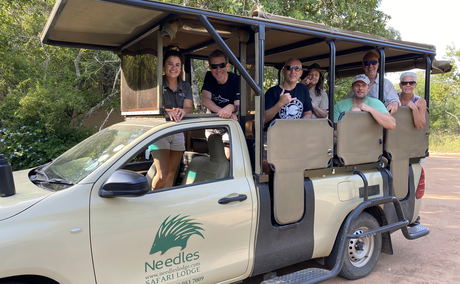
Needles Lodge is on Bushpig Avenue in Marloth Park, 10 minutes from Crocodile Bridge gate into southern Kruger. The lodge takes a maximum of 16 guests, runs guided drives in an open vehicle, and handles everything so you can focus on the bush.
Share This Post