
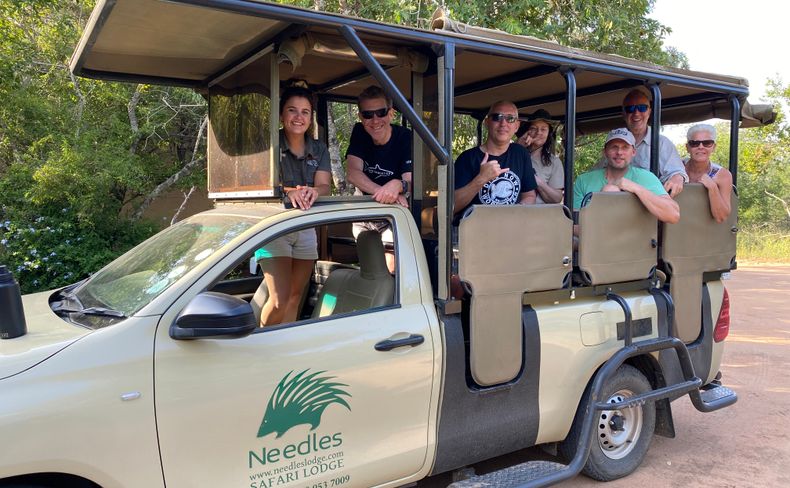
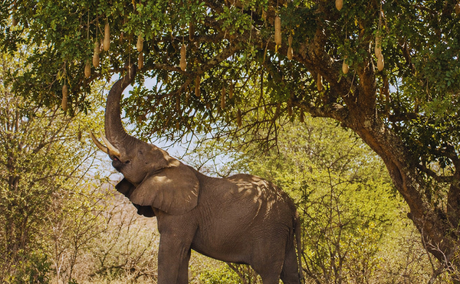
Discover 10 fascinating facts about the Sausage Tree, from giant fruits and bat pollination to traditional uses, skincare and where to see Kigelia africana near Kruger.
A look at the signs our Needles Lodge guides watch for on game drives and walks in southern Kruger, and how to start spotting them yourself from the open vehicle.
Evenings at Needles Lodge are easy. Zebra and giraffe graze near the deck, kudu and warthog move through the garden, and dinner is on the table. The days are spent in southern Kruger National Park, and that is where a guide earns their place.
A good guide sees the bush differently. The impala that stopped mid-step and is staring into a thicket, the vultures settling in a dead tree, the baboon bark that came from the wrong direction: each one is a small piece of information. Put together, they help the guide decide where to stop, where to wait, and what might be worth investigating.
This article explains what our guides are reading, so that from your seat in the open vehicle you can start to read it too. The animals in Kruger are wild and free-roaming, so no sighting can be promised. What a guide does is improve your chances of being in the right place at the right time, as often as the bush allows.
1. Why the Departure Time and Gate Matter
The day's tracking starts before the vehicle leaves the lodge. Our guides plan early departures to make the most of the cooler morning hours, with timing and park entry arrangements following current SANParks requirements. The first hours of daylight can be a good time to look for predators, while tracks left overnight may still be visible on the roads.
Southern Kruger can be entered through the Crocodile Bridge or Malelane gates, depending on the day's arrangements and park conditions. Crocodile Bridge gives access to the Crocodile River roads, where lion, elephant and hippo are among the animals guides look out for. Malelane leads into more hilly country toward Berg-en-Dal, where the grassy slopes and surrounding bush offer different opportunities for wildlife sightings.
2. The Bush Thermostat
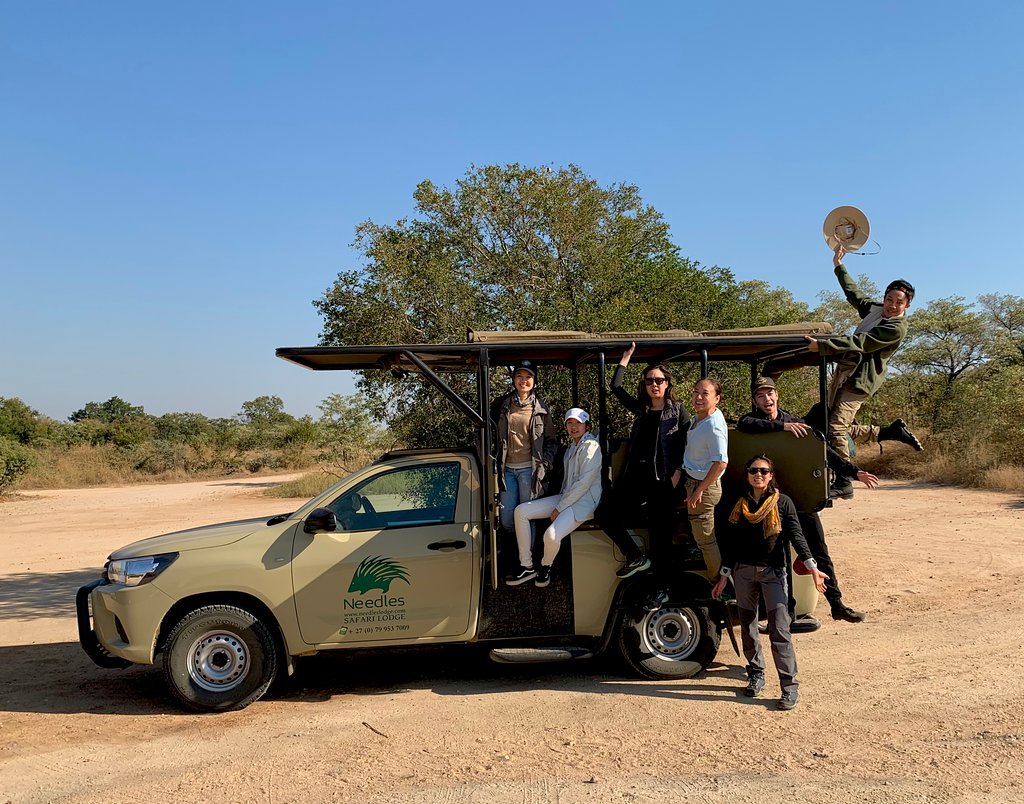
Animals conserve energy, and temperature can influence their behaviour throughout the day.
- Dawn to about 09:00: The air is cooler and the grass may still be damp. Lion and leopard sometimes use the roads during these hours, making it worthwhile to scan the road ahead and the verges.
- About 10:00 to 14:00: As the heat builds, cats may seek out shade. The guide looks beyond the roadside, checking the branches of large trees, where leopard sometimes rest on horizontal limbs. Elephant and buffalo may also visit rivers to drink and cool off, making areas around the Crocodile and Sabie rivers worth exploring.
- Late afternoon: Activity can pick up again as temperatures drop. Predators may become more active, while herds sometimes move toward water. The changing light also makes this a particularly beautiful time in the bush, and a SANParks sunset drive offers another opportunity to experience it.
3. The Bush Alarm System
Prey animals can give away more than most visitors realise. This is one of the main reasons an open vehicle is better than a closed car: with no glass and the engine switched off, you can hear what the guide hears.
- The baboon bark: A sharp, explosive bark from a baboon high in a tree may be an alarm call, sometimes signalling that the troop has spotted a predator such as a leopard. There can be other reasons for the alarm, so guides slow down and listen for further clues.
- The impala snort: When a herd of impala all face the same direction with ears forward, stamping and snorting, something may have caught their attention. The guide might stop, follow their line of sight with binoculars, and check the thicket they are watching.
- Going quiet: A sudden silence among birds or monkeys can sometimes suggest that a predator is moving nearby, although it isn't proof. Guides notice what has stopped as well as what has started.
4. Reading the Common Game
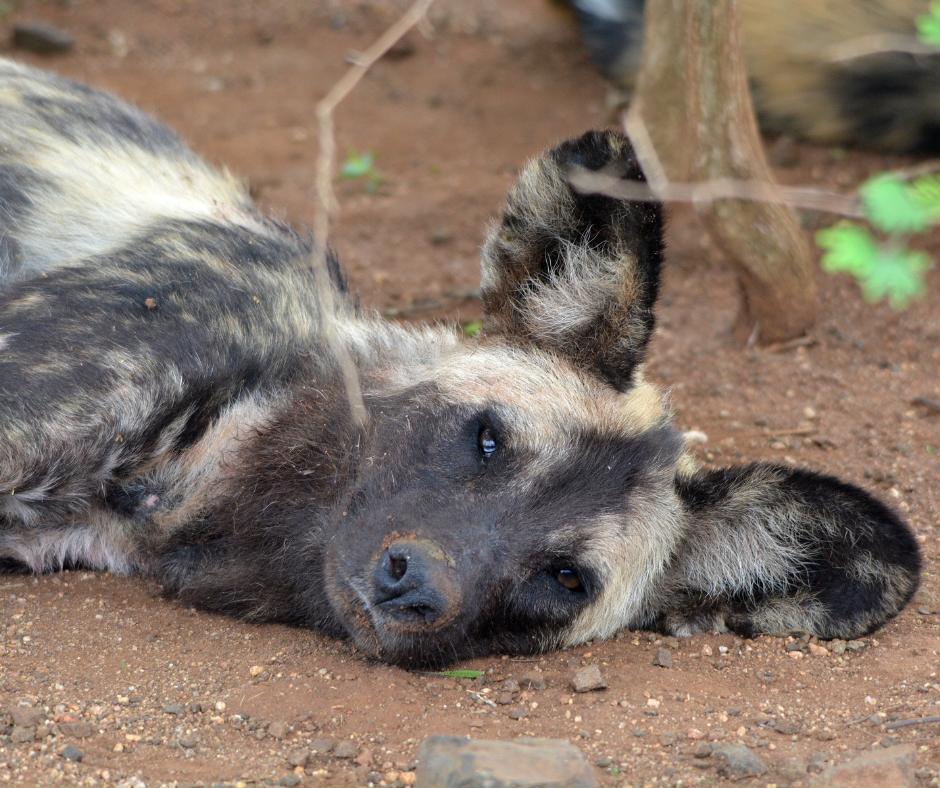
A good guide doesn't overlook a herd of impala, zebra, or kudu. These common animals can offer clues about what else might be happening nearby, and they are worth watching in their own right.
- Zebra and wildebeest: The two species are often found in mixed herds, and they seem to benefit from one another's strengths. Zebra may graze on taller grass, leaving shorter shoots that wildebeest prefer, and when one animal raises the alarm, others in the herd may react.
- Kudu: Kudu slip quietly through thick bush, and a kudu's loud alarm bark carries a long way. Watching them browse can sometimes draw attention to other animals too, including helmeted guineafowl and hornbills foraging on the ground beneath them.
- Hornbills: Southern Yellow-billed Hornbills often follow dwarf mongooses and other foraging animals to catch the insects they disturb.
- Vultures: White-backed vultures circling tightly over one spot, or sitting quietly in the dead branches of a tree, can sometimes suggest a carcass nearby. It isn't always the case, but it is a clue worth investigating.
5. Reading the Ground: Tracks and Clues Left Behind
Sometimes the best clue that an animal is nearby isn't the animal itself, but what it has left behind. Experienced guides pay close attention to the roads, sandy patches and muddy areas around waterholes, where tracks and other signs can reveal which animals have passed through.
Footprints: Large, rounded elephant tracks are relatively easy to recognise, while the padded prints of lions and leopards can be harder to distinguish. Guides look at the size, shape, direction and condition of tracks to work out which animals have been moving through an area.
Fresh dung: Elephant dung, buffalo droppings and rhino middens can reveal which animals have visited an area. Guides also look at the condition of the dung, although this alone cannot tell them exactly when the animal passed.
Disturbed ground: Freshly churned mud around a waterhole, flattened grass or a well-used animal path can suggest recent activity. These are small details most visitors might overlook, but they help a guide build a picture of what's happening in the surrounding bush.
The next time your guide slows down to study something on the road, take a closer look. What appears to be an ordinary patch of sand may hold the story of an animal that passed through before you arrived.
6. Spotting Animals Hidden in Plain Sight
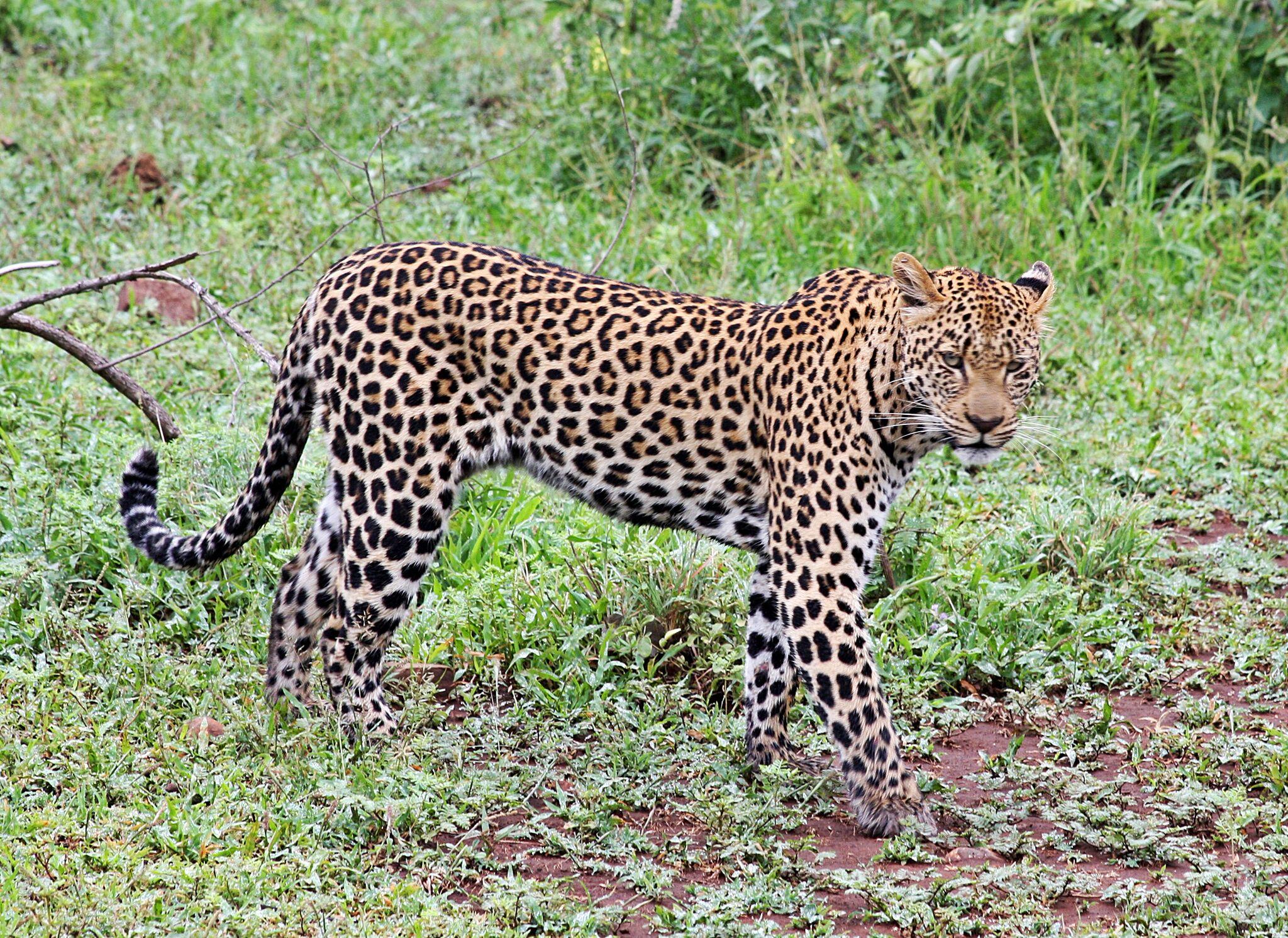
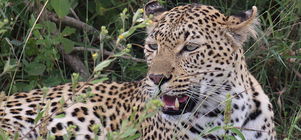
One of the most surprising things about a safari is just how easily a large animal can disappear into its surroundings. A lion can lie almost unnoticed in golden grass, while a leopard's spotted coat blends remarkably well into the shadows of a tree.
Experienced guides don't always look for an entire animal. Instead, they search for small movements, unusual shapes and details that seem out of place.
- Look for movement: A flicking tail, a twitching ear or grass moving when everything around it is still can give away an animal's position. Sometimes the smallest movement is all it takes to reveal something hidden.
- Look for shapes: Two rounded ears sticking above the grass might belong to a resting lion. A long tail hanging beneath a branch could reveal a leopard. Even the straight line of an animal's back can stand out among the irregular shapes of the bush.
- Look beyond the roadside: Many visitors concentrate on what is immediately beside the vehicle. Guides scan at different distances, looking into the thickets, beneath trees, across open clearings and up into the branches.
- Use your binoculars wisely: Start by scanning with your eyes to pick up movement or an unusual shape, then use binoculars for a closer look. This makes it easier to identify what caught your attention without losing sight of the surrounding bush.

What the Signs Can Mean
- Fresh tracks on the road at dawn: An animal may have passed through recently, although tracks can remain visible for different lengths of time depending on the conditions.
- Baboon alarm bark: The troop may have seen a leopard or another predator, or something else may have disturbed them.
- Impala all facing one way, snorting: Something may have caught their attention in that direction.
- Vultures circling tightly: A possible carcass nearby; worth a closer look.
- Vultures resting in a dead tree: They may be waiting near a food source, although their presence doesn't necessarily mean a kill is nearby.
- Cluster of pins on a sighting board: Predators have been reported in the area, but they may already have moved on.
- Midday heat: Check shady branches and areas around rivers.
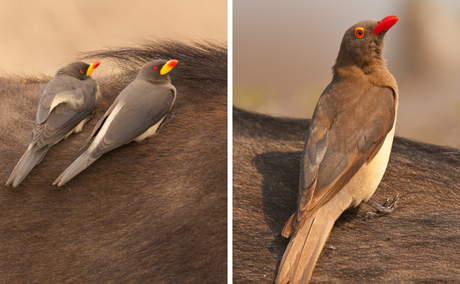
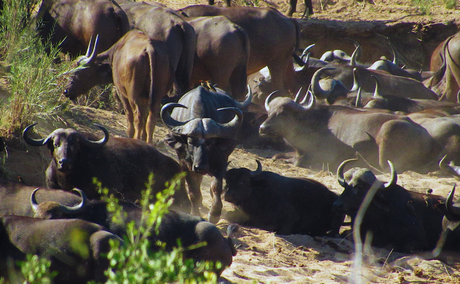
- Oxpeckers suddenly flying off a buffalo or giraffe: The birds may have been disturbed by something approaching. Check the surroundings and the direction the animal is facing for further clues.
Experience the Bush with Needles Lodge
Needles Lodge is conveniently located for exploring southern Kruger. Our guides know these roads and read the bush daily, helping you notice the signs and small details that are so easy to miss on your own.
If you're planning a visit, why not experience the bush with someone who knows how to read it? Book your Kruger game drives through Needles Lodge and let us take care of the arrangements. Our Explorer 3-Night Safari Package includes two full-day guided game drives, while our Tracks and Trails 4-Night Package combines game drives with a guided morning walk. You can also explore our Kruger safari activities to find the right experience for your stay.
Every game drive is different, and that's part of what makes a Kruger safari so special. Come and discover what the bush has to show you.
Frequently Asked Questions
What is the best time of day to see predators like lion and leopard?
Early morning and late afternoon can be particularly good times to look for predators, as they are often more active during cooler conditions. However, sightings can happen at any time of day. Our guides plan their drives around the conditions and the opportunities the bush presents, while following SANParks entry requirements.
How far are the gates from Needles Lodge?
Needles Lodge is conveniently located near Crocodile Bridge and Malelane gates, both providing access to southern Kruger. Travel times and entry arrangements depend on the route, conditions and current park requirements.
What does the SANParks sunset drive involve?
A SANParks sunset drive offers guests the opportunity to explore Kruger in the late afternoon and evening in an open safari vehicle with a SANParks ranger. Needles Lodge can help arrange the activity and any necessary transfers, with departure times and meeting arrangements confirmed when booking.
Can a guide guarantee I will see the Big Five?
No. Kruger's animals are wild and free-roaming, and any promise of a specific sighting would be misleading. A guide can improve your chances by understanding animal behaviour, reading the signs described above, and making informed decisions about where to explore. Even then, the animals decide where they want to be.
What can I learn from a guided walk that I cannot from a drive?
On foot, the rangers can show you tracks, dung, plants, insects, and bird calls that a vehicle passes over. The walk gives a closer reading of the small signs that show what has been moving through an area.
Share This Post